Southern Savanna & Subtropical Coast · Spring · 7 October 2026
The ground under Mbombela
Mbombela stands on plutonic and metamorphic rock, about 3.6 billion years old. The rock decides the soil, the soil decides what grows, and the lie of the land decides where the rain runs off to.
- Highland, summer rain climate
- 876 mm of rain a year
- 674 m above sea level
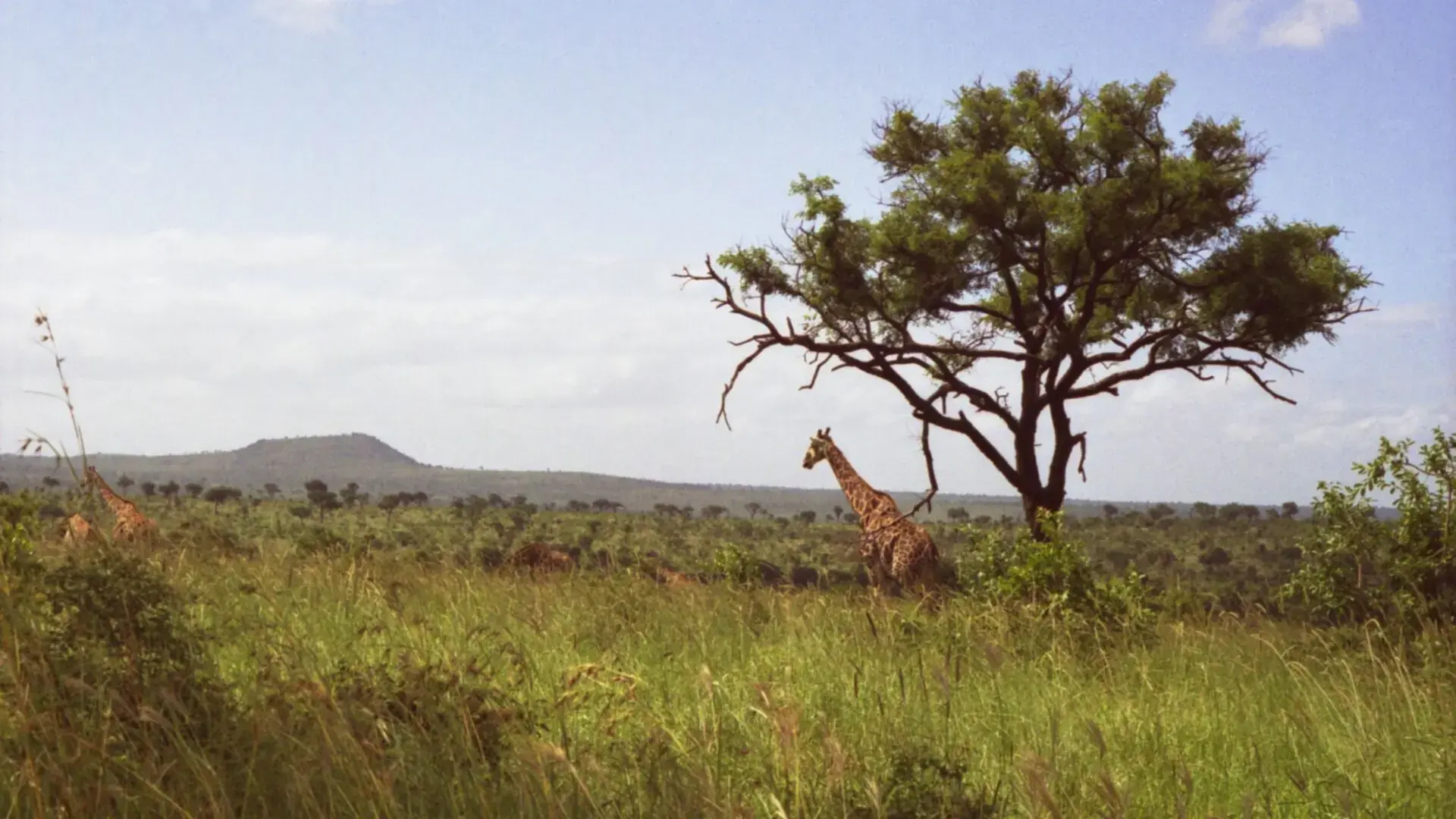
Photograph: Chris Eason from London · CC BY 2.0
Bedrock
Mbombela sits on Paleoarchean igneous rock
About 3.6 billion years old — older than free oxygen in the air, and older than almost any fossil.
Rock types and how they form →
- At the surface4.0 billion years old
Nelspruit Suite
· Archean
- Below, layer 23.6 billion years oldLowers soil pH
Igneous rock
plutonic and metamorphic · Paleoarchean
- What it is
- Rock formed by the cooling of magma. Some maps say only this much, which still tells you a good deal: it will be hard, unlayered, and it will not have fossils in it.
- Weathering
- By the breakdown of its feldspars into clay, which releases whatever else was locked between them as sand and grit.
- Effect on soil and vegetation
- Coarse, gritty soil and rounded outcrops, generally acid and generally hungry, though the dark iron-rich members are much more fertile than the pale ones.
- Below, layer 33.6 billion years oldLowers soil pH
Igneous rock
Archean crystalline metamorphic rocks · Paleoarchean
- What it is
- Rock formed by the cooling of magma. Some maps say only this much, which still tells you a good deal: it will be hard, unlayered, and it will not have fossils in it.
- Weathering
- By the breakdown of its feldspars into clay, which releases whatever else was locked between them as sand and grit.
- Effect on soil and vegetation
- Coarse, gritty soil and rounded outcrops, generally acid and generally hungry, though the dark iron-rich members are much more fertile than the pale ones.
River flow
Rivers near Mbombela: very high for the date
355%
of the ten-year median for this date · 2.5 m³/s against 0.7 normally
very highlowmedian for the datehigh
Well above normal. The river is moving gravel and wood, the banks are undercut and unreliable, and this is the state in which people drown. Watch it from the bank. It is dropping, roughly 46% over the week ahead.
Nearby waters
Named waters near Mbombela
Named lakes, rivers and streams within about 20 km, nearest first, from OpenStreetMap.
- GladdespruitStream3.3 km
- BrinkspruitStream3.8 km
- FriedenheimStream4.8 km
- Friedenheim DamLake6.4 km
- Pre-school PoolLake7.5 km
- RietspruitStream7.6 km
- RiestspruitStream8.9 km
- Nels RiverRiver11.3 km
- North DamLake12.7 km
- SinphonyLake12.9 km
- South DamLake13.3 km
- Primkop DamLake14.8 km
- Stream
- Small, cold, and shaded by whatever grows over it. Most of what lives here eats insects that fall in from the trees, so a stream through woodland is a richer place than the same stream through a field.
- Lake
- Still water that layers in summer: warm at the top, cold below, with a sharp boundary between. Fish sit at the depth that suits them and move as that boundary does.
- River
- Moving water sorts itself into riffles, runs and pools, and everything in it lives where the current brings food without costing more energy than the food is worth. Learn to read the seams and you have learned the river.
Bedrock and soil figures are modelled from national geological surveys and global soil mapping, at a resolution of a few hundred metres — right for the shape of a district, not for a particular garden. River discharge is modelled, not gauged. For anything that matters, dig a hole and look.
For children: dig down through the soil under Mbombela to the bedrock, an interactive cross-section.
The weekly field note for Mbombela
One email, Sunday evening. Unsubscribe at any time.