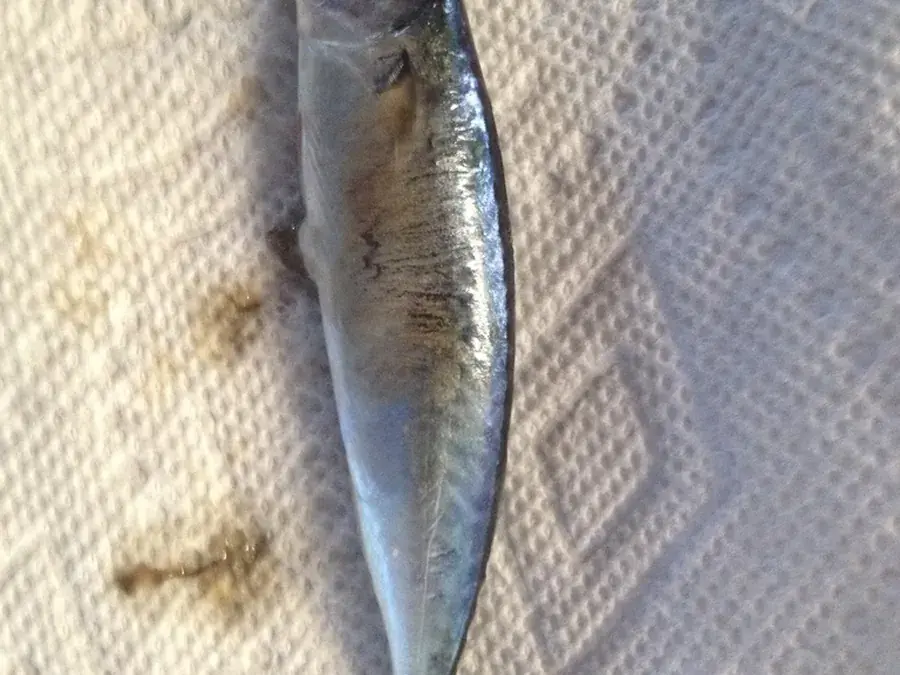
Photo by Jonathan Layman on iNaturalist · CC BY 4.0
Atlantic mackerel
Scomber scombrus
- When
- Jun–Sep — June, July, August, September. Earlier where the water warms first.
- Where it holds
- Open water off piers, breakwaters, rocky points and boats in summer, chasing fry in fast-moving shoals near the surface.
- How to know it
- Torpedo-shaped, with wavy black tiger stripes on a blue-green back, a plain silver-white belly, and a row of small finlets before the forked tail.
- What to know
- The summer fish of every pier. When the shoals are in, everyone catches — which is exactly why it pays to take only a few.
- The tactic
- A string of feathers or small lures cast out and wound back fast, or jigged under a boat.
- Caution
- Both Atlantic stocks are low. Take only what you will eat that day; in Canada the recreational limit is 20 mackerel a day, on one line with up to three hooks.
Seasons, size limits and catch limits change every year and differ by water body. Check the current regulations for the country and the water before you fish.
Atlantic mackerel facts
- Also called
- Mackerel, common mackerel; maquereau in French, caballa in Spanish, sgombro in Italian, makrell in Norwegian, makrill in Swedish.
- Family
- Scombridae, the mackerels and tunas.
- Native range
- Both sides of the North Atlantic — from Labrador to the US mid-Atlantic coast in the west, and from Iceland and Norway south to North Africa in the east — and the Mediterranean.
- Habitat
- Open water over the continental shelf, in huge schools near the surface in summer and deeper offshore in winter. It comes inshore in spring as the sea warms.
- Water temperature
- Cool water; mackerel move inshore in spring when the sea reaches about 11–14°C (52–57°F).
- Size
- Most adults 25–40 cm (10–16 in); the largest measured about 60 cm (24 in).
- Record
- IGFA all-tackle world record: 1.6 kg (3 lb 8 oz), Lorenzo Roca, L'Ampolla, Spain, 2015. The British boat record is heavier: 2.79 kg (6 lb 2 oz), off Penberth Cove, Cornwall, 1984.
- Lifespan
- Up to about 17 years.
- What it eats
- Zooplankton and small fish, hunted mostly by day.
- Spawning
- In batches through spring and summer, in open water; the eggs and larvae drift in the plankton. After spawning, adults feed hard in small, fast-moving shoals.
- Young fish
- Larvae grow quickly in the plankton, and young mackerel school close inshore by late summer.
- Teeth and mouth
- A pointed head and a wide mouth with small teeth.
- Look-alikes
- Atlantic chub mackerel has a swim bladder, a bigger eye, and spots or wavy lines on its lower sides; the Atlantic mackerel has a plain silver belly and no swim bladder. Horse mackerel (scad) has a row of bony plates along its side.
- Eating
- Superb fresh, grilled or smoked — oily and rich — but it spoils fast, so ice it at once.
- Status
- IUCN Least Concern as a species, but both Atlantic stocks are in trouble. ICES advised a cut of about 70% in the northeast Atlantic catch for 2026, with the stock below its safe biological limit; in Canada the stock has been in the critical zone since 2011 and the commercial fishery remains closed.
Try it
How big does a atlantic mackerel get?
Slide it from an ordinary adult to the biggest one ever measured, next to things you know the size of.
Most adults you'll catch: 25–40 cm (10–16 in).
This atlantic mackerel: 33 cm. Longer than a loaf of bread, shorter than a four-year-old.
The record
IGFA all-tackle world record: 1.6 kg (3 lb 8 oz), Lorenzo Roca, L'Ampolla, Spain, 2015. The British boat record is heavier: 2.79 kg (6 lb 2 oz), off Penberth Cove, Cornwall, 1984.
Questions people ask about atlantic mackerel
Is it OK to catch mackerel?
Yes, in moderation. Take only what you will eat, and follow local limits: in Canada, recreational anglers may keep 20 mackerel a day, fishing one line with up to three hooks. The northeast Atlantic stock is low too, so put the rest back.
Do mackerel have a swim bladder?
No — the Atlantic mackerel has no swim bladder, which is one way to tell it from its close relative, the Atlantic chub mackerel, which does.
How big do mackerel get?
Most are 25–40 cm (10–16 in) and under 1 kg. The largest reach about 60 cm and 3.4 kg. The IGFA world record is 1.6 kg (3 lb 8 oz), from Spain in 2015; Britain's boat record, from Cornwall in 1984, is 2.79 kg (6 lb 2 oz).
When are the mackerel in?
In northern Europe and Atlantic Canada, mackerel come inshore in late spring and summer — June to September are the peak months — then move offshore and deeper for the winter.
Found in these regions
Checked against these sources ·
- FishBase — Scomber scombrus
- Fisheries and Oceans Canada — Atlantic mackerel, NAFO subareas 3 and 4 (2025–2026)
- Marine and Freshwater Research Institute (Iceland) — ICES advice on mackerel for 2026
- British Record (Rod Caught) Fish Committee — sea fish records, June 2026
Sizes, records and ranges are for the species as a whole; local fish, and local rules, vary. Records change — the record-keeper named above has the current one.
Is it active near you?
Get this week's guide for your area
Enter a town, postal code or ZIP and we'll tell you what's happening right there this week — from your local climate, this week's weather and your ecological region.
Also active in October
 FishJun–Mar
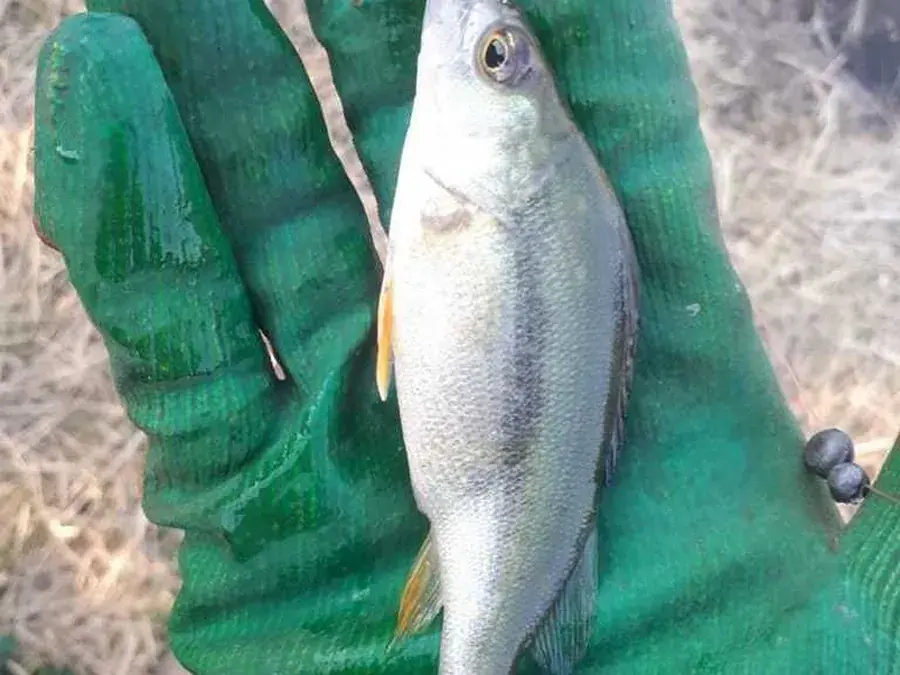
European perch
Perca fluviatilis
Five to eight dark bars on a greenish flank, bright red-orange lower fins, and a spiny first dorsal fin with a black blotch at the back.
Where and how to catch it →Photo: Дауд Арсанукаев · CC BY 4.0
 FishJun–Mar
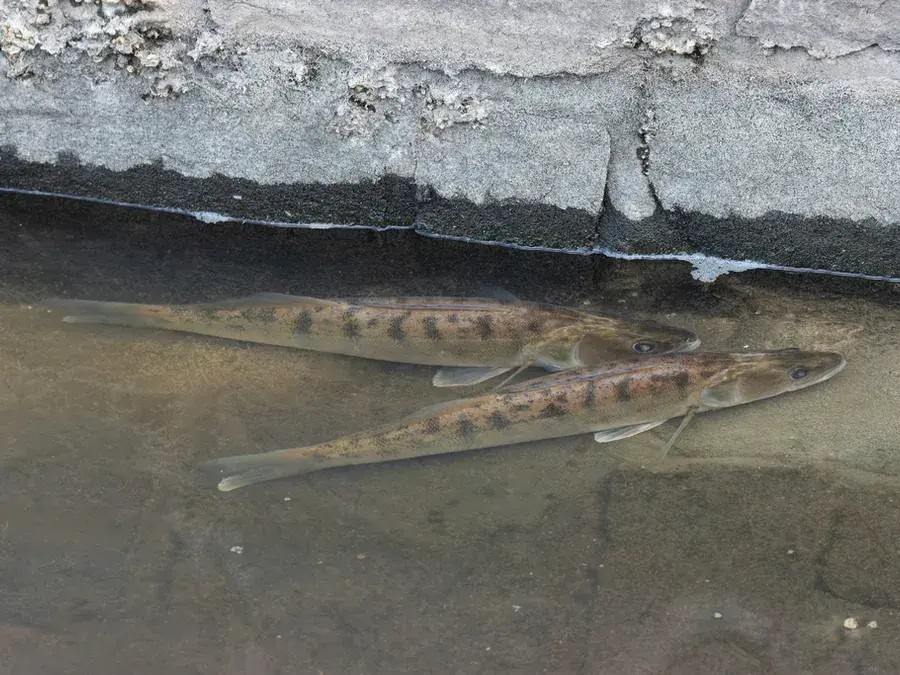
Zander
Sander lucioperca
Slim and glassy-eyed, with grey-brown saddles, rows of black spots on the spiny dorsal fin, and long fang-like canine teeth.
Where and how to catch it →Photo: Tomas Broucek · CC BY 4.0
 FishApr–Oct
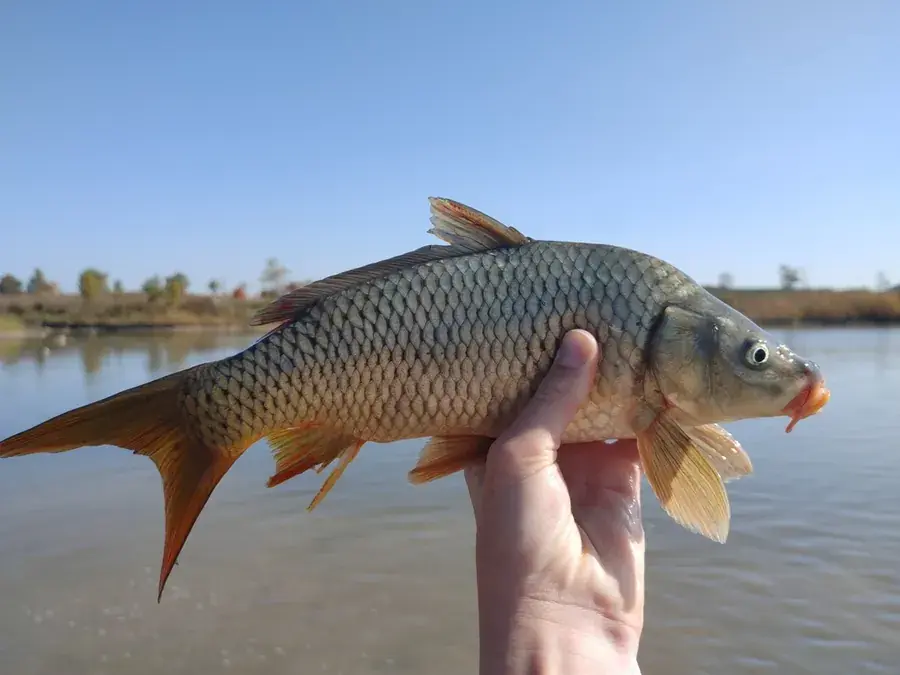
Common carp
Cyprinus carpio
Big bronze scales (or the scattered big scales of a mirror carp), a long dorsal fin, and two pairs of barbels at a rubbery, tube-like mouth.
Where and how to catch it →