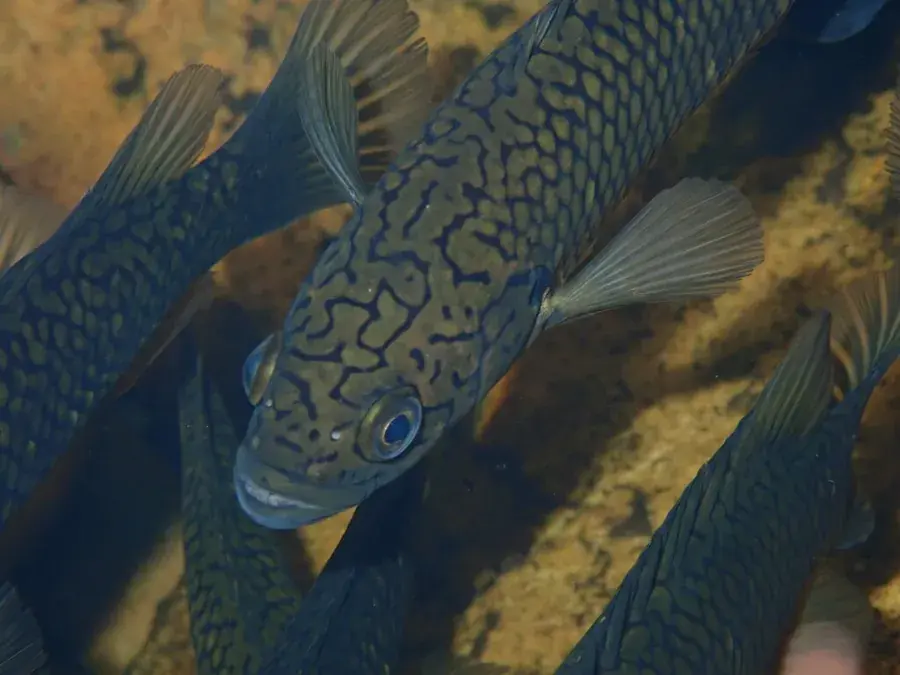
Photo by Ren Hoekstra on iNaturalist · CC BY 4.0
Cape kurper
Sandelia capensis
- When
- Oct–Mar — January, February, March, October, November, December. Earlier where the water warms first.
- Habitat
- Quiet pools and slow margins of the Cape’s coastal rivers, among rocks, roots and overhanging plants — from the Verlorenvlei south to the Cape Flats and east to the Coega River near Gqeberha.
- Identification
- A small fish, yellow to golden-brown with dark markings that run onto the dorsal and anal fins. Breeding males turn darker, with vertical bars and blackened fins and lower jaw.
- Notes
- A native of Western and Eastern Cape rivers and a member of the climbing-gourami family, able to gulp air at the surface. In summer the male defends a nest on the bottom and guards the eggs alone. Many populations have declined through habitat loss and predation by introduced bass.
- Method
- Not a fish to target. If one takes a small fly or worm meant for something else, wet your hands, unhook it in the water and let it go at once.
- Caution
- Indigenous and in decline: in the Western Cape every indigenous freshwater fish caught must be released alive, and fishing public inland waters needs a CapeNature freshwater angling licence. Further national protection may apply. Never move fish from one water to another.
Seasons, size limits and catch limits change every year and differ by water body. Check the current regulations for the country and the water before fishing.
Cape kurper facts
- Also called
- Cape kurper. In South Africa ‘kurper’ is also used for tilapias such as the blue kurper (Mozambique tilapia).
- Family
- Anabantidae, the climbing gouramis.
- Native range
- The Western and Eastern Cape: coastal rivers from the Coega River near Gqeberha west to the Cape Flats and north to the Verlorenvlei. Introduced into the Olifants system near Clanwilliam.
- Habitat
- Varied — from rocky, swift streams to slow, weedy water — but it prefers quiet margins with cover among rocks, roots and submerged branches. It can breathe air at the surface.
- Water temperature
- Subtropical to warm-temperate fresh water: FishBase gives 18–22°C (64–72°F).
- Size
- Most adults 10–15 cm (4–6 in); the largest measured about 25 cm (10 in).
- Record
- None kept: it is a protected indigenous fish that must be released, not a sport species.
- Lifespan
- Not well documented.
- What it eats
- Insects and other invertebrates, small fish and crabs.
- Spawning
- In summer. The male defends a territory on the bottom, courts the female with bubble-blowing and display, then drives her away and guards the eggs and the newly hatched larvae, which stick to the nest site.
- Young fish
- Larvae cling to the bottom of the nest under the male’s guard until they can swim.
- Look-alikes
- Introduced bass and bluegill, whose young can look similar, now share many of its streams. The kurper’s yellow to golden-brown body with dark markings running onto the dorsal and anal fins, and the breeding male’s dark bars and blackened fins, are its marks.
- Eating
- Not eaten: indigenous fish caught in the Western Cape must be released alive.
- Status
- Data Deficient on the IUCN Red List (2017). Genetic work suggests it is probably several distinct species, and many populations have declined through habitat loss and predation by introduced bass. The Western Cape holds South Africa’s highest concentration of threatened freshwater fish.
Interactive
Cape kurper: size range
Move the slider from a typical adult to the largest recorded specimen, shown against objects of known size.
Most adults you'll catch: 10–15 cm (4–6 in).
This cape kurper: 13 cm. Shorter than a hand.
The record
None kept: it is a protected indigenous fish that must be released, not a sport species.
Questions people ask about cape kurper
Can I keep a Cape kurper?
No. In the Western Cape no indigenous freshwater fish may be killed when caught by an angler; all must be released alive. Fishing public inland waters needs a CapeNature freshwater angling licence, and keeping or moving indigenous fish needs a permit.
Why is the Cape kurper threatened?
Mainly because introduced predators — largemouth, smallmouth and spotted bass — eat it, and because dams, pollution and water abstraction have damaged its rivers. Climate change adds to the pressure.
How does the Cape kurper breed?
In summer the male stakes out a nest on the bottom, turns dark with bold bars, courts a female with bubbles and display, then chases her off and guards the eggs and larvae alone.
Found in these regions
Checked against these sources ·
- FishBase — Sandelia capensis
- Wikipedia — Sandelia capensis
- CapeNature — Code of Practice for Freshwater Recreational Angling in the Western Cape
- CapeNature — Transport and utilisation of indigenous freshwater fishes in the Western Cape (policy, November 2025)
Sizes, records and ranges are for the species as a whole; local populations and rules vary. Records change; the record-keeper named above holds the current one.
Local activity
This week's guide for a place
Enter a town, postal code or ZIP for this week's conditions there, based on the local climate, this week's weather and the ecological region.
Also active in October
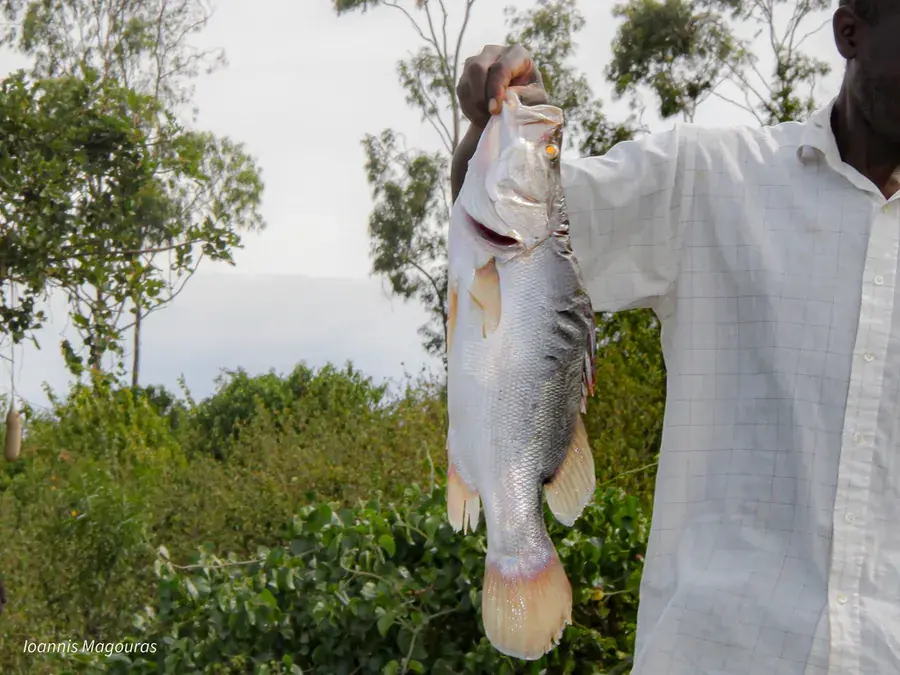 FishYear-round
Nile perch
Lates niloticus
A huge silver perch with a blue sheen, a dorsal fin cut deeply into spiny and soft halves, a rounded tail, and a dark eye ringed in bright yellow.
Habitat and methods →Photo: Ioannis Magouras · CC BY 4.0
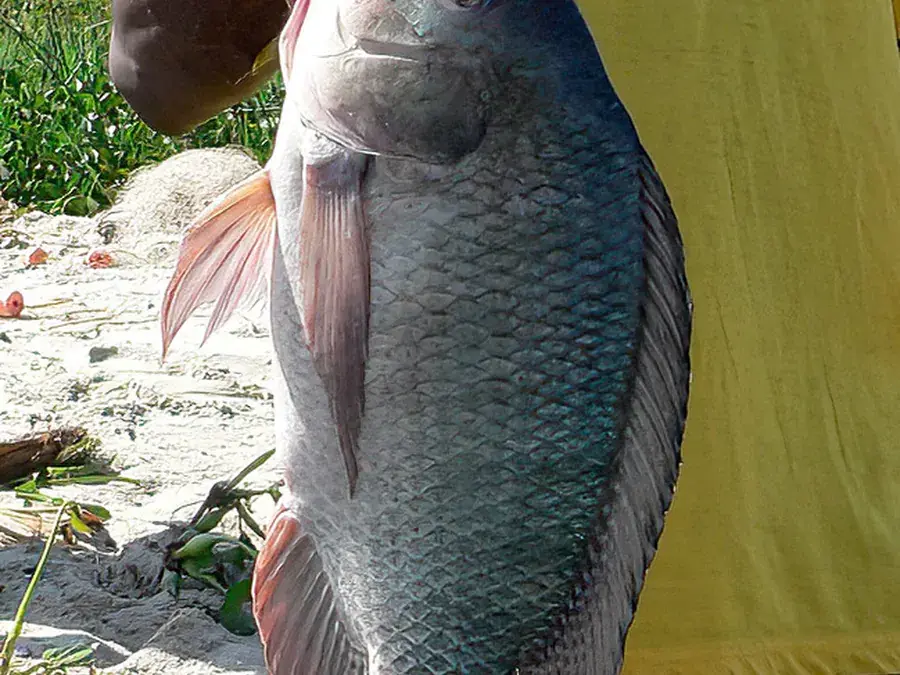 FishYear-round
Nile tilapia
Oreochromis niloticus
Deep-bodied and grey-brown with faint bars, and the tell: regular dark vertical stripes right across the tail fin. Breeding males turn reddish, especially on the fins.
Habitat and methods →Photo: Pål A. Olsvik · CC BY 4.0
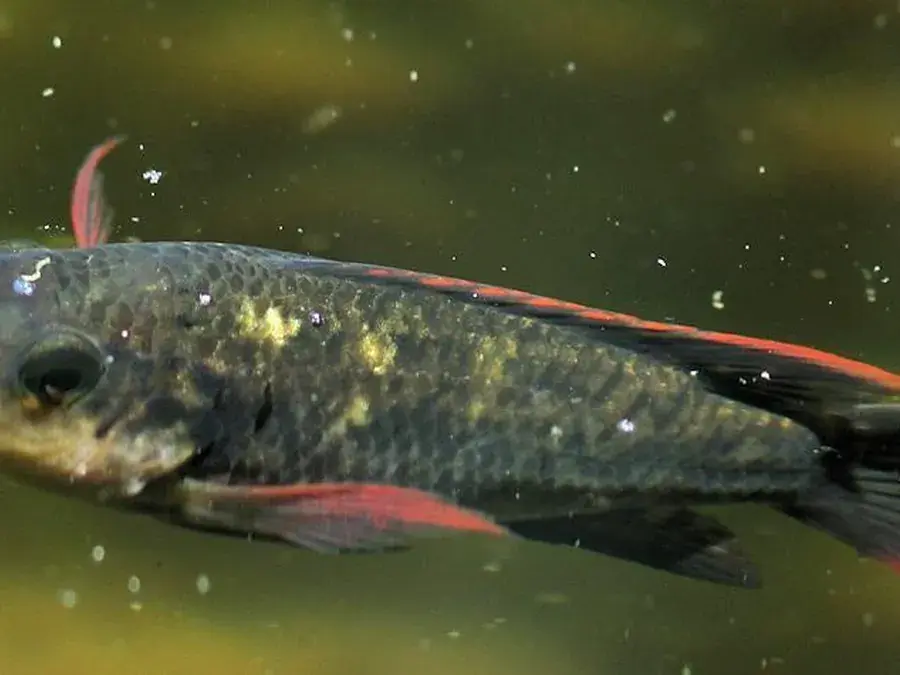 FishSep–Apr
Mozambique tilapia (blue kurper)
Oreochromis mossambicus
Deep-bodied and dull silvery-olive with a few dark blotches along the side and no regular stripes on the tail. Breeding males turn black with a white throat, red-edged fins and a pointed, duck-bill snout.
Habitat and methods →Photo: Wynand Uys · CC BY 4.0