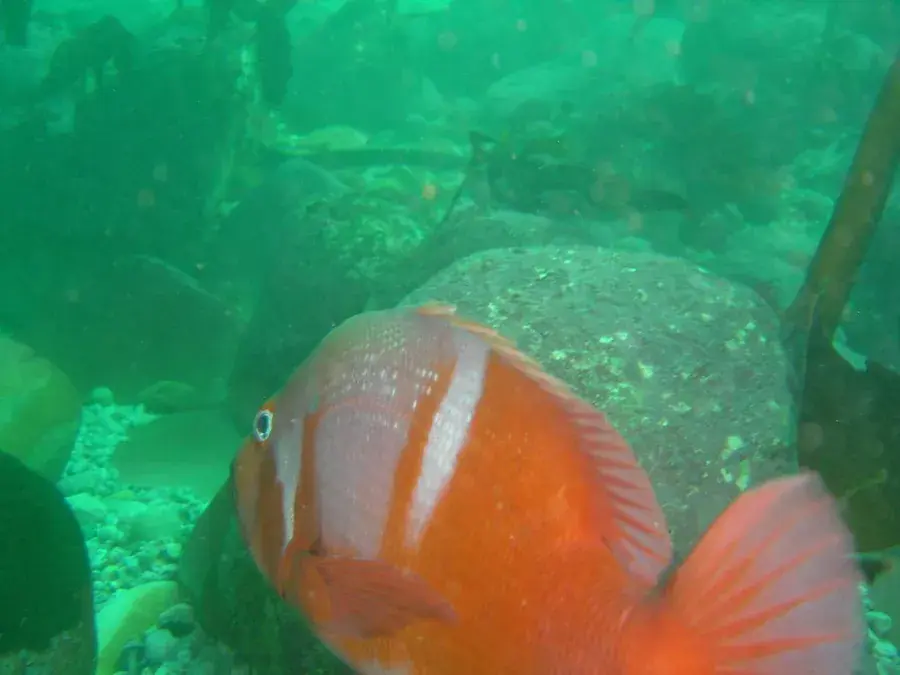
Photo by Peter Southwood on iNaturalist · CC BY-SA 4.0
Red roman
Chrysoblephus laticeps
- When
- Active all year; habitat and behaviour shift with the season.
- Habitat
- Inshore and offshore reefs with high relief, down to about 100 m, between Cape Point and the Eastern Cape — mostly fished from ski-boats; deep-water rock ledges sometimes produce one from the shore.
- Identification
- A vivid orange seabream with a broad, concave forehead, a blue bar between the eyes and a white, saddle-like mark on the back below the middle of the dorsal fin.
- Notes
- A slow-growing reef fish that lives on a patch of reef no bigger than a few thousand square metres and starts adult life as a female, turning male as it grows. That loyalty to one reef is why marine protected areas such as Tsitsikamma and Goukamma protect it so well.
- Method
- It takes almost any bait: squid (chokka), sardine or prawn on the bottom over broken reef, on a short, strong trace.
- Caution
- Two a day at 30 cm or more, on a DFFE recreational permit (online or at the Post Office). No fishing in no-take marine protected areas — around Cape Town that includes the six restricted zones of the Table Mountain MPA.
Seasons, size limits and catch limits change every year and differ by water body. Check the current regulations for the country and the water before fishing.
Red roman facts
- Also called
- Roman, rooi roman, roman seabream.
- Family
- Sparidae, the seabreams and porgies.
- Native range
- Endemic to southern Africa, from Namibia round the Cape; the stock lies mainly between Cape Point and Port St Johns, and it is very rare on the west coast.
- Habitat
- High- and low-profile reefs from close inshore down to about 100 m (330 ft); juveniles live on shallow reefs to 30 m. Each fish holds a small home range of 1,000–3,000 m² and shelters in caves during cold upwelling.
- Water temperature
- Cool temperate. AquaMaps puts its preferred surface water at about 14–16°C (57–61°F), within a range of roughly 13–25°C.
- Size
- Most adults 25–35 cm (10–14 in); the largest measured about 50 cm (20 in).
- Record
- IGFA all-tackle world record: 2.00 kg (4 lb 7 oz), Graham Doman, Struisbaai, South Africa (listed by IGFA as ‘Stryis Bay’), 1 May 2024. The South African spearfishing record is 4.57 kg (10 lb 1 oz), from 1993.
- Lifespan
- Up to 17–19 years.
- What it eats
- Feather stars, brittle stars, squid and cuttlefish, crabs and worms; young fish eat worms and small crustaceans.
- Spawning
- October to January in the Eastern Cape and November to February near Goukamma, after paired courtship well above the reef. Females mature at two and a half to three and a half years and about 18 cm; the biggest become territorial males.
- Teeth and mouth
- A strong mouth with prominent canine teeth at the front.
- Look-alikes
- Other members of its genus — the dageraad (Chrysoblephus cristiceps) and Englishman (Chrysoblephus anglicus) among them — share its reefs; the roman’s blue bar between the eyes and white saddle on the back set it apart.
- Eating
- Good eating; WWF-SASSI rates line-caught South African roman orange — think twice.
- Status
- Least Concern on the IUCN Red List (2024 assessment). Historically overfished, with signs of recovery; marine protected areas have proved very effective for it.
Interactive
Red roman: size range
Move the slider from a typical adult to the largest recorded specimen, shown against objects of known size.
Most adults you'll catch: 25–35 cm (10–14 in).
This red roman: 30 cm. About as long as a loaf of bread.
The record
IGFA all-tackle world record: 2.00 kg (4 lb 7 oz), Graham Doman, Struisbaai, South Africa (listed by IGFA as ‘Stryis Bay’), 1 May 2024. The South African spearfishing record is 4.57 kg (10 lb 1 oz), from 1993.
Questions people ask about red roman
What is the bag limit for red roman?
Two a day at 30 cm or more, on a DFFE recreational permit. Red roman mature at about 18 cm, well under the legal size, which has helped the stock hold up.
Why do red roman change sex?
They are protogynous hermaphrodites: every roman starts adult life as a female, and the largest become territorial males. Heavy fishing removes the big fish, which can skew the sex ratio towards females.
Can you fish for red roman around Cape Town?
Yes, with a permit, outside the protected zones. The Table Mountain National Park MPA has six restricted zones — Karbonkelberg, Cape of Good Hope, Paulsberg, Castle Rock, Boulders and St James — where no fishing is allowed (snoek may be fished beyond the 35 m line at Karbonkelberg).
Found in these regions
Checked against these sources ·
- FishBase — Chrysoblephus laticeps
- Mann (ed.), Southern African Marine Linefish Species Profiles — ORI Special Publication 9 (2013)
- WWF-SASSI — Red roman
- Wikipedia — Chrysoblephus laticeps
- Wikipedia — Table Mountain National Park Marine Protected Area
- IGFA — World Records search
Sizes, records and ranges are for the species as a whole; local populations and rules vary. Records change; the record-keeper named above holds the current one.
Local activity
This week's guide for a place
Enter a town, postal code or ZIP for this week's conditions there, based on the local climate, this week's weather and the ecological region.
Also active in October
 FishYear-round
Nile perch
Lates niloticus
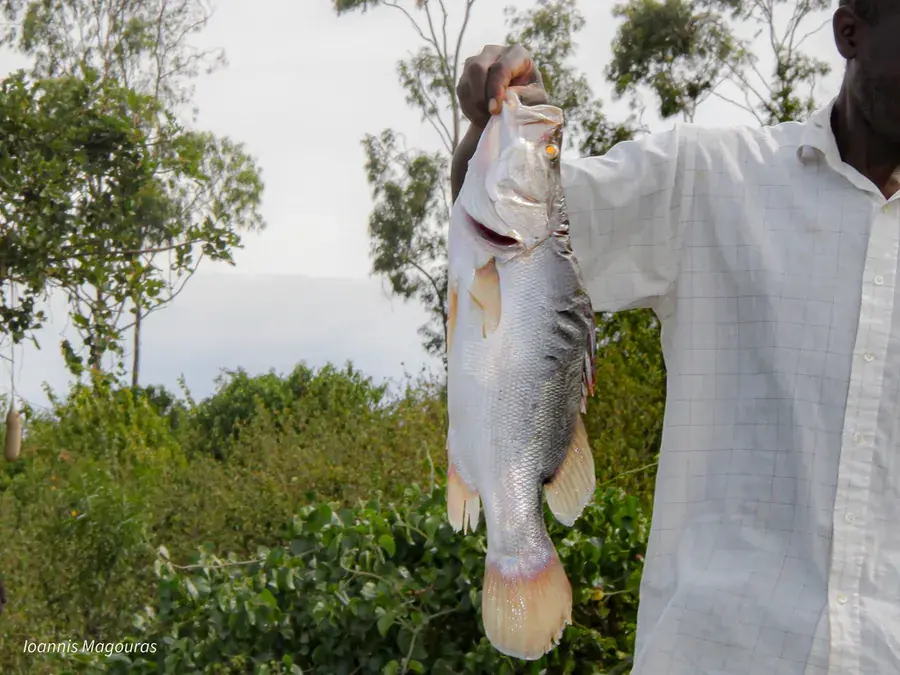
A huge silver perch with a blue sheen, a dorsal fin cut deeply into spiny and soft halves, a rounded tail, and a dark eye ringed in bright yellow.
Habitat and methods →Photo: Ioannis Magouras · CC BY 4.0
 FishYear-round
Nile tilapia
Oreochromis niloticus
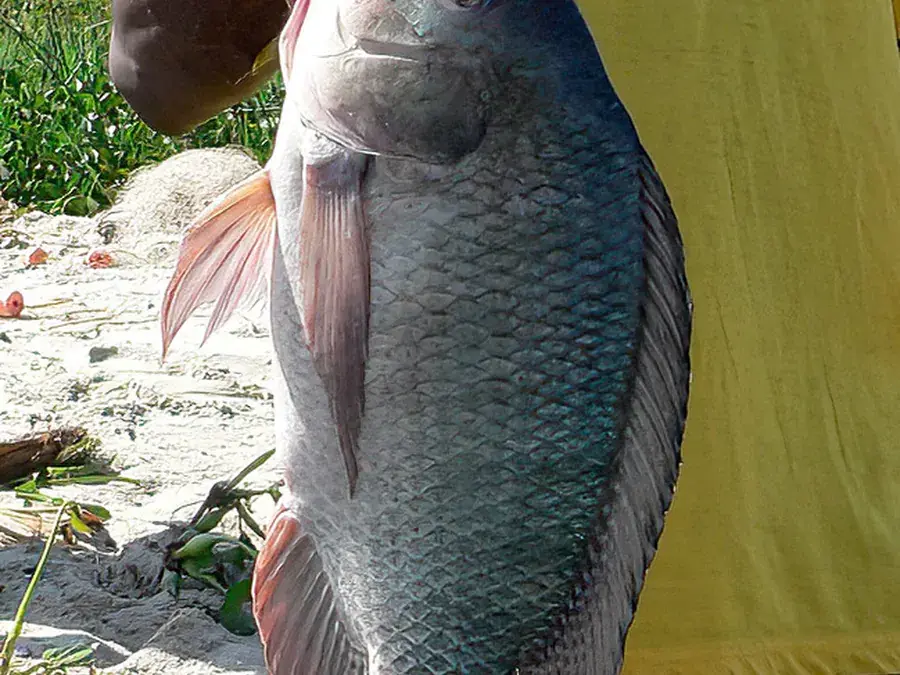
Deep-bodied and grey-brown with faint bars, and the tell: regular dark vertical stripes right across the tail fin. Breeding males turn reddish, especially on the fins.
Habitat and methods →Photo: Pål A. Olsvik · CC BY 4.0
 FishSep–Apr
Mozambique tilapia (blue kurper)
Oreochromis mossambicus
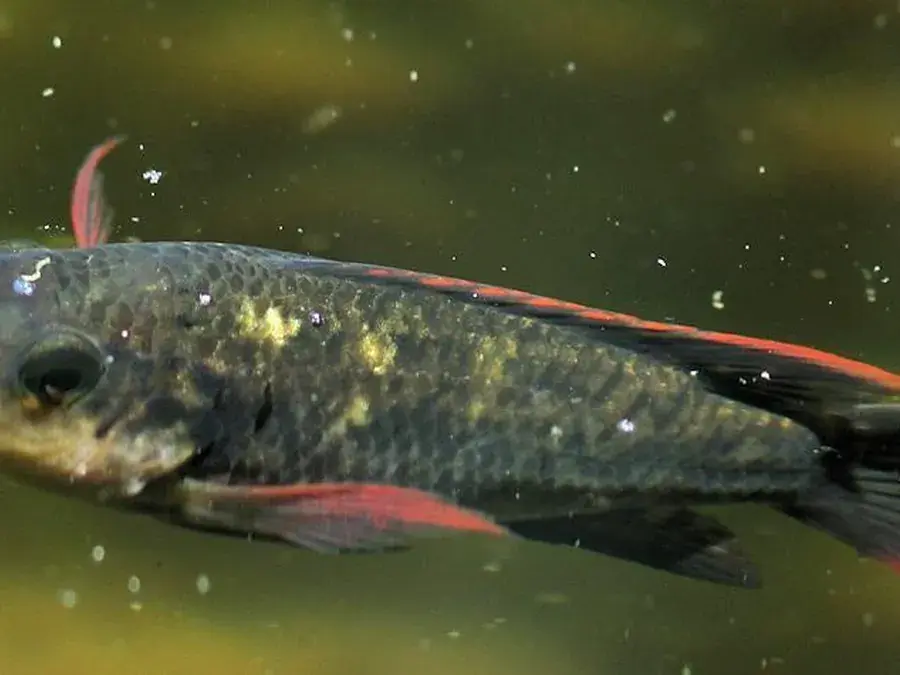
Deep-bodied and dull silvery-olive with a few dark blotches along the side and no regular stripes on the tail. Breeding males turn black with a white throat, red-edged fins and a pointed, duck-bill snout.
Habitat and methods →Photo: Wynand Uys · CC BY 4.0