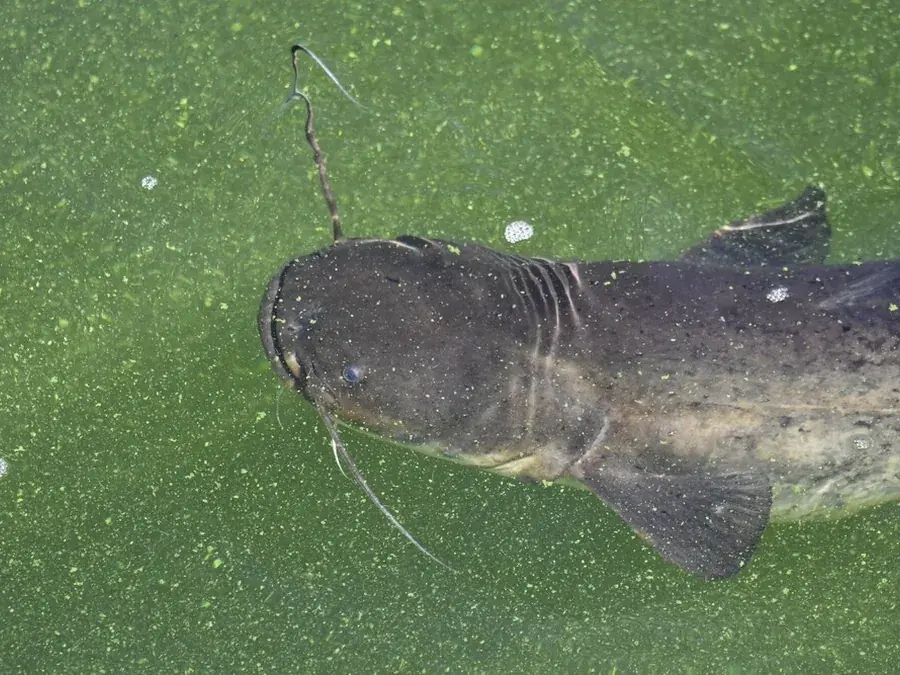
Photo by Paulo Martins on iNaturalist · CC BY-SA 4.0
Wels catfish
Silurus glanis
- When
- May–Oct — May, June, July, August, September, October. Earlier where the water warms first.
- Where it holds
- Big lowland rivers, deep holes below dams, reservoirs and weedy lakes; it hunts the shallows at night.
- How to know it
- Huge and scaleless, with a broad flat head, two long whiskers and four short ones under the chin, a tiny dorsal fin, and an anal fin that runs almost to the tail.
- What to know
- Europe's largest freshwater fish — the biggest rod-caught wels passed 130 kg. Native in central and eastern Europe; introduced, and now enormous, in Spain, Italy and France.
- The tactic
- Big livebait or a bunch of pellets on the bottom or under a float at night; the traditional wooden 'clonk' slapped on the surface calls them up.
- Caution
- Use very heavy tackle and land a big fish by hand with a glove. In Sweden the wels is endangered and fully protected — release it at once. In Spain and Italy it is invasive, and the rules on releasing it differ by region.
Seasons, size limits and catch limits change every year and differ by water body. Check the current regulations for the country and the water before you fish.
Wels catfish facts
- Also called
- Wels, sheatfish, European catfish; silure glane in French, Wels or Waller in German, siluro in Spanish and Italian, harcsa in Hungarian, sum in Polish and Czech, mal in Swedish.
- Family
- Siluridae, the sheatfishes — a different family from North America's channel and blue catfish (Ictaluridae).
- Native range
- Central and eastern Europe and western Asia: the North Sea, Baltic, Black Sea, Caspian and Aral basins, north to southern Sweden, plus several Aegean rivers and Turkey. Absent from the rest of the Mediterranean basin.
- Introduced to
- Widely through western and southern Europe — Spain (into the Ebro in 1974, and now in all of Spain's main rivers), Italy, France (including the Tarn, in 1983) and stocked lakes in Britain — and Tunisia and Kazakhstan. Several countries report harm to native fish.
- Habitat
- Large and medium lowland rivers, backwaters, deep water below dams, reservoirs and well-vegetated lakes, and sometimes brackish water in the Baltic and Black seas. A nocturnal hunter, near the bottom and in mid-water.
- Water temperature
- Temperate; FishBase gives about 4–20°C (39–68°F), but wels grow fastest and spread most in the warm rivers of the south.
- Size
- Most adults 80–160 cm (31–63 in); the largest measured about 273 cm (107 in).
- Record
- IGFA all-tackle world record: 134.97 kg (297 lb 9 oz), Attila Zsedely, River Po, Italy, March 2010. The British record is 68.12 kg (150 lb 3 oz), from Chigborough Fisheries, Essex, in 2024.
- Lifespan
- Very long-lived: a Swedish study found a wels at least 70 years old, and FishBase cites up to 80.
- What it eats
- Larvae and young eat invertebrates and small fish. Adults eat fish, crayfish, frogs, water birds and small mammals — and in the River Tarn at Albi, France, wels have learned to lunge out onto the bank to catch pigeons.
- Spawning
- In late spring and summer, in shallow, weedy water. The male defends a small territory, builds a nest of plant material or cleans a patch of roots, and guards the eggs until they hatch in 3–10 days, depending on the temperature.
- Young fish
- Larvae and young fish live on the bottom. In warm water wels can mature at 2–3 years.
- Teeth and mouth
- An enormous mouth lined with bands of small, rasp-like teeth, with two long barbels on the upper jaw and four short ones beneath.
- Look-alikes
- Burbot has one chin barbel and two dorsal fins. North American bullheads and channel catfish have an adipose fin and stout fin spines; the wels has neither — just a tiny dorsal fin and a very long anal fin. Aristotle's catfish, in western Greece, is a much smaller relative.
- Eating
- Eaten widely in central and eastern Europe — harcsapaprikás is a Hungarian classic — but big, old fish can carry contaminants; check local advice.
- Status
- IUCN Least Concern. Native but endangered in Sweden, where it survives in a handful of waters and is protected from fishing; invasive in Spain, Italy, France and other places it has been introduced.
Try it
How big does a wels catfish get?
Slide it from an ordinary adult to the biggest one ever measured, next to things you know the size of.
Most adults you'll catch: 80–160 cm (31–63 in).
This wels catfish: 120 cm. Longer than a four-year-old, shorter than a canoe paddle.
The record
IGFA all-tackle world record: 134.97 kg (297 lb 9 oz), Attila Zsedely, River Po, Italy, March 2010. The British record is 68.12 kg (150 lb 3 oz), from Chigborough Fisheries, Essex, in 2024.
Questions people ask about wels catfish
How big do wels catfish get?
Most caught are 0.8–1.6 m (2.5–5 ft) long. The largest with solid evidence measured 2.73 m and weighed 130 kg; old tales of 5 m, 300 kg giants rest on mistakes. The IGFA world record is 134.97 kg (297 lb 9 oz), from Italy's River Po in 2010.
Do wels catfish really eat pigeons?
Yes. In the River Tarn at Albi, in southern France, researchers filmed wels lunging out of the water onto gravel banks to grab pigeons, then wriggling back in — a hunting trick the introduced fish seem to have learned there.
Are wels catfish invasive?
Where they have been introduced, yes. Wels were put into Spain's Ebro in 1974 and now live in all of Spain's main rivers; they have also spread in Italy and France, eating native fish. In Sweden, by contrast, the native wels is endangered and protected.
What should I do if I catch a wels in Sweden?
Release it straight away, handling it carefully. The wels is strongly threatened in Sweden and protected from fishing; it survives only in a few systems, such as the Emån, Lake Båven, Lake Möckeln and the Helge å.
Found in these regions
Checked against these sources ·
- FishBase — Silurus glanis
- Cucherousset et al. (2012), Freshwater killer whales: beaching behavior of an alien fish to hunt land birds — PLOS ONE
- Länsstyrelsen Kalmar län — Mal (wels catfish)
- The Local Spain — How a 200-kilo fish is putting Spain's rivers at risk
Sizes, records and ranges are for the species as a whole; local fish, and local rules, vary. Records change — the record-keeper named above has the current one.
Is it active near you?
Get this week's guide for your area
Enter a town, postal code or ZIP and we'll tell you what's happening right there this week — from your local climate, this week's weather and your ecological region.
Also active in October
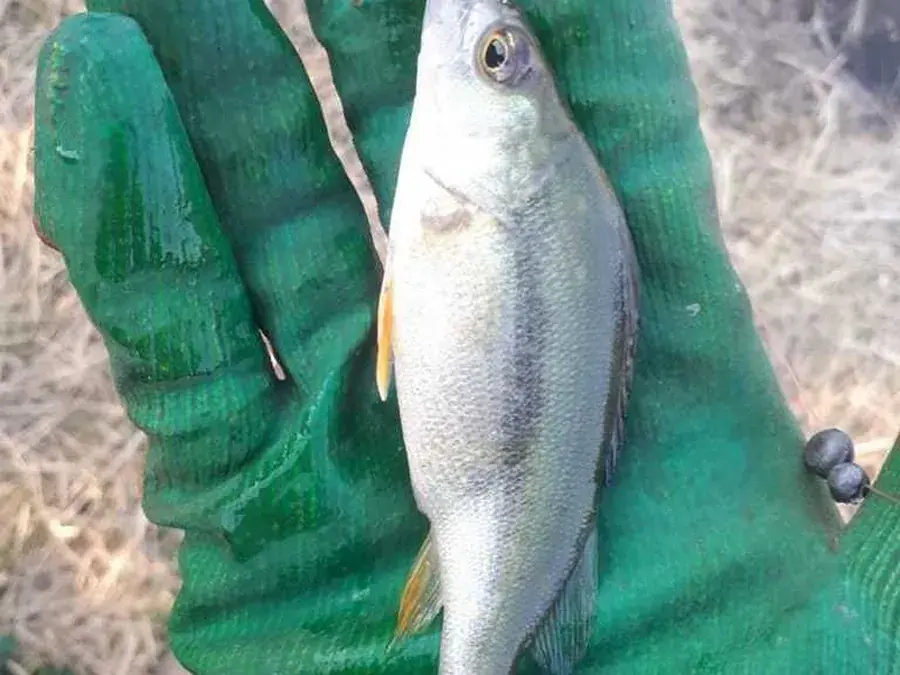 FishJun–Mar
European perch
Perca fluviatilis
Five to eight dark bars on a greenish flank, bright red-orange lower fins, and a spiny first dorsal fin with a black blotch at the back.
Where and how to catch it →Photo: Дауд Арсанукаев · CC BY 4.0
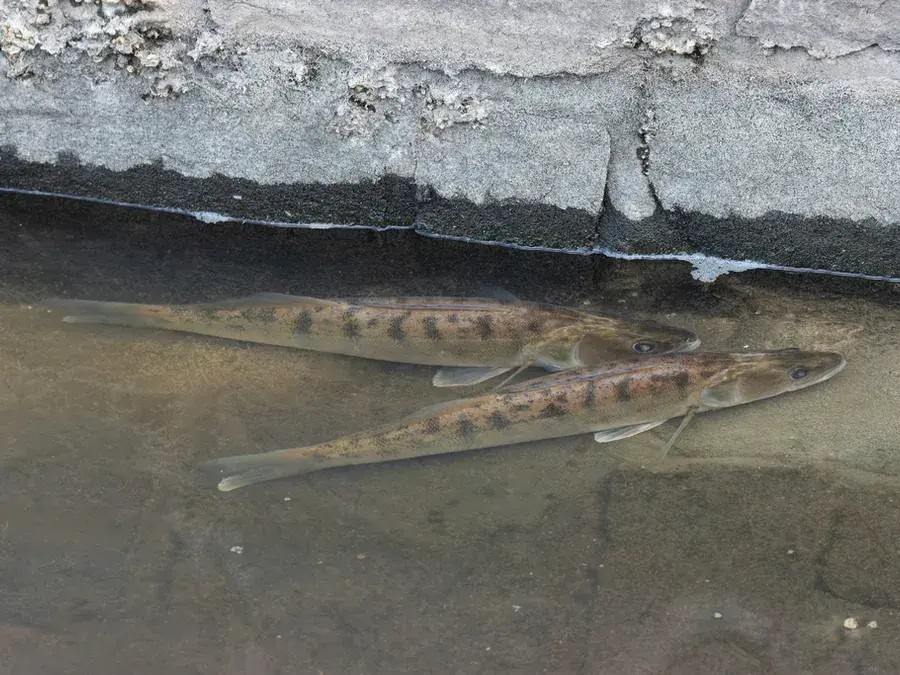 FishJun–Mar
Zander
Sander lucioperca
Slim and glassy-eyed, with grey-brown saddles, rows of black spots on the spiny dorsal fin, and long fang-like canine teeth.
Where and how to catch it →Photo: Tomas Broucek · CC BY 4.0
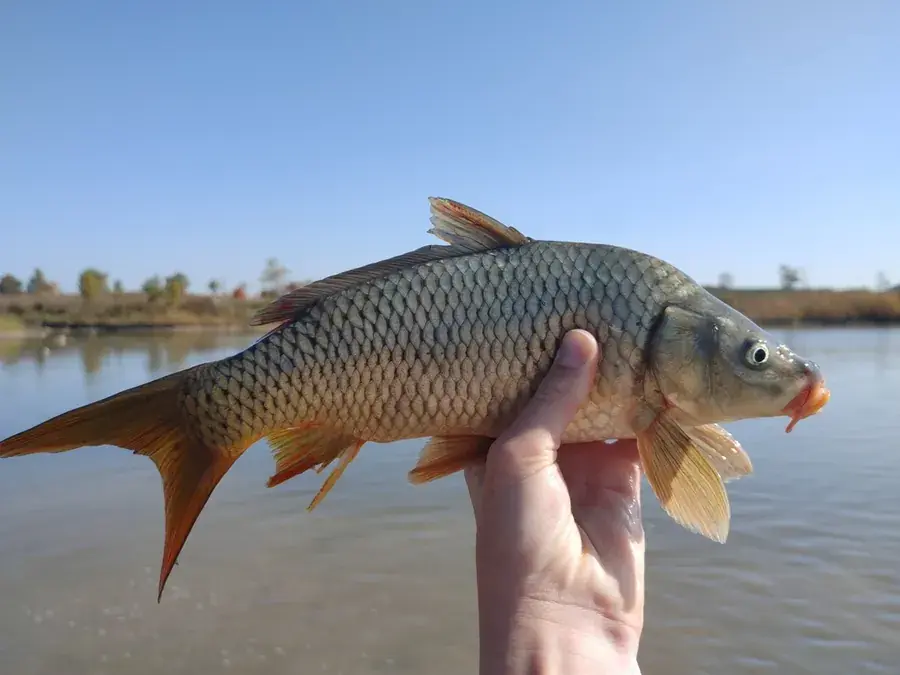 FishApr–Oct
Common carp
Cyprinus carpio
Big bronze scales (or the scattered big scales of a mirror carp), a long dorsal fin, and two pairs of barbels at a rubbery, tube-like mouth.
Where and how to catch it →