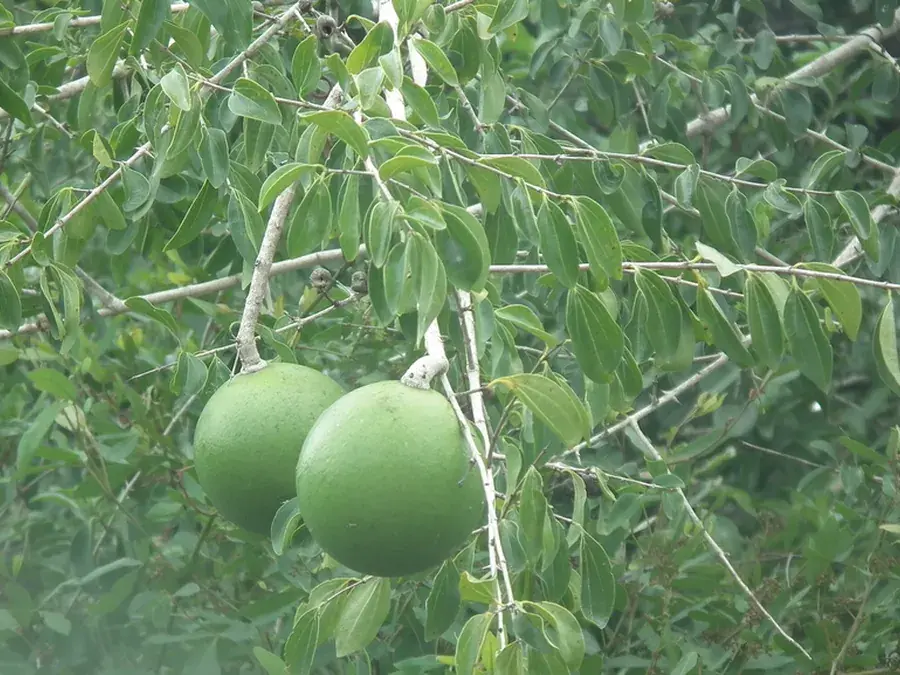
Photo by Shaun Swanepoel on iNaturalist · CC BY 4.0
FruitSeason: November – April
Monkey orange (green monkey orange)
Strychnos spinosa
- When
- Typically November – April — November, December, January, February, March, April. Earlier in warm, low country; later in the hills.
- Where it grows
- Dry woodland, bushveld, sandy riverbanks, sand forest and coastal bush from sea level to about 1,800 m; the fruit comes after good rains.
- How to know it
- A small, often spiny tree with opposite, rounded, glossy leaves showing three to five veins running from the base. The fruit is large, round and hard, with a woody shell that turns from green (often speckled) to yellow as it ripens; inside, many hard brown seeds packed in sweet-sour, brown, edible pulp.
- Look-alikes
- Several monkey oranges share the woodland. The spine-leaved monkey orange (S. pungens) and corky-bark monkey orange (S. cocculoides) are eaten too. Strychnos is the genus of strychnine, though, so eat only the ripe pulp of a tree someone has shown you.
- Harvest and use
- Crack a ripe, yellow fruit and eat the pulp off the seeds, or mash it with water for juice. Green fruit can be picked and left to ripen: the Basarwa (San) of Botswana bury it in sand for months, and it comes out juicy and golden. Spit the seeds out — don't chew them.
- Caution
- The seeds and unripe fruit are poisonous; unripe flesh causes vomiting. Eat only the pulp of fully yellow fruit.
Monkey orange (green monkey orange) at a glance
- Also called
- Natal orange, spiny monkey orange, elephant orange; mokotra (Madagascar), mtonga (Swahili), mzimbili (Nyanja)
- Family
- Loganiaceae (the strychnine family)
- Where it grows
- Tropical and subtropical Africa from Senegal to Ethiopia and south to the Eastern Cape: bushveld, riverine fringes, sand forest and coastal bush in KwaZulu-Natal, Mozambique, Eswatini, Zimbabwe, Zambia, northern Botswana, northern Namibia and Angola, East Africa from coastal Kenya inland, and parts of Madagascar.
- When to pick
- The fruit takes a long time to ripen and hangs on the tree for months; big crops follow good rains. In southern Africa the tree flowers from September to February, and in Zimbabwe and Botswana monkey oranges are mostly harvested and sold from about September to December. Seasons vary widely: in Kenya, fruit comes in August around Kitui and in January–February on the coast. Ripe fruit is yellow.
- Parts used
- The sweet-sour pulp around the seeds, fresh, juiced or dried. The hard shells are used as sound boxes for musical instruments. Never the seeds or unripe fruit.
- Is any of it poisonous?
- The seeds and unripe fruit are toxic. SANBI warns that the seeds may be poisonous or purgative, and ICRAF that the seeds are toxic and unripe fruit poisonous; the unripe flesh is said to cause vomiting. The slippery seeds are easy to swallow whole by accident and usually pass through, but never chew or crush them.
Questions people ask about monkey orange
Are monkey orange seeds poisonous?
Treat them as poisonous. SANBI and ICRAF both warn that the seeds are toxic, and unripe fruit too; eat only the pulp of ripe fruit and spit the seeds out.
How do you know a monkey orange is ripe?
The hard shell turns from green, often speckled with white, to yellow or orange, and the pulp inside is soft, brown and sweet-sour. Green fruit can be picked and kept, or buried, to ripen.
Why do people bury monkey oranges?
To ripen and store them. The Basarwa (San) of Botswana pick green fruit and bury it in sand for several months; the hard shell keeps out rot and fruit flies, and as long as it isn't cracked the fruit comes out juicy and golden.
What does monkey orange taste like?
Sweet and sour: descriptions range from a mix of citrus and pineapple to a lightly fermented, tart apple.
Found in these regions
Is it ready near you?
Get this week's foraging guide for your area
Enter a town, postal code or ZIP and we'll tell you what's in season right there this week — from your local climate, this week's weather and your ecological region.
Also ready in October
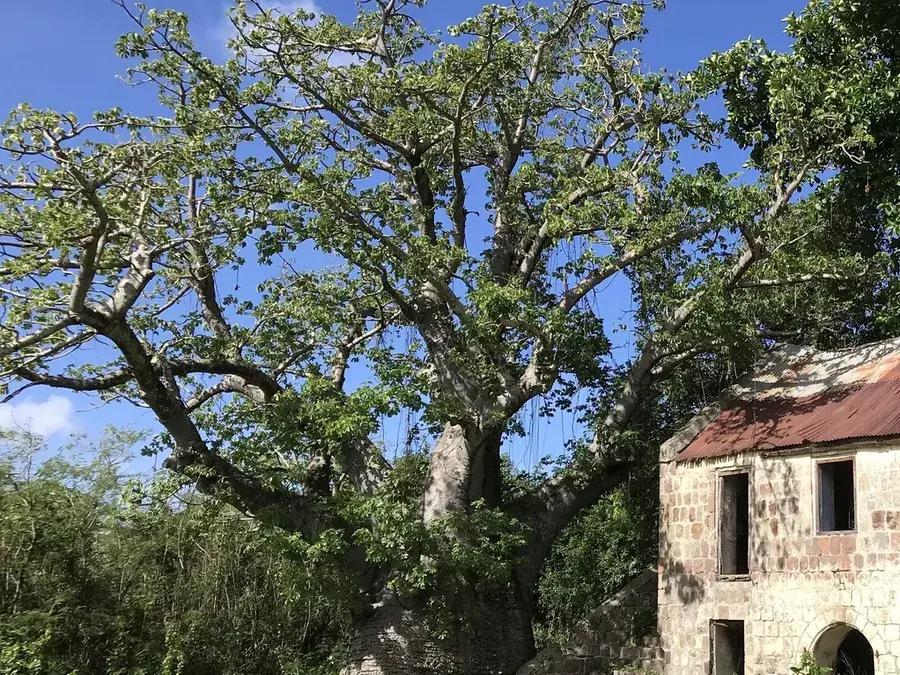 FruitOctober – February
Baobab (fruit and leaves)
Adansonia digitata
A vast, swollen grey trunk with smooth, folded bark and stubby branches that look like roots, bare of leaves for most of the dry season. The leaves are hand-shaped, with five to seven finger-like leaflets. The fruit is a velvety, egg- to sausage-shaped pod up to 25 cm (10 in) long on a long hanging stalk: a hard woody shell around chalky, off-white pulp and black kidney-shaped seeds.
How to know it & its look-alikes →Photo: Cliff Tyllick · CC BY 4.0
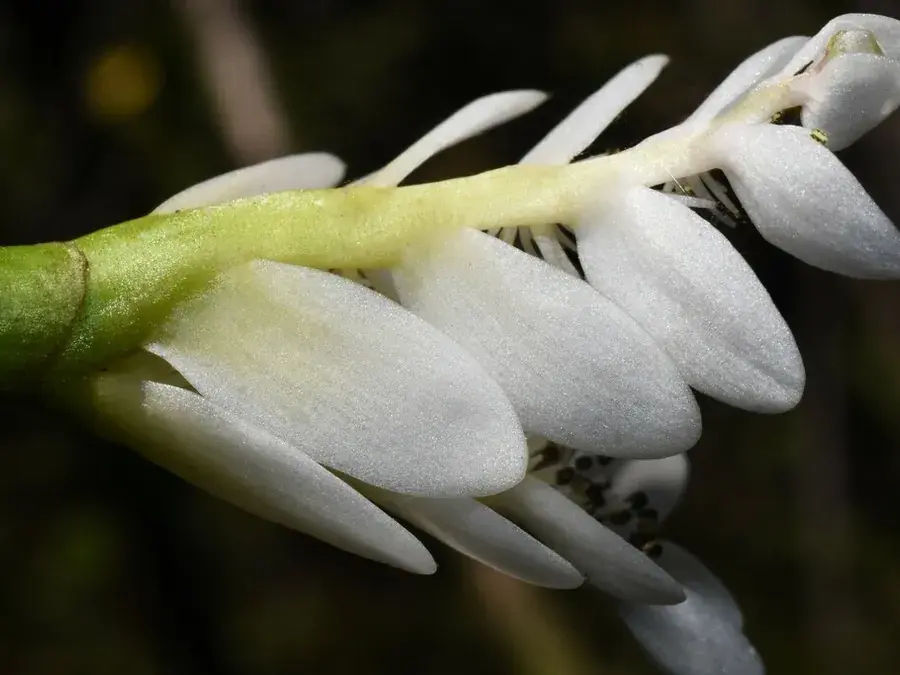 GreenJune – October
Waterblommetjie (Cape pondweed)
Aponogeton distachyos
Long-stalked, narrow-oval leaves floating flat on the water, and above them forked white flower spikes shaped like a 'Y', each branch lined with white petal-like bracts and dark purple-brown stamens, sweetly scented. The plant dies back as the pools dry in summer and regrows with the autumn rain.
How to know it & its look-alikes →Photo: Gabriel Campbell-Martinez · CC BY 4.0
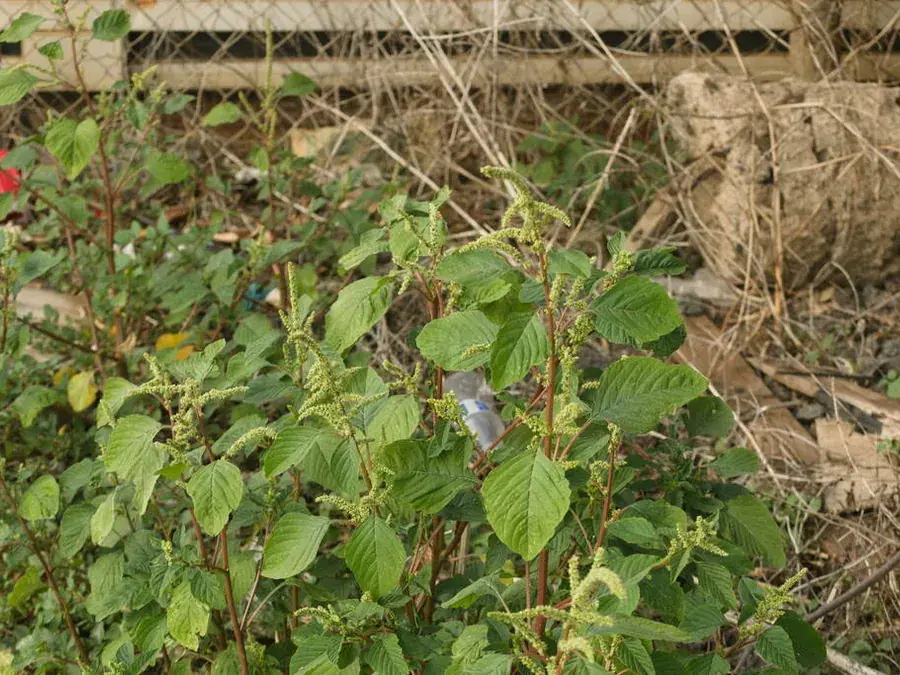 Has a dangerous look-alikeGreenMay – October
Amaranth greens (morogo, mchicha)
Amaranthus spp.
Upright or sprawling herbs, often with reddish stems, carrying alternate, oval to diamond-shaped, smooth-edged leaves on long stalks, and dense, bristly spikes of tiny green or reddish flowers at the top and in the leaf joints. No milky sap, no berries, no trumpet flowers. Spiny amaranth has a pair of sharp spines at each leaf base.
How to know it & its look-alikes →Photo: Kevin Faccenda · CC BY 4.0
Checked against these sources ·
- SANBI PlantZAfrica — Strychnos spinosa
- National Research Council — Lost Crops of Africa, Vol. III: Fruits — Monkey Oranges
- World Agroforestry (ICRAF) — Useful trees of Zambia: Strychnos spinosa
- UK Department for International Development — Monkey orange factsheet
Seasons are typical for the middle of the range and move by weeks north and south, and up and down hills.
Educational information only. Never eat a wild plant or mushroom identified from a single photograph or description — confirm with a regional field guide or an experienced forager, and know the poisonous species in your area first.