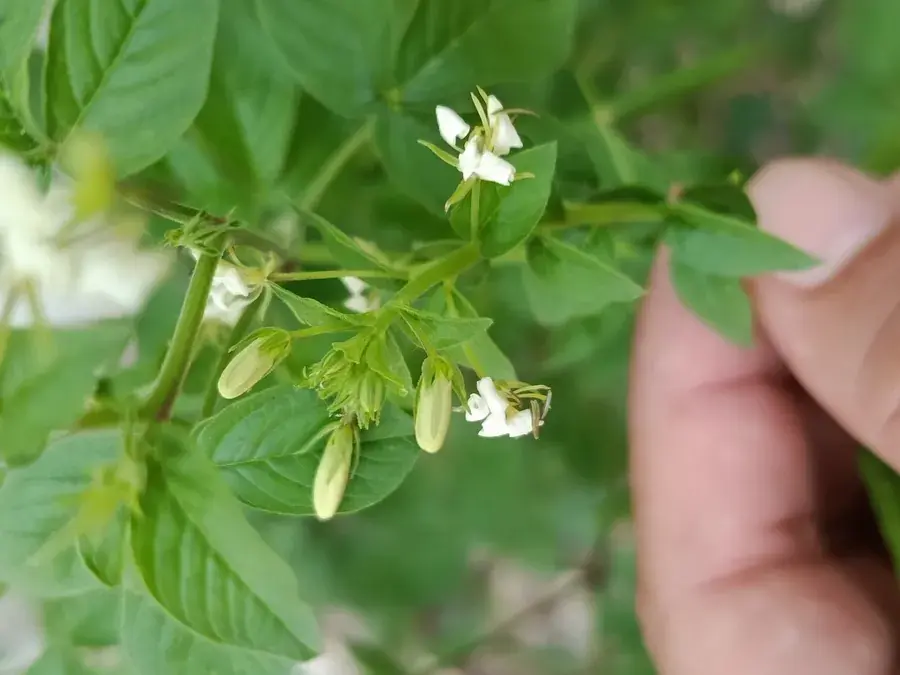
Photo by Arturo Benavides Mendoza on iNaturalist · CC BY 4.0
GreenSeason: April – September
Spider plant (cat's whiskers)
Cleome gynandra
- When
- Typically April – September — April, May, June, July, August, September. Earlier in warm, low country; later in the hills.
- Where it grows
- Near homes and fields on fertile, well-drained ground from sea level to 2,400 m; a weed of well-manured crops, often spared or sown on purpose.
- How to know it
- An upright, branching annual up to about 1.5 m with a sticky, glandular stem and a strong smell. Leaves are hand-shaped, of three to seven (usually five) finely toothed leaflets. The flowers are white or purple-tinged with four clawed petals, and the purple stamens and the ovary are held out on a long stalk well beyond the petals — the cat's whiskers. Pods are long, thin and beaked.
- Look-alikes
- Other spider-flowers (Cleome species) grow in the same places, and a few are eaten locally too; only this one carries its stamens and ovary on a long stalk far beyond the petals. If you can't see the 'whiskers', wait for it to flower.
- Harvest and use
- Pick tender leaves and shoot tips and cook them. They can be bitter, so many cooks boil them and pour off the water, or cook them with milk, peanut paste or milder greens such as amaranth and cowpea leaves. Leaves are also blanched and sun-dried, as balls or powder, for the dry season — omuvanda cakes in Namibia.
- Caution
- The sticky hairs can irritate skin. The seeds are acrid with mustard-oil compounds and have been thrown into water to kill fish; eat the cooked leaves, not the seeds.
Spider plant (cat's whiskers) at a glance
- Also called
- Spiderplant, cat's whiskers, spider flower, bastard mustard; caya blanc, brède caya (French), mgagani (Swahili); also Gynandropsis gynandra
- Family
- Cleomaceae (the spider-flowers, close to the cabbage family)
- Where it grows
- Probably in every country of tropical Africa, mostly near homes and fields, from sea level to 2,400 m, and in southern Africa south to Namibia and Botswana; less common in very humid climates. It is most valued as a vegetable in East and southern Africa, where it is sold in rural and city markets through the rains.
- When to pick
- Traditionally picked at the start of the rainy season, when other vegetables are scarce. Leaves are best in the first weeks: they get more bitter as the plant ages, and yields fall by about nine-tenths by the tenth week.
- Parts used
- Tender leaves, young shoots and sometimes flowers, cooked. The seeds give an edible oil when pressed, but are not eaten raw.
- Is any of it poisonous?
- The seeds contain glucosinolates and a sharp, mustard-like oil; thrown into water they kill fish. The glucosinolates also irritate skin.
Questions people ask about spider plant
How do you cook spider plant?
Boil the leaves — many cooks pour off the first water to cut the bitterness — then cook them with milk, peanut paste or other greens such as amaranth and cowpea leaves. In Botswana and Namibia fresh leaves are boiled for about two hours with salt, pressed into small balls and sun-dried to keep until the next rains.
Why is spider plant given to new mothers?
By tradition: in several communities boiled spiderplant leaves are given to women before and after childbirth, and to anyone who has lost blood, and a leaf infusion is used for anaemia. The leaves are rich in calcium and iron.
When is spider plant in season?
In the rains. It is picked from the beginning of the rainy season and sold in markets while the rains last; dried leaves carry over into the dry season.
How do I recognise spider plant?
By the hand-shaped leaves of usually five leaflets on a sticky, smelly stem, and by its flowers: four white or pinkish petals, with the purple stamens and the ovary held far out on a long stalk — the cat's whiskers.
Found in these regions
Is it ready near you?
Get this week's foraging guide for your area
Enter a town, postal code or ZIP and we'll tell you what's in season right there this week — from your local climate, this week's weather and your ecological region.
Also ready in October
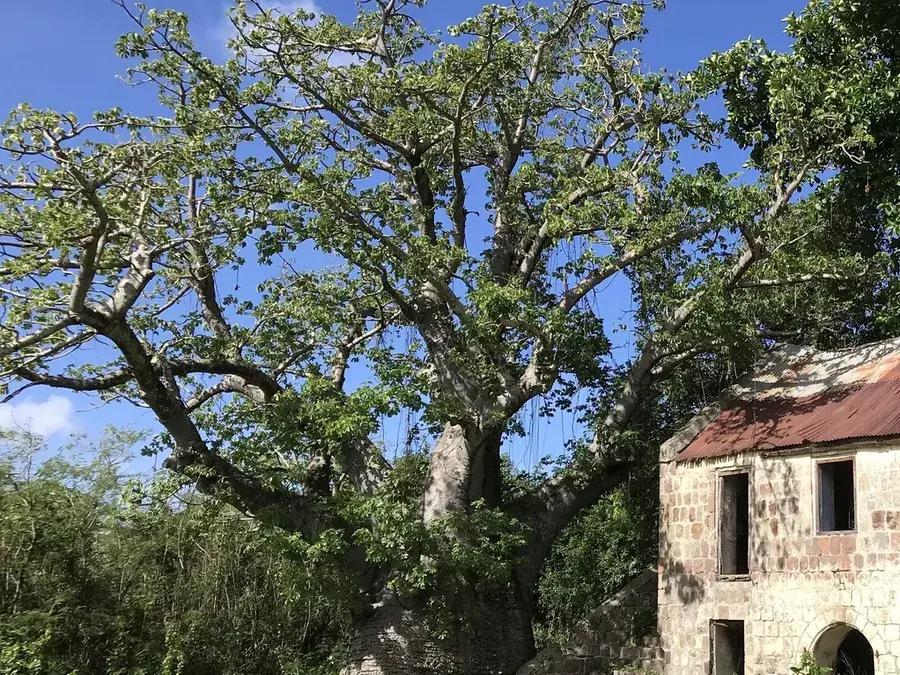 FruitOctober – February
Baobab (fruit and leaves)
Adansonia digitata
A vast, swollen grey trunk with smooth, folded bark and stubby branches that look like roots, bare of leaves for most of the dry season. The leaves are hand-shaped, with five to seven finger-like leaflets. The fruit is a velvety, egg- to sausage-shaped pod up to 25 cm (10 in) long on a long hanging stalk: a hard woody shell around chalky, off-white pulp and black kidney-shaped seeds.
How to know it & its look-alikes →Photo: Cliff Tyllick · CC BY 4.0
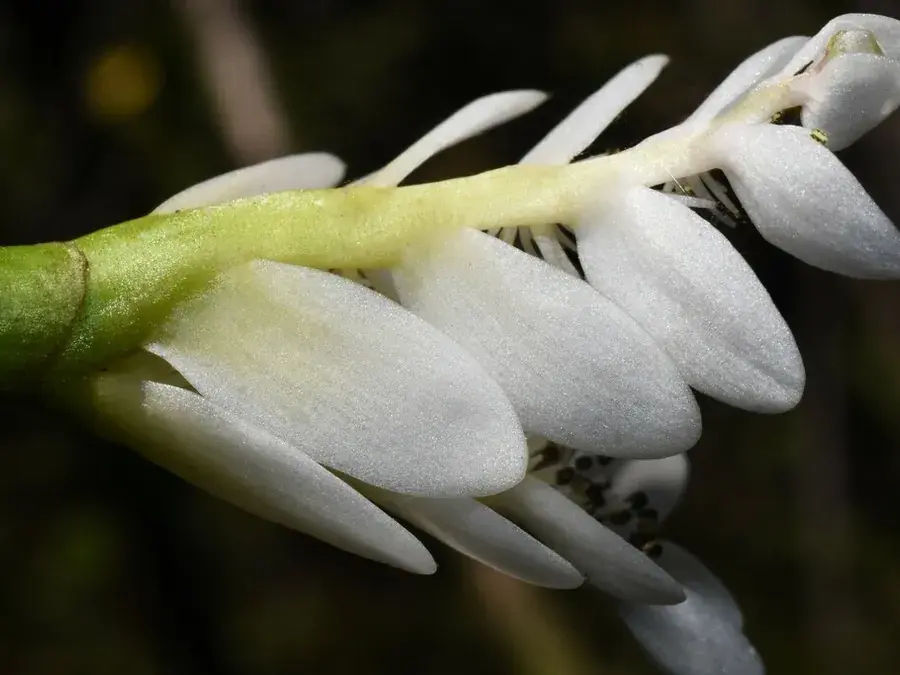 GreenJune – October
Waterblommetjie (Cape pondweed)
Aponogeton distachyos
Long-stalked, narrow-oval leaves floating flat on the water, and above them forked white flower spikes shaped like a 'Y', each branch lined with white petal-like bracts and dark purple-brown stamens, sweetly scented. The plant dies back as the pools dry in summer and regrows with the autumn rain.
How to know it & its look-alikes →Photo: Gabriel Campbell-Martinez · CC BY 4.0
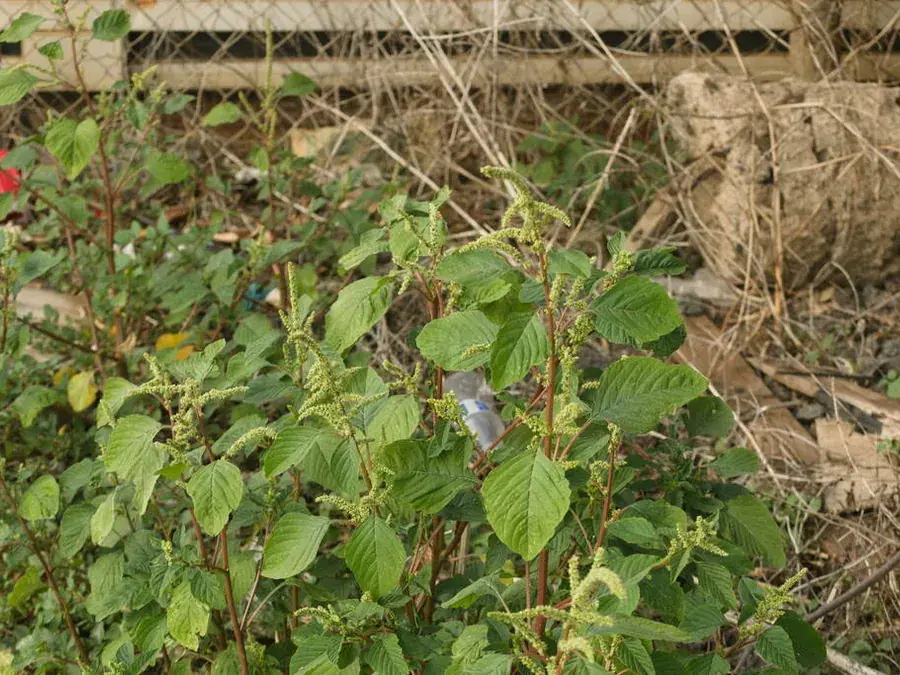 Has a dangerous look-alikeGreenMay – October
Amaranth greens (morogo, mchicha)
Amaranthus spp.
Upright or sprawling herbs, often with reddish stems, carrying alternate, oval to diamond-shaped, smooth-edged leaves on long stalks, and dense, bristly spikes of tiny green or reddish flowers at the top and in the leaf joints. No milky sap, no berries, no trumpet flowers. Spiny amaranth has a pair of sharp spines at each leaf base.
How to know it & its look-alikes →Photo: Kevin Faccenda · CC BY 4.0
Checked against these sources ·
Seasons are typical for the middle of the range and move by weeks north and south, and up and down hills.
Educational information only. Never eat a wild plant or mushroom identified from a single photograph or description — confirm with a regional field guide or an experienced forager, and know the poisonous species in your area first.