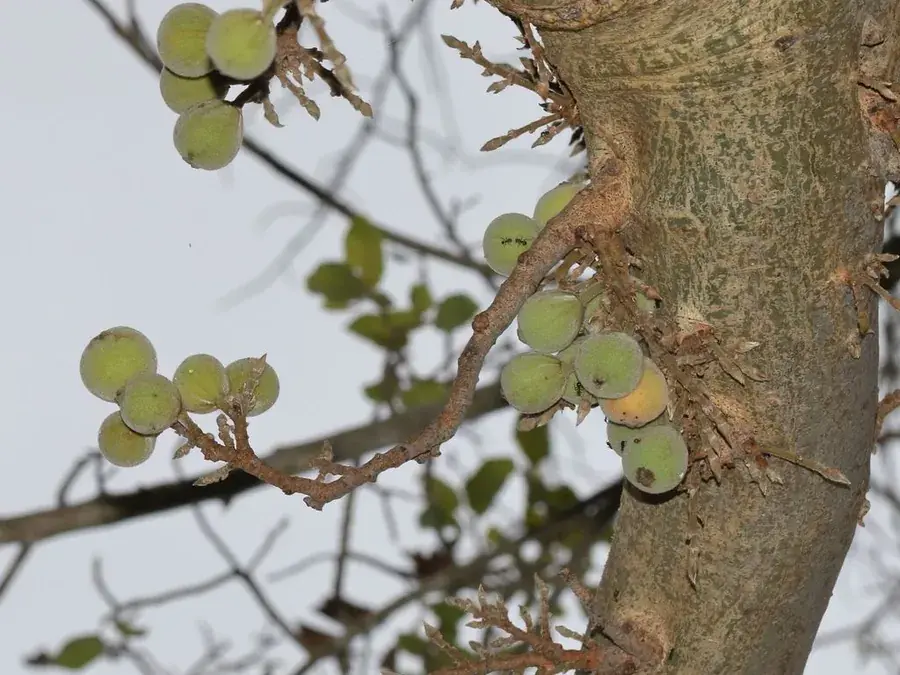
Photo by Alan Manson on iNaturalist · CC BY 4.0
FruitIn season now (October)
Sycamore fig
Ficus sycomorus
- When
- All year, though what is worth picking changes with the rains and the seasons.
- Where it grows
- Rich soils along rivers, streams, swamps and waterholes in the savanna, and riverine woodland; often the giant shade tree on the bank.
- How to know it
- A big, spreading tree with yellowish to orange bark that peels in papery strips, and rough, heart-shaped leaves with prominent yellow veins beneath. The figs, 2–3 cm (about 1 in) across, grow in thick clusters on short leafless branchlets from the trunk and main branches and ripen from greenish-buff to yellow or reddish. Broken twigs bleed milky latex.
- Look-alikes
- Africa has dozens of wild figs, all with milky sap and figs of some kind. Learn this one by its peeling yellow-orange bark and big clusters of figs on the trunk, and eat only from a tree you have identified.
- Harvest and use
- Eat ripe, soft figs fresh, stewed or dried. Break each open first: wild figs are pollinated from the inside by tiny wasps, and often hold them. They are less sweet than a garden fig.
- Caution
- The milky latex irritates skin and eyes.
Sycamore fig at a glance
- Also called
- Sycomore, fig-mulberry; the tree of life of ancient Egypt
- Family
- Moraceae (figs and mulberries)
- Where it grows
- Native across Africa south of the Sahel and north of the Tropic of Capricorn, except the rainforests of the centre-west: the savannas from Senegal to Sudan, Ethiopia, Eritrea and Somalia, East Africa, Zambia, Zimbabwe, Mozambique, northern Namibia and South Africa's far north, with outposts in Madagascar. Grown in Egypt since before the pharaohs.
- When to pick
- All year. Flowering and fruiting go on year-round, and in southern Africa peak from July to December; neighbouring trees fruit at different times, which keeps their pollinating wasps alive.
- Parts used
- Ripe figs, fresh, stewed or dried, or fermented into a drink. Leaves are livestock fodder; bark and latex are traditional medicines.
- Is any of it poisonous?
- The milky latex irritates skin and eyes. Otherwise nothing poisonous.
Questions people ask about sycamore fig
Can you eat sycamore figs?
Yes. The figs are eaten fresh, stewed or dried, and fermented into a drink, though they are considered inferior to the common fig.
Why are there insects inside wild figs?
A fig is a closed bunch of flowers pollinated from the inside by tiny fig wasps — for the sycamore fig, Ceratosolen arabicus — which breed in some of the flowers. Wild figs often hold wasps and other small creatures, so split each one before you eat it.
Why did ancient Egyptians cut sycamore figs?
Gashing young figs makes them ripen without pollination. The fig wasp is extinct in Egypt, and figs found in ancient tombs carry the cut marks, showing the technique is thousands of years old.
When do sycamore figs fruit?
Throughout the year, with a peak from July to December in southern Africa. Different trees fruit at different times, so there is usually one in fruit somewhere along a river.
Found in these regions
Is it ready near you?
Get this week's foraging guide for your area
Enter a town, postal code or ZIP and we'll tell you what's in season right there this week — from your local climate, this week's weather and your ecological region.
Also ready in October
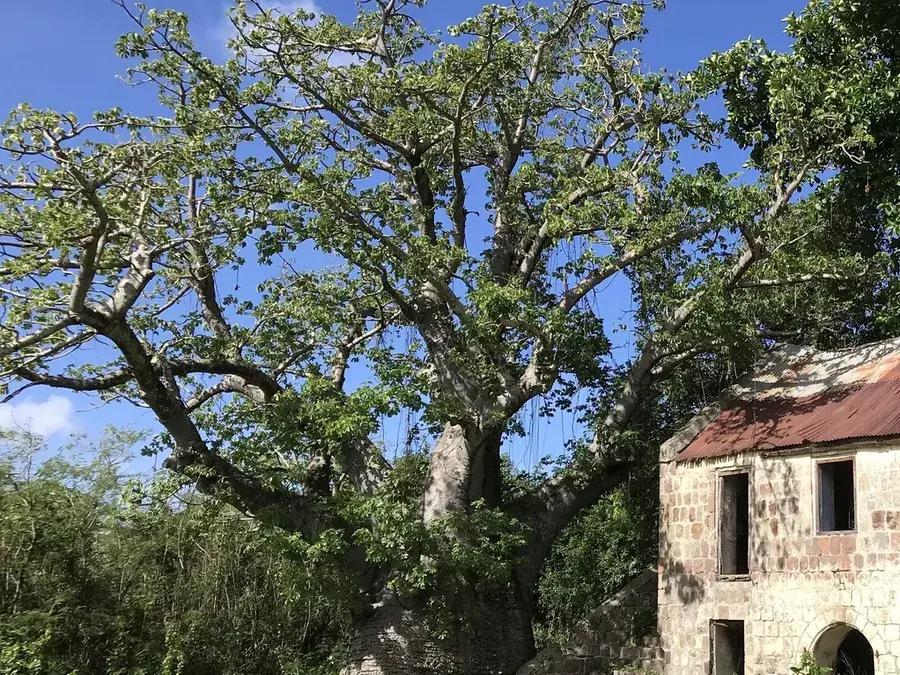 FruitOctober – February
Baobab (fruit and leaves)
Adansonia digitata
A vast, swollen grey trunk with smooth, folded bark and stubby branches that look like roots, bare of leaves for most of the dry season. The leaves are hand-shaped, with five to seven finger-like leaflets. The fruit is a velvety, egg- to sausage-shaped pod up to 25 cm (10 in) long on a long hanging stalk: a hard woody shell around chalky, off-white pulp and black kidney-shaped seeds.
How to know it & its look-alikes →Photo: Cliff Tyllick · CC BY 4.0
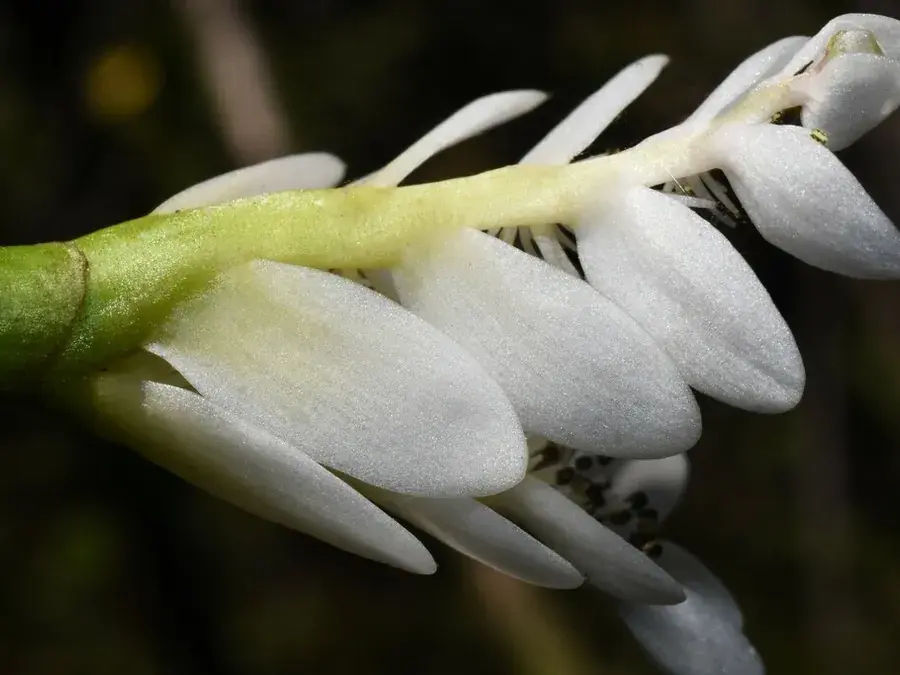 GreenJune – October
Waterblommetjie (Cape pondweed)
Aponogeton distachyos
Long-stalked, narrow-oval leaves floating flat on the water, and above them forked white flower spikes shaped like a 'Y', each branch lined with white petal-like bracts and dark purple-brown stamens, sweetly scented. The plant dies back as the pools dry in summer and regrows with the autumn rain.
How to know it & its look-alikes →Photo: Gabriel Campbell-Martinez · CC BY 4.0
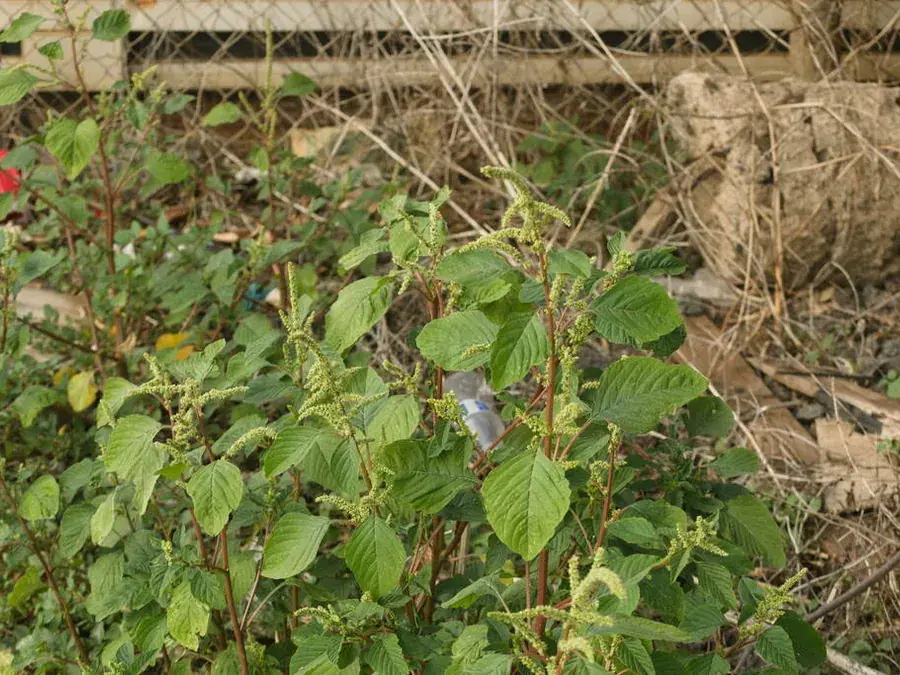 Has a dangerous look-alikeGreenMay – October
Amaranth greens (morogo, mchicha)
Amaranthus spp.
Upright or sprawling herbs, often with reddish stems, carrying alternate, oval to diamond-shaped, smooth-edged leaves on long stalks, and dense, bristly spikes of tiny green or reddish flowers at the top and in the leaf joints. No milky sap, no berries, no trumpet flowers. Spiny amaranth has a pair of sharp spines at each leaf base.
How to know it & its look-alikes →Photo: Kevin Faccenda · CC BY 4.0
Checked against these sources ·
Seasons are typical for the middle of the range and move by weeks north and south, and up and down hills.
Educational information only. Never eat a wild plant or mushroom identified from a single photograph or description — confirm with a regional field guide or an experienced forager, and know the poisonous species in your area first.