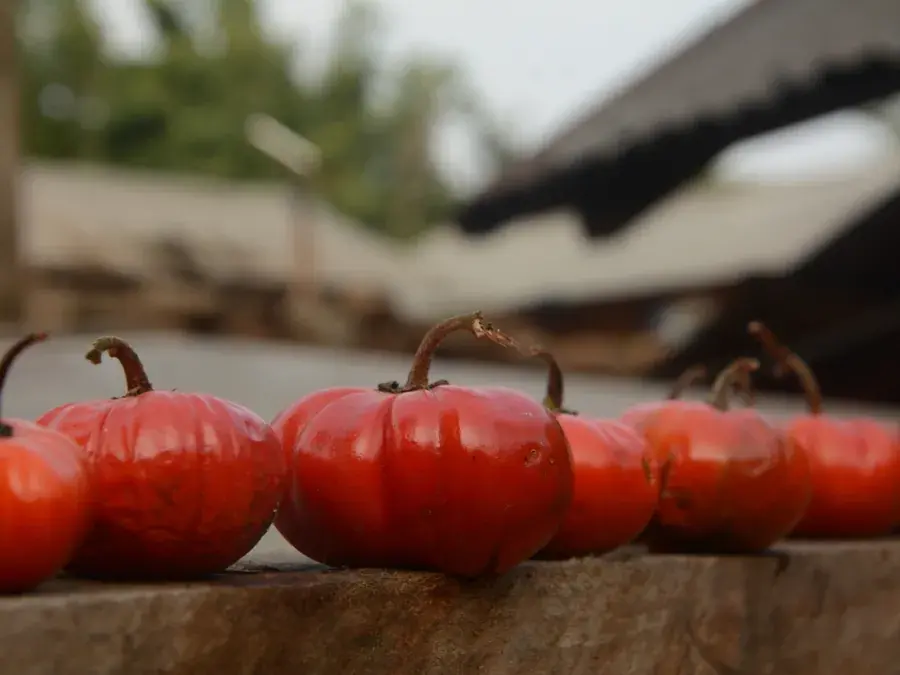
Photo Siddarth Machado via Openverse · CC BY 4.0
African eggplant (garden egg)
Solanum aethiopicum
The garden egg of Ghana and Nigeria — small, firm, often bitter fruit picked pale and unripe, with leaves for the pot as well.
- Signs of ripeness
- Pick fruit at full size but still immature — white, pale green or cream for most garden eggs — while the seeds are soft; some sweet cultivars are picked as they begin to turn orange. Left on the plant, the fruit turns creamy or yellow to red, fills with seed and becomes less palatable. Flowering begins 70–100 days after sowing, earlier in the hot-savanna types. Leafy types are picked before they flower.
- Harvesting
- Cut the fruit with a short stalk once a week, and keep picking even when you cannot use it all: fruit left on the plant holds back new fruit. For greens, pick young shoots with several leaves; leafy types can be cut back and allowed to regrow up to six times if they are watered and fed with nitrogen, or pulled whole when 40–50 cm tall.
- Frost tolerance
- African eggplant does not survive cold: the garden-egg types thrive at 25–35 °C by day and 20–27 °C at night, and none of its forms survive cold or very wet conditions. Pick every usable fruit before a frost. In the tropics, plants that go dormant in the dry season can revive with the rains, but they are rarely productive.
Storage
Storing african eggplant (garden egg)
| Where | Temperature | Humidity | Keeps | How |
|---|---|---|---|---|
| Cool, well-ventilated place | 15–25 °C59–77 °F | moderate | Several days to weeks | Sound, undamaged fruit keeps for days or even weeks with good ventilation; the large garden-egg types stay firm longest. |
| Warmest part of the fridge | 8–12 °C46–54 °F | high | About a week | Like other eggplants, the fruit is chill-sensitive below about 8 °C. |
Preserving
Preserving african eggplant (garden egg)
Garden eggs are mostly eaten fresh — cooked in stews and sauces, often with palm oil, or sometimes raw — and are not usually kept long. Like eggplant, they freeze: peel, slice 8 mm (⅓ in) thick, blanch 4 minutes in 4 litres (1 gallon) of boiling water with 125 ml (½ cup) of lemon juice to stop darkening, cool, drain and freeze. The leaves are sun-dried and ground to a powder for soup in the dry season. The leaves contain oxalate and alkaloids such as solasodine, which cooking reduces, so cook them rather than eating them raw. There is no tested home-canning process for any eggplant.
Seed saving
Easy to save: comes true from seed
All the flowers are bisexual and can set fruit, and they are bee-pollinated, so nearby varieties cross to some extent; Seed Savers Exchange advises 100–500 m (300–1,600 ft) between eggplant varieties for pure seed. Leave a few of the best fruit on the plant until fully ripe and softening, then wash the seeds out of the pulp and dry them on cloth or paper out of direct sun. Farmers traditionally store the seed inside the air-dried fruit until sowing.
Keeps: Years, stored cool and dry; Seed Savers Exchange gives 4–6 years for eggplant seed.
Seed saving →Next year
Planning african eggplant (garden egg) for next season
Treat it as part of the nightshade family: keep it off beds that grew tomatoes, eggplant, peppers or potatoes in the last two or three years. Full sun, deep, well-drained soil at pH 5.5–6.8 — it will not stand waterlogging — and manure or compost before planting. Sow in a nursery bed or trays and transplant after 30–35 days, at 5–7 leaves and 15–20 cm tall, 50–100 cm apart. In West Africa sow early in the rains; with irrigation it crops all year, and in the dry season it needs about 5 mm of water a day. In East Africa it is grown through the rains, and in Uganda in swamp margins in the dry season. In the Mediterranean or southern Africa treat it as a summer eggplant, planting out once nights stay above 15 °C. Steady moisture improves fruit quality.
African eggplant (garden egg) at a glance
- Botanical name
- Solanum aethiopicum
- Group
- Fruiting vegetables
- Picked
- July, August, September, October, November
- Frost
- Tender: finished by the first frost.
- Best put up as
- freezing, drying
- Seed
- Easy to save: comes true from seed
Questions people ask about african eggplant (garden egg)
What is a garden egg?
A garden egg is the fruit of the African eggplant, Solanum aethiopicum — usually small, round to egg-shaped and white or cream when picked, turning yellow, orange or red as it ripens. It is grown across tropical Africa, above all in Ghana and Nigeria, where offering garden eggs is a traditional Igbo welcome to visitors.
Why are garden eggs bitter?
Bitterness comes from furostanol glycosides, and some cultivars are bred bitter on purpose — they are valued as medicine in many African countries. If you want mild fruit, choose a sweet cultivar and pick the fruit young.
Can you eat African eggplant leaves?
Yes, cooked. Leafy types are grown for their young shoots, which are picked repeatedly through the wet season, and the leaves of fruiting types are eaten too. They contain oxalate and alkaloids that cooking reduces, so do not eat them raw.
When do you pick garden eggs?
When the fruit is full-sized but still immature and pale, with soft seeds — usually weekly once cropping starts. Fruit left to colour on the plant fills with seed, becomes less palatable and slows the plant down.
Can I grow garden eggs in Canada?
Yes, as you would eggplant: sow indoors 7–10 weeks before planting out, and transplant into soil above 15 °C after all danger of frost, ideally through black plastic mulch in the warmest bed. Specialty eggplants in Ontario crop 55–80 days after transplanting.
How do you freeze garden eggs?
Peel and slice them 8 mm thick, blanch 4 minutes in boiling water with ½ cup of lemon juice per gallon to stop browning, cool, drain and freeze. For frying later, pack the slices with freezer wrap between them.
Local frost dates
Harvest timing for a place
Enter a town, postal code or ZIP to build the garden year, the frost forecast and this week’s guide from local weather.
Also in fruiting vegetables
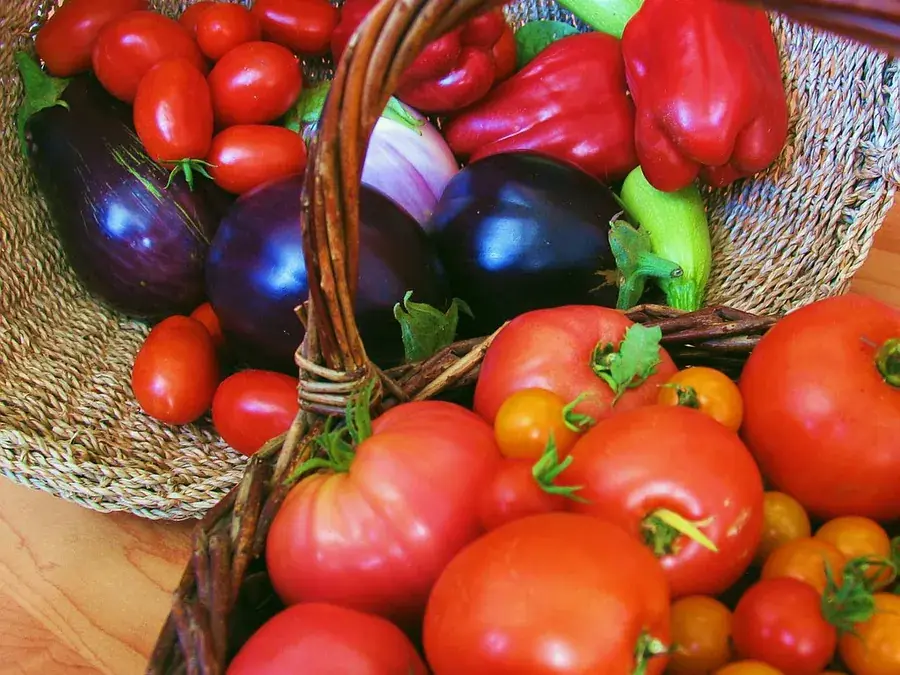 TenderFruiting vegetablesHarvest Jul–Oct
Tomatoes
The crop every garden ends up with too many of at once — and the one most worth putting up.
Water-bath · Freezing · DryingHarvest and storage →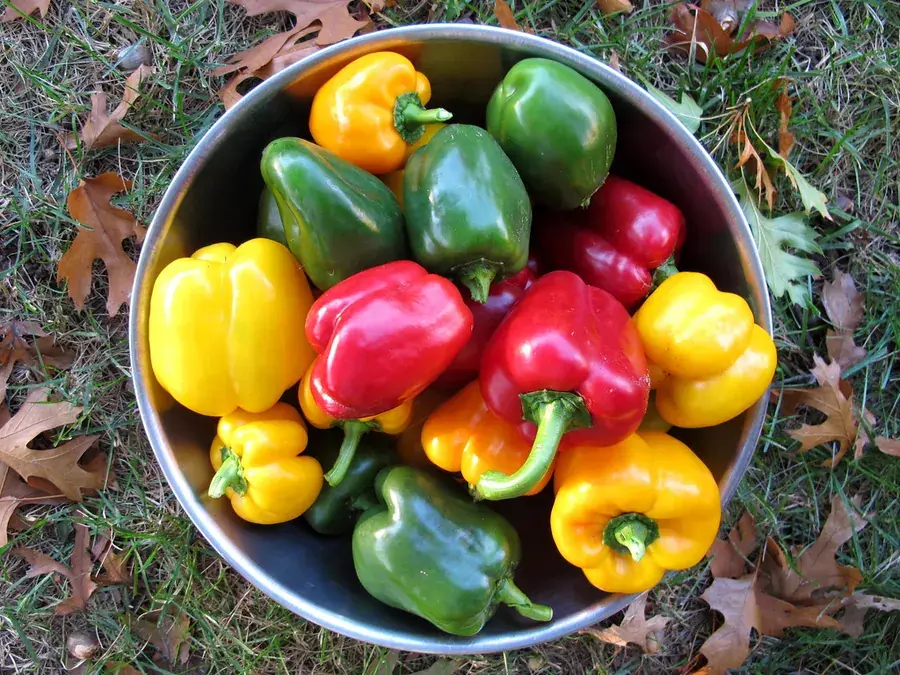 TenderFruiting vegetablesHarvest Jul–Oct
Sweet peppers
Slow to colour, quick to freeze — the pepper harvest is a race between the plant and the first frost.
Freezing · Pickling · PressureHarvest and storage → TenderFruiting vegetablesHarvest Aug–Oct
Hot peppers
A handful of plants gives a year of heat — dried on a string, pickled in rings, or fermented into sauce.
Drying · Pickling · FermentingHarvest and storage →
Checked against these sources ·
- PROTA (Pl@ntUse): Solanum aethiopicum
- NCHFP: Freezing eggplant
- Seed Savers Exchange: Grow and save eggplant seeds
- OMAFRA Specialty Cropportunities: Specialty eggplant
- FAO ECOCROP: Solanum aethiopicum data sheet
Harvest months are typical for zones 4–6 and shift by weeks north and south. Storage figures assume ideal conditions; without a cold store, expect the shorter end of each range.