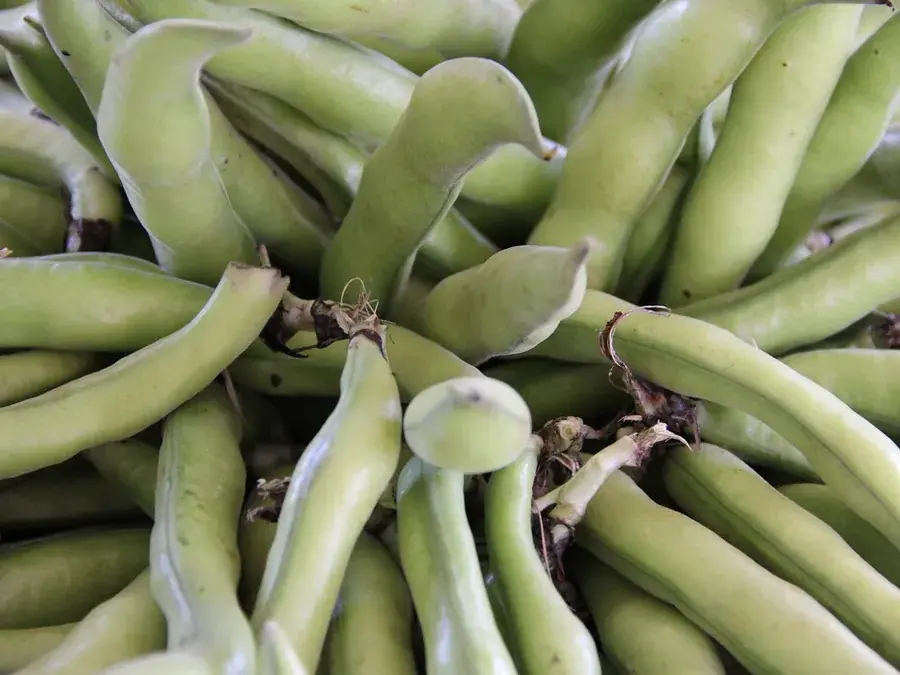
Photo Michela Simoncini on Flickr · CC BY 2.0
Broad beans (fava beans)
Vicia faba
The cool-season bean of the Mediterranean, Ethiopia and the English allotment — sown where winters are mild, picked young and sweet in spring.
- Signs of ripeness
- For shelling, pick when the pods are full but still fairly small, while the scar on each bean, where it joins the pod, is still white or green; once the scar turns black, the beans are tough. Whole young pods can be cooked when about 5 cm long. The lowest pods mature first. For dry beans, leave the pods until pods and seeds have dried on the plant, then harvest before they split in the rain.
- Harvesting
- Cut the pods with scissors or secateurs rather than pulling, which damages the plants, and pick every few days: regular picking keeps new pods coming. When the lowest flowers have set small pods, pinch out the shoot tips — it puts the plant’s effort into the pods and discourages blackfly, which colonise the soft tips — and cook the tips like spinach.
- Frost tolerance
- Broad beans are the hardiest of the beans: hardy varieties such as Aquadulce Claudia are sown in autumn in mild regions and overwinter as young plants, protected by cloches or fleece in cold spells. Even so, frost is the limiting factor on the crop above about 3,000 m in the Ethiopian highlands. In a spring cold snap, fleece over the rows protects the flowers and young pods.
Storage
Storing broad beans (fava beans)
| Where | Temperature | Humidity | Keeps | How |
|---|---|---|---|---|
| Fridge, in the pod | 0–4 °C32–39 °F | high | A few days | Young beans lose their sweetness quickly after picking; shell and cook or freeze them soon. |
| Airtight jar, dry beans | 5–20 °C41–68 °F | dry | 1–4 years at 10–20 °C; 2–7 years at 5–10 °C | Dried to 11–14% moisture and kept cool, dry and free of pests. |
Preserving
Preserving broad beans (fava beans)
Freezing keeps young broad beans best, though there is no officially tested blanching time for them: UC Master Food Preservers boil shelled beans for about 4 minutes, cool them, tray-freeze and bag them, and slip the beans out of their pale skins after thawing — close to the 2–4 minutes by size tested for lima beans. Dry beans are the staple form around the Mediterranean and in Ethiopia — ful medames, shiro, kik wot — and dried to 11–14% moisture they keep for years. They can be pressure-canned like any dried bean: soak 12–18 hours, boil 30 minutes, pack in the cooking liquid and process 75 minutes for 500 ml jars or 90 minutes for litre jars at 10 lb weighted gauge. Never water-bath beans. One safety rule matters more than any recipe: people with G6PD deficiency must not eat broad beans. The vicine and convicine in the beans, especially immature ones, trigger favism — a rapid destruction of red blood cells — and cooking does not remove them; even the pollen can affect very sensitive people.
The fastest route and the one that keeps flavour best.
A dehydrator or a low oven; light, keeps for a year.
Jars heated above boiling under pressure — the only safe way to can plain vegetables.
Seed saving
Cross-pollinates readily: needs isolation
Broad beans sit between self- and cross-pollinating: bees usually cross 20–50% of the flowers, and occasionally far more. To keep a variety true, grow only one kind for seed or keep varieties well apart. Leave the best plants unpicked until the pods blacken and the seeds rattle, harvest before wet weather splits them, and finish drying the seed indoors.
Keeps: 2–7 years at 5–10 °C, or 1–4 years at 10–20 °C, if dried to 11–14% moisture.
Seed saving →Next year
Planning broad beans (fava beans) for next season
Broad beans fix their own nitrogen and leave the bed richer, so follow them with brassicas or leafy crops. Give them sun, shelter and well-drained, near-neutral soil with compost dug in; they tolerate neither waterlogging nor drought. Sow seed 5–7.5 cm deep and 15–23 cm apart, in single rows 45 cm apart or double rows 23 cm apart, and stake the taller kinds. A mean daily temperature of about 13 °C suits them best, so they are a cool-season crop everywhere: in the Mediterranean sow in autumn — October–November around Lisbon, April–May in Cape Town — for a spring harvest; in Egypt and Sudan from mid-October to November; in the Ethiopian highlands with the main rains in June and July; in Britain in autumn (hardy varieties, mild areas) or from February to April; in Canada as early in spring as the soil can be worked. In the lowland tropics they may flower but rarely set pods. Water well as flowering starts and again two weeks later.
Broad beans (fava beans) at a glance
- Botanical name
- Vicia faba
- Group
- Peas and beans
- Picked
- April, May, June, July
- Frost
- Hardy: takes −4 to −6 °c and often sweetens.
- Best put up as
- freezing, drying, pressure canning
- Seed
- Cross-pollinates readily: needs isolation
Questions people ask about broad beans (fava beans)
When should I sow broad beans?
In the cool season. Around the Mediterranean, including Lisbon and Cape Town, sow in autumn for a spring harvest; in Britain sow hardy varieties in autumn in mild areas, or from February to April; in Canada sow as soon as the soil can be worked in spring. In the Ethiopian highlands they go in with the June–July rains.
Who should not eat broad beans?
Anyone with G6PD deficiency, an inherited enzyme deficiency that affects some 500 million people worldwide. The vicine and convicine in broad beans trigger favism — rapid destruction of red blood cells, with jaundice and dark urine — and cooking does not remove them. If favism runs in your family, get tested before eating them, and keep sensitive children away from the flowering crop.
Do you need to double-peel broad beans?
Not when they are young and small, when the skins are tender. Larger beans have tough, pale skins: blanch them briefly, cool, and pinch each bean out of its skin — or freeze them in the skin and slip it off after thawing.
How do you freeze broad beans?
Shell them, boil about 4 minutes, cool quickly, freeze on a tray and bag them once hard. There is no officially tested blanching time for broad beans; this follows UC Master Food Preservers and is close to the tested times for lima beans.
Can broad beans grow in the tropics?
Only at altitude. They are a cool-season crop that grows best at a mean temperature of about 13 °C; in Ethiopia they are grown at 1,300–3,800 m, mostly 2,000–2,500 m. In the hot lowland tropics they may flower but usually set no pods.
Why are there black aphids on my broad beans?
Blackfly colonise the soft shoot tips in late spring. Pinch out the tips once the lowest flowers have set pods — it removes the aphids’ favourite food and sends the plant’s effort into the pods — and cook the tips like spinach.
Local frost dates
Harvest timing for a place
Enter a town, postal code or ZIP to build the garden year, the frost forecast and this week’s guide from local weather.
Also in peas and beans
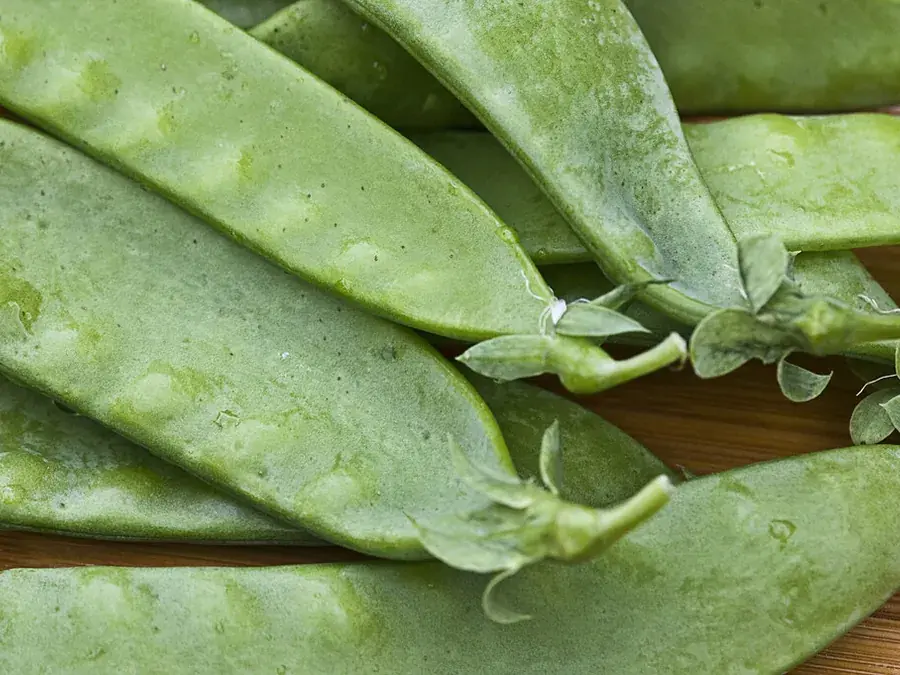 Half-hardyPeas and beansHarvest Jun–Oct
Peas
The first sowing of the year and the first thing in the freezer — pick them every day or they turn to starch.
Freezing · Drying · PressureHarvest and storage →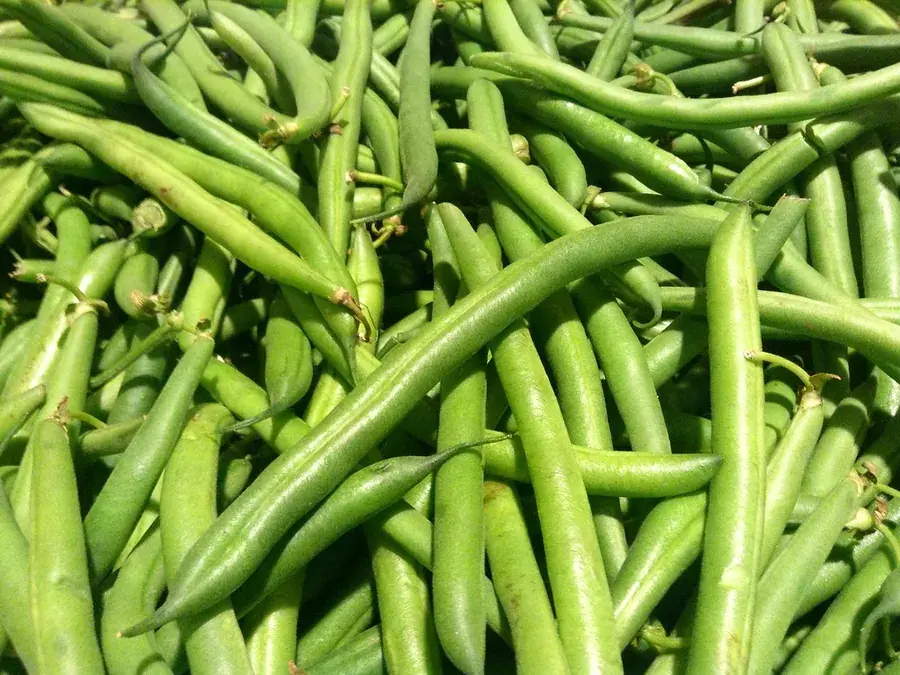 TenderPeas and beansHarvest Jul–Sep
Green beans
Pick them young and pick them often — and never, ever water-bath a jar of plain beans.
Freezing · Pressure · PicklingHarvest and storage →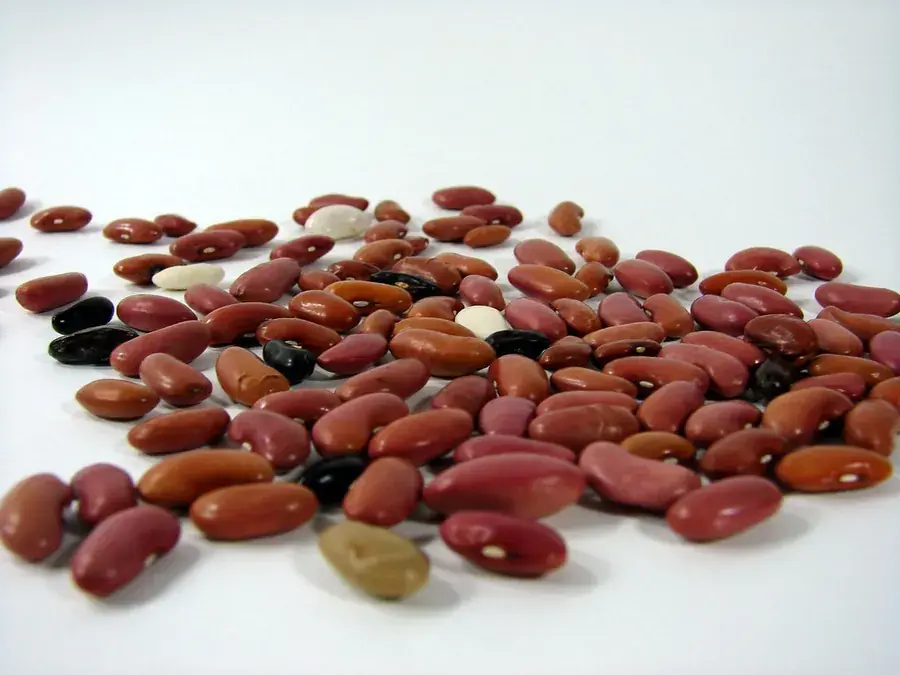 TenderPeas and beansHarvest Sep–Oct
Dry beans
The crop that stores itself: leave the pods to rattle, shell them on the step, and eat them in February.
Drying · Pressure · FreezingHarvest and storage →
Checked against these sources ·
- RHS: How to grow broad beans
- PROTA (Pl@ntUse): Vicia faba
- UC Master Food Preservers of San Luis Obispo and Santa Barbara Counties: How to harvest and freeze fava beans
- Singapore Food Agency: The arch enemy of G6PD-deficient individuals — fava beans
- NCHFP: Freezing lima, butter or pinto beans
- NCHFP: Canning beans or peas, shelled, dried
Harvest months are typical for zones 4–6 and shift by weeks north and south. Storage figures assume ideal conditions; without a cold store, expect the shorter end of each range.