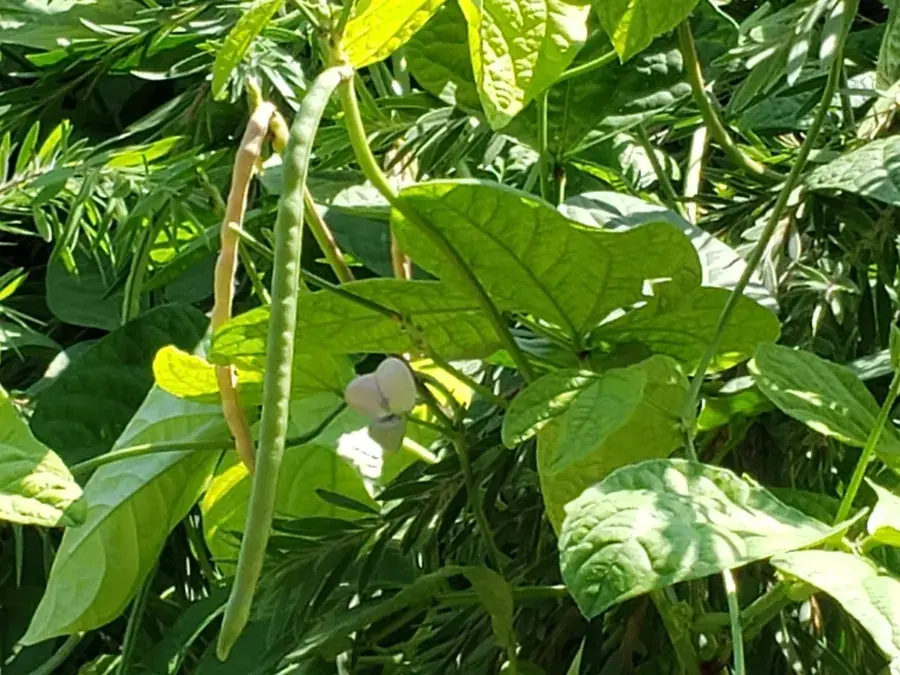
Photo Chris Hughes via Openverse · CC BY 4.0
Cowpeas
Vigna unguiculata
Leaves at four weeks, green pods at eight, dry black-eyed peas at twelve — the Sahel’s pulse, and a crop that feeds the soil.
- Signs of ripeness
- Leaves from about four weeks after the seedlings emerge until flowering begins. Green pods 12–15 days after the flower, while the seeds are still soft and the pod snaps. For dry peas, wait until the pods have turned yellow to tan and at least two-thirds of them are dry.
- Harvesting
- Take young shoot tips and a few leaves from each plant; picking more than 10–20% of the leaves before flowering starts to cut the pod crop. Leafy varieties can be cut back to about 10 cm to regrow. Pull green pods with a twist, holding the stem. Many varieties split and drop their seed when dry, so check dry pods every few days, or pull whole plants when most pods are mature and spread them under cover to finish.
- Frost tolerance
- Cowpea does not tolerate frost and stops growing on cold nights; it wants nights above 15 °C. If frost threatens a late crop, pick the green pods and any dry ones that evening, or pull whole plants and hang them under cover to finish drying.
Storage
Storing cowpeas
| Where | Temperature | Humidity | Keeps | How |
|---|---|---|---|---|
| Fridge, green pods and fresh-shelled peas | 4–8 °C39–46 °F | high | About a week; yard-long pods up to two | In a perforated bag. Fresh shelled cowpeas keep about 8 days at 8 °C, and yard-long bean pods 7–14 days at 4–7 °C; colder than that injures the pods. |
| Airtight jar or tin, dry peas | 10–25 °C50–77 °F | dry | Years | Dried until a fingernail will not dent them — below about 14% moisture — then sealed against damp and weevils. |
Preserving
Preserving cowpeas
Dry peas are the point of the crop: dried hard and kept airtight, they last for years. The leaves are dried for the dry season across Africa — whole, crumbled or powdered, or boiled, kneaded and squeezed into balls and sun-dried, as in Botswana and Zimbabwe. Fresh green-shelled peas freeze well: shell, sort out over-mature, immature and insect-damaged ones, water-blanch 2 minutes, cool and pack with 1 cm headspace. Dry peas can be pressure-canned: soak 12–18 hours, boil 30 minutes, pack with 2.5 cm headspace in the cooking water and process 75 minutes for 500 ml jars or 90 minutes for litre jars at 10 lb weighted gauge. There is no water-bath method for any bean or pea, and dried cowpeas must be soaked and boiled before eating.
A dehydrator or a low oven; light, keeps for a year.
The fastest route and the one that keeps flavour best.
Jars heated above boiling under pressure — the only safe way to can plain vegetables.
Seed saving
Easy to save: comes true from seed
Cowpea flowers open in the morning and close by noon, and in dry climates they are almost entirely self-pollinated; in humid places insects can cross up to 40%. Seed Savers Exchange suggests just 3–6 m (10–20 ft) between varieties, so a gardener can save two kinds in one season. Leave pods on the plant until tan and dry, or pull plants when most pods are yellow and finish drying them under cover; shell, winnow, and dry the seed until a fingernail will not dent it.
Keeps: 3–4 years cool, dark and dry in an airtight container.
Seed saving →Next year
Planning cowpeas for next season
Cowpea fixes its own nitrogen and can leave 75–150 kg per hectare in the soil for the next crop, so it belongs before maize, millet or a hungry leafy crop. Give it full sun, any well-drained soil, half the fertiliser of other vegetables — too much nitrogen limits pods — and keep it weeded for the first six weeks. Sow 1–2 cm deep in soil above 20 °C; seedlings appear in three to five days above 22 °C. In the West African savanna sow early in the rains for a harvest from late August to November; in East Africa with the long or short rains; in summer-rainfall southern Africa from November to January; around the Mediterranean in late spring as a summer crop. Climbing and yard-long types need stakes 2 m tall.
Cowpeas at a glance
- Botanical name
- Vigna unguiculata
- Group
- Peas and beans
- Picked
- July, August, September, October
- Frost
- Tender: finished by the first frost.
- Best put up as
- drying, freezing, pressure canning
- Seed
- Easy to save: comes true from seed
Questions people ask about cowpeas
Are black-eyed peas the same as cowpeas?
Yes. Black-eyed peas, crowder peas, cream peas and southern field peas are all cowpeas, Vigna unguiculata, and the yard-long bean is a climbing form of the same species grown for its long green pods.
Can you eat cowpea leaves?
Yes, and across much of Africa the leaves matter as much as the peas. Pick young tips from about four weeks after the seedlings emerge until flowering, boil or fry them, and dry the surplus for the dry season. Do not take more than a fifth of the leaves if you also want a pea crop.
How do you freeze black-eyed peas?
Pick pods when the seeds are tender and well filled, shell them, discard any that are over-mature, immature or insect-damaged, water-blanch for 2 minutes, cool, drain and freeze with 1 cm headspace.
Do cowpeas need fertiliser?
Very little. Cowpea fixes nitrogen from the air through its root nodules, so give it about half the fertiliser of other vegetables — too much nitrogen gives leaves and few pods. On phosphorus-poor soil a little phosphate helps nodules and roots.
Can I grow cowpeas in Canada?
In the warmer parts of southern Canada, yes, with a short-season variety. Ontario growers sow yard-long beans directly after frost into soil above 20 °C and pick 60–80 days later; bush black-eyed types are similar. They need heat — a cool, wet summer gives a poor crop.
How do I save cowpea seed?
Leave pods on the plant until tan and dry, shell them, and dry the seed until a fingernail will not dent it. Cowpeas rarely cross, so 3–6 m between varieties is enough. Seed keeps three to four years cool and dry.
Local frost dates
Harvest timing for a place
Enter a town, postal code or ZIP to build the garden year, the frost forecast and this week’s guide from local weather.
Also in peas and beans
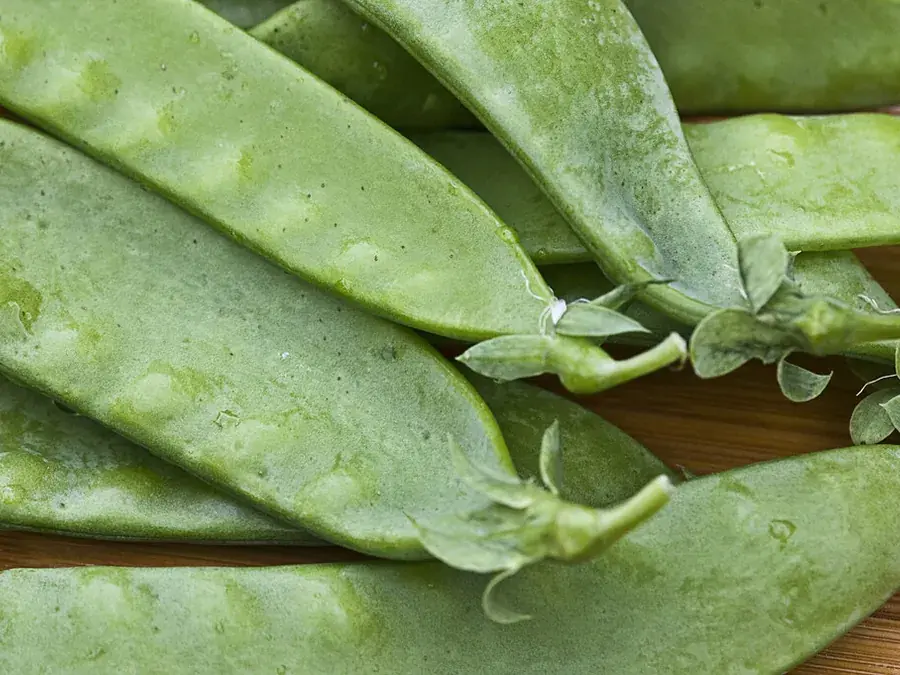 Half-hardyPeas and beansHarvest Jun–Oct
Peas
The first sowing of the year and the first thing in the freezer — pick them every day or they turn to starch.
Freezing · Drying · PressureHarvest and storage →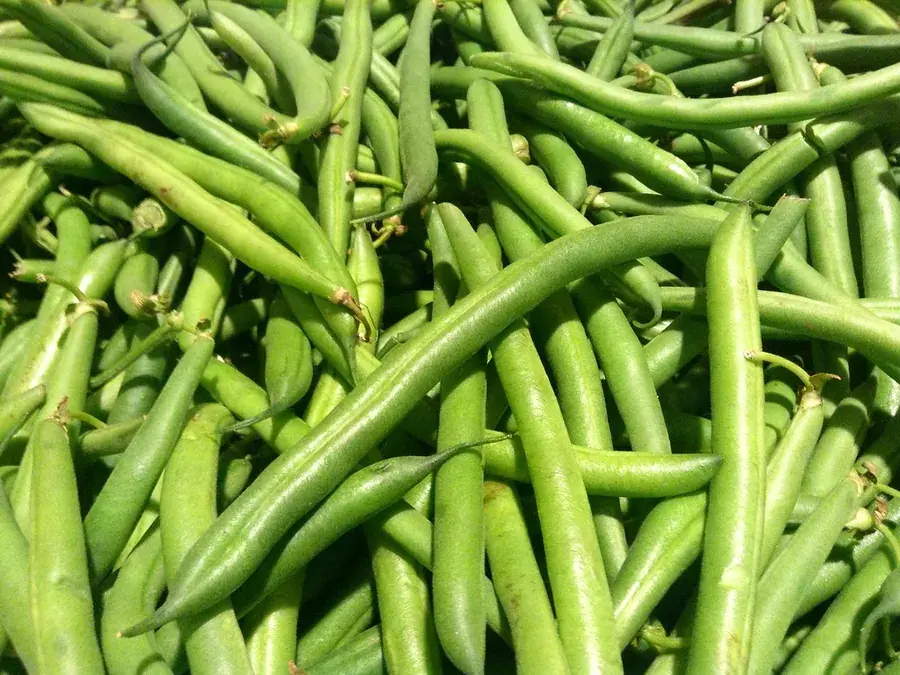 TenderPeas and beansHarvest Jul–Sep
Green beans
Pick them young and pick them often — and never, ever water-bath a jar of plain beans.
Freezing · Pressure · PicklingHarvest and storage →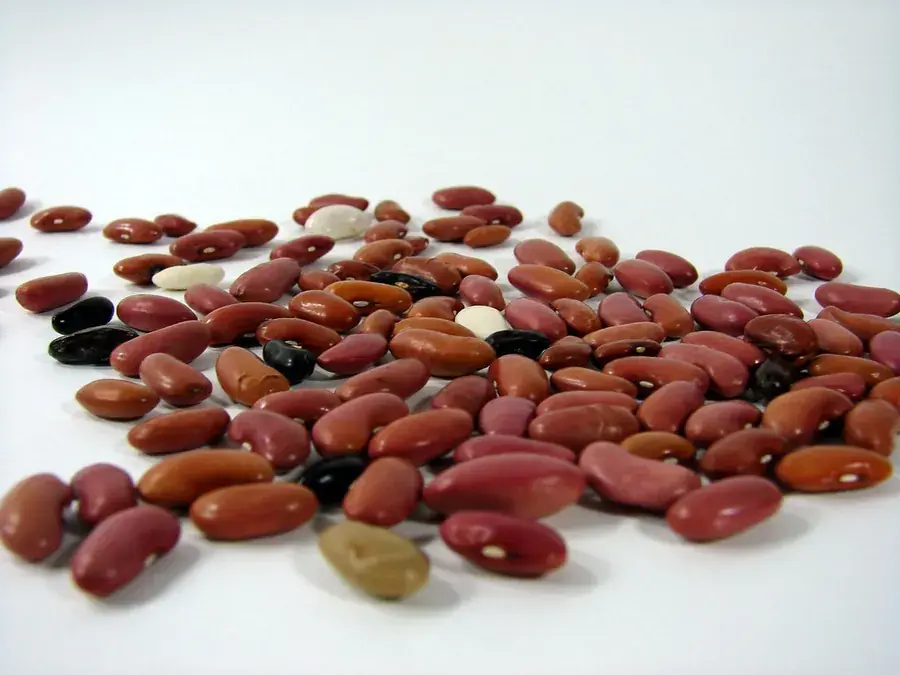 TenderPeas and beansHarvest Sep–Oct
Dry beans
The crop that stores itself: leave the pods to rattle, shell them on the step, and eat them in February.
Drying · Pressure · FreezingHarvest and storage →
Checked against these sources ·
- PROTA (Pl@ntUse): Vigna unguiculata
- Seed Savers Exchange: Grow and save cowpea seeds
- NCHFP: Freezing blackeye or field peas
- NCHFP: Canning beans or peas, shelled, dried
- UF/IFAS: Florida Vegetable Gardening Guide (SP 103)
- OMAFRA Specialty Cropportunities: Yard long beans
- FAO ECOCROP: Vigna unguiculata data sheet
Harvest months are typical for zones 4–6 and shift by weeks north and south. Storage figures assume ideal conditions; without a cold store, expect the shorter end of each range.