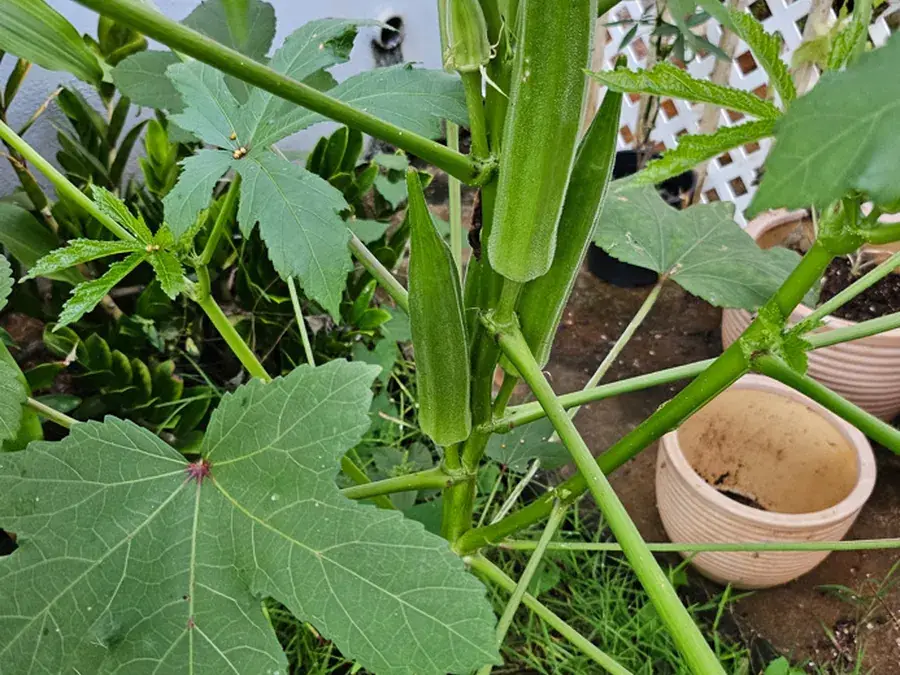
Okra
Abelmoschus esculentus
West Africa’s gift to the soup pot — a pod to pick every second day, small, before it turns to wood.
- Signs of ripeness
- Pods are picked young — about a week after the flower opens, when they are 5–8 cm (2–3 in) long for most varieties and no more than about 12 cm for long-podded types. A ready pod snaps cleanly at the tip and a knife slides through it easily; once it resists the knife it has gone fibrous.
- Harvesting
- Cut the stalk just above the cap with secateurs or a sharp knife — the stems are tough, and pulling tears the plant. Pick every two days in hot weather, daily at the peak, and take any pod you missed: plants left carrying old pods slow down. Wear long sleeves and gloves, because the fine hairs on the leaves, stems and pods irritate skin.
- Frost tolerance
- Okra is finished by frost and sulks long before it: it needs temperatures above about 20 °C for normal growth, and its pods are cold-sensitive. When a frost is forecast, pick every pod worth having that evening; covering the plants late in the season buys nothing.
Storage
Storing okra
| Where | Temperature | Humidity | Keeps | How |
|---|---|---|---|---|
| Cool room or the warmest shelf of the fridge | 8–10 °C46–50 °F | high | 5–10 days | Unwashed and dry, in a paper bag inside a perforated plastic one. The pods are cold-sensitive, so keep them out of the coldest part of the fridge; commercial storage is 8–10 °C at 90–100% humidity. In a household fridge, use them within the week. |
Preserving
Preserving okra
Freezing is the easiest: trim the stems without opening the seed cells, water-blanch pods up to 10 cm for 3 minutes and larger ones for 4, cool, and freeze whole or sliced; for frying, slice after blanching, dredge in meal or flour and tray-freeze before bagging. Pickled dilled okra is a tested water-bath recipe — 3.2 kg (7 lb) of small pods to 1.4 L (6 cups) each of water and 5% vinegar with 160 ml (⅔ cup) of pickling salt, garlic, dill seed and small hot peppers, processed 10 minutes for 500 ml (pint) jars at 0–300 m. Drying is the West African way: whole or sliced pods are sun-dried and usually ground to a powder that thickens soup through the dry season. Plain okra can be pressure-canned — boil 2 minutes, pack hot with 2.5 cm headspace and process 25 minutes for 500 ml jars or 40 minutes for litre jars at 10 lb weighted gauge — but it comes out soft, and there is no safe water-bath method for unpickled okra.
The fastest route and the one that keeps flavour best.
Vinegar does the preserving; the canner just seals the jar.
A dehydrator or a low oven; light, keeps for a year.
Jars heated above boiling under pressure — the only safe way to can plain vegetables.
Seed saving
Easy to save: comes true from seed
Okra is basically self-pollinating, which makes it a good first seed crop, though bees do carry some pollen between plants; Seed Savers Exchange advises 150–500 m (500–1,600 ft) between varieties for purity. Leave a few of the best early pods on the plant until they turn brown and brittle — about a month after flowering — clipping them as they ripen from the bottom of the plant upward, and finish drying them under cover. Crack them open by hand, or snip off the stem end and pour the seed out; gloves help, because dry pods are spiny. West African farmers often keep the seed in the dried pod until sowing time.
Keeps: 1–3 years cool, dark and dry. Okra seed is short-lived, so save a little every year.
Seed saving →Next year
Planning okra for next season
Rotate where root-knot nematode is about — okra is highly susceptible, and moving it each year keeps numbers down. Full sun, well-drained soil with plenty of organic matter at pH 6–7, and steady water: okra survives drought but crops far better watered. Soak seed for six hours before sowing and sow 1–2 cm deep when the soil is above 20 °C; germination is fastest at 30–35 °C. In West Africa sow with the rains, and again in the dry season where there is water; in East Africa with the long rains in March–April or the short rains in October; in summer-rainfall southern Africa from October to January; around the Mediterranean from May, once the nights are warm. Thin to 30–45 cm apart in rows about 90 cm apart; a balanced, slow-release fertiliser is enough.
Okra at a glance
- Botanical name
- Abelmoschus esculentus
- Group
- Fruiting vegetables
- Picked
- July, August, September, October
- Frost
- Tender: finished by the first frost.
- Best put up as
- freezing, pickling, drying, pressure canning
- Seed
- Easy to save: comes true from seed
Questions people ask about okra
Can I grow okra in Toronto?
Yes, in a warm summer and as a transplant. Ontario trials show okra starts cropping 40–50 days after transplanting and keeps going until frost if it goes into soil above 20 °C, ideally through black plastic mulch. Start seed indoors in pots about four weeks before planting out, harden the plants off, and set them out two or three weeks after the last frost in the warmest bed you have, with a variety such as Clemson Spineless or Annie Oakley II.
How big should okra be when you pick it?
Small — about 5–8 cm (2–3 in) for most varieties, a few days after the flower petals fall. If a knife will not slide through the pod easily, it is too old to eat; leave it for seed or the compost.
Can you eat okra leaves?
Yes. Young okra leaves are cooked like spinach in many parts of Africa, and the pods are only half the crop. Pick a few young leaves from each plant rather than stripping one, since the leaves feed the pods.
How do you freeze okra?
Trim the stems without cutting into the seed cells, water-blanch small pods for 3 minutes and large ones for 4, cool in iced water, drain, and freeze whole or sliced with 1 cm headspace. For frying later, slice after blanching, coat in cornmeal or flour, freeze on a tray and bag once firm.
Why does okra make my skin itch?
The leaves, stems and pods carry fine hairs that irritate skin, especially in the heat of a picking session. Wear long sleeves and rubber gloves and cut with shears; spineless varieties such as Clemson Spineless are easier to handle.
How do I save okra seeds?
Leave a few early pods to grow on until they are brown and brittle, about a month after flowering, then dry them further under cover and break them open. Okra is mostly self-pollinated, but keep varieties 150 m or more apart for pure seed. Seed keeps one to three years.
Local frost dates
Harvest timing for a place
Enter a town, postal code or ZIP to build the garden year, the frost forecast and this week’s guide from local weather.
Also in fruiting vegetables
 TenderFruiting vegetablesHarvest Jul–Oct
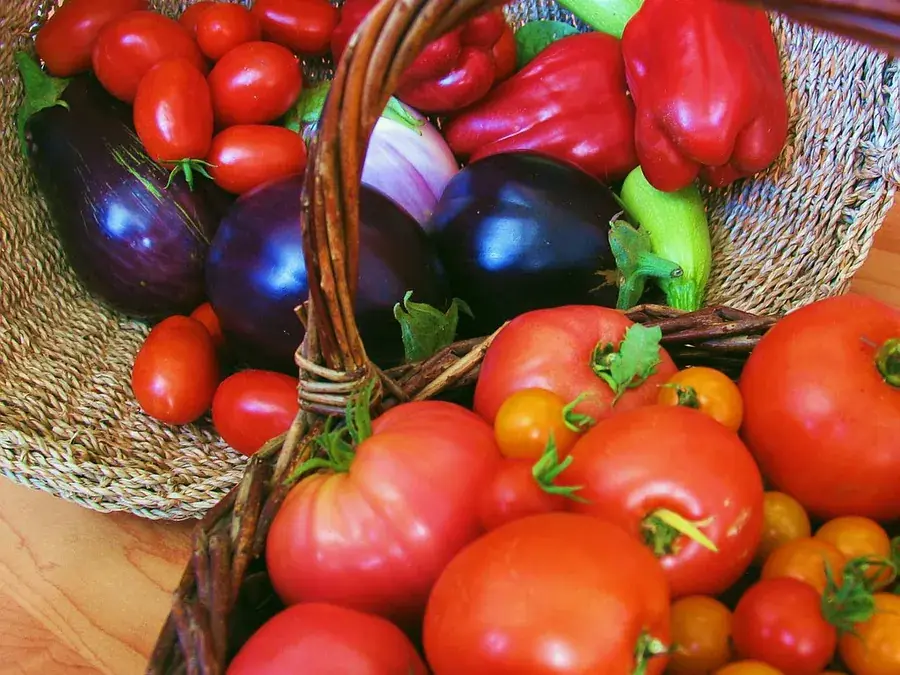
Tomatoes
The crop every garden ends up with too many of at once — and the one most worth putting up.
Water-bath · Freezing · DryingHarvest and storage →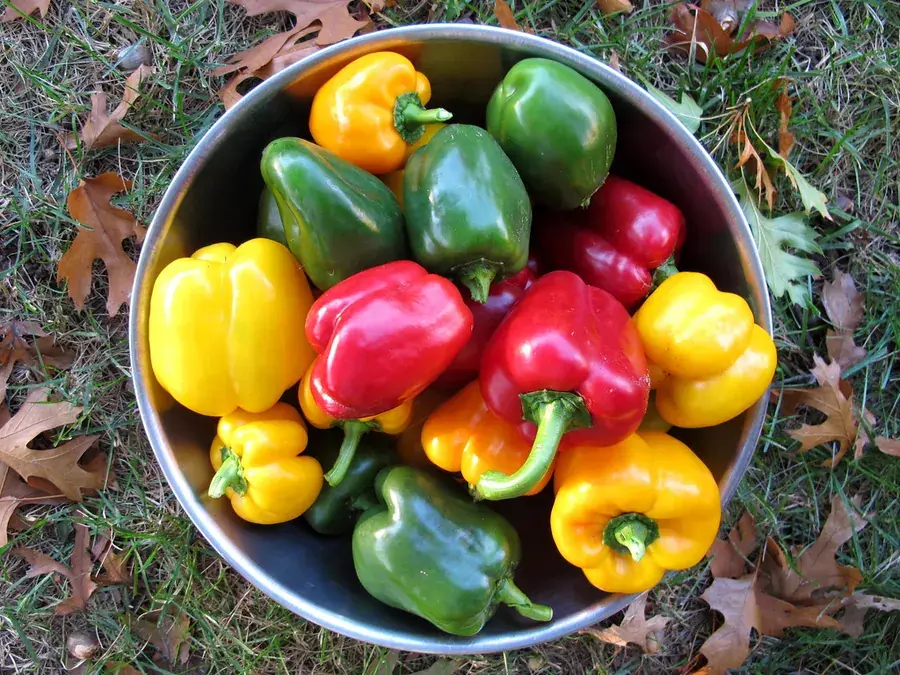 TenderFruiting vegetablesHarvest Jul–Oct
Sweet peppers
Slow to colour, quick to freeze — the pepper harvest is a race between the plant and the first frost.
Freezing · Pickling · PressureHarvest and storage →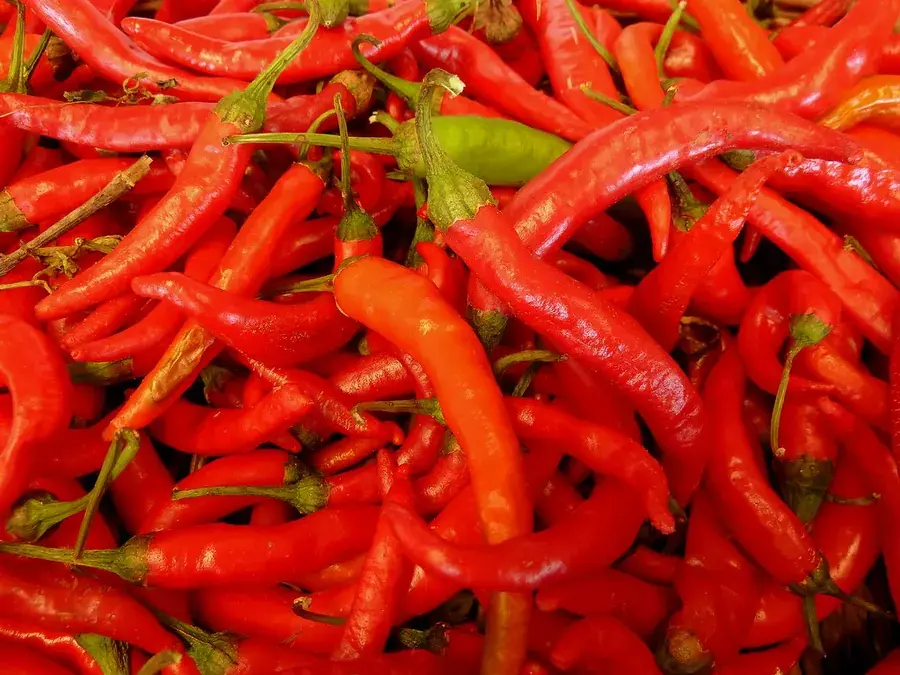 TenderFruiting vegetablesHarvest Aug–Oct
Hot peppers
A handful of plants gives a year of heat — dried on a string, pickled in rings, or fermented into sauce.
Drying · Pickling · FermentingHarvest and storage →
Checked against these sources ·
- UF/IFAS Gardening Solutions: Okra
- PROTA (Pl@ntUse): Abelmoschus esculentus
- OMAFRA Specialty Cropportunities: Okra
- NCHFP: Freezing okra
- NCHFP: Pickled dilled okra
- NCHFP: Canning okra
- Seed Savers Exchange: Grow and save okra seeds
- FAO ECOCROP: Abelmoschus esculentus data sheet
Harvest months are typical for zones 4–6 and shift by weeks north and south. Storage figures assume ideal conditions; without a cold store, expect the shorter end of each range.