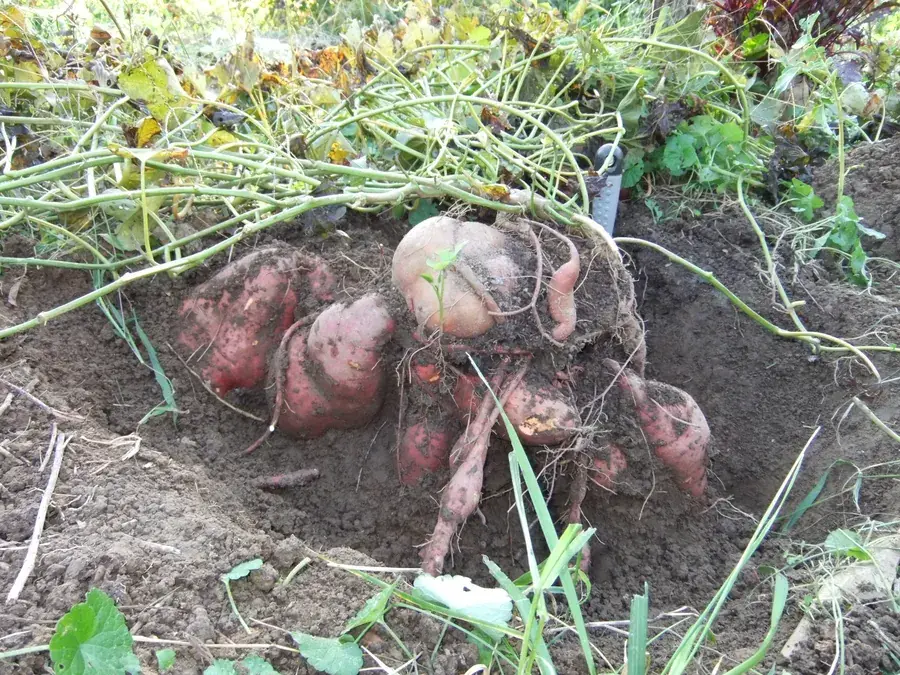
Photo User:Vmenkov on Wikimedia Commons · CC BY-SA 3.0
Sweet potatoes
Ipomoea batatas
Grown from slips, cured in the warmth, kept in a cupboard — and the leaves are a hot-season green in their own right.
- Signs of ripeness
- Most varieties need at least 120 days from planting the slips, and can be left to 150 if the weather allows; Ontario growers count 100–130 days. Dig one plant as a test, and lift the crop once the roots have reached a useful size. In the tropics, where the plants never stop, dig the whole crop rather than leaving it in for months: old roots toughen, and pests build up in a planting left too long.
- Harvesting
- Cut the vines away first, then dig with a fork from well outside the plant and lift rather than lever: the skin is thin, and every cut or bruise is an entry for rot. Handle the roots as little as possible. The young leaves and shoot tips can be picked all season as a cooked green; take a few from each plant rather than stripping one.
- Curing
- Curing heals small wounds, sets the skin and converts starch to sugar — a sweet potato eaten the day it is dug is starchy and bland. Hold the roots for about a week at 27–29 °C (80–85 °F) and 90–95% relative humidity; UF/IFAS gives a warmer cure of about 35 °C (95 °F) and 90% humidity for around ten days. A warm shed with the roots in boxes under damp sacking does the job in a tropical or Mediterranean autumn; in Canada, a small room with a heater and a pan of water.
- Frost tolerance
- The vines blacken at the first frost, and the roots underneath are sensitive well before that: sweet potatoes are chill-damaged below about 10 °C, and roots that sit in cold soil store badly. Dig immediately before or just after a vine-killing frost; in a cold autumn, do not wait for the frost at all — lift once the nights head towards 10 °C.
Storage
Storing sweet potatoes
| Where | Temperature | Humidity | Keeps | How |
|---|---|---|---|---|
| Cool cupboard, pantry or basement corner | 13–16 °C55–61 °F | high | 4–6 months, cured | In crates or paper-lined boxes, off the floor, in the dark, at 85–90% humidity. Below 13 °C (55 °F) the flesh discolours and develops an off flavour; above 16 °C the roots sprout. Never refrigerate them. |
Preserving
Preserving sweet potatoes
A cured sweet potato kept at 13–16 °C lasts four to six months, which is preservation enough for most households. For the freezer, cook them first — boiled, steamed, pressure-cooked or baked until almost tender — then cool, peel, and halve, slice or mash; dip slices for 5 seconds in 125 ml (½ cup) of lemon juice per litre (quart) of water, or stir 2 tablespoons of lemon or orange juice into each litre (quart) of mash, to stop darkening. Pressure canning works for pieces only: boil or steam them 15–20 minutes until partly soft, peel, cut into even pieces, pack with 2.5 cm (1 in) headspace in boiling water or syrup, and process 65 minutes for 500 ml (pint) jars or 90 minutes for litre (quart) jars at 10 lb in a weighted-gauge canner at 0–300 m (0–1,000 ft). What does not work: mashing or puréeing before canning, which the USDA guide forbids because the dense mass will not heat through; dry-packing pieces without liquid; and any water-bath method, since sweet potato is a low-acid vegetable.
Two weeks of warmth and air that turn a fresh crop into a keeper.
The fastest route and the one that keeps flavour best.
Jars heated above boiling under pressure — the only safe way to can plain vegetables.
Seed saving
Grown from tubers, cloves, crowns or runners, not seed
Sweet potatoes are grown from slips — leafy shoots that sprout from a stored root — not from seed. Keep a few sound, medium-sized cured roots, and a few weeks before planting time bed them half-buried in moist sand somewhere warm and bright. Snap or cut the sprouts off when they are 20–30 cm long with at least four nodes, and plant them with two nodes below ground. Vine-tip cuttings from a growing crop root just as easily, which is how gardeners in the tropics keep a planting going season after season. Where sweet potato weevil or virus is a problem, start again from certified clean slips rather than your own.
Keeps: Not applicable — the variety is carried in the roots and vines. A cured root kept at 13–16 °C stays sound for slipping until the next planting season.
Seed saving →Next year
Planning sweet potatoes for next season
Rotate: at least two years away from the same bed, to keep sweet potato weevil and nematodes down. Full sun, light sandy or sandy-loam soil, ridges or hills about 15 cm high and 40 cm wide, and go easy on fertiliser — too much feeds the vine and stops roots forming. Plant slips 30–40 cm apart in rows about a metre apart once the soil holds above 18 °C. In the tropics plant at the start of the rains, or at any time with irrigation; in Kenya and Uganda with the long rains (March–April) or the short rains (October–November); in summer-rainfall southern Africa from October to December; in the Mediterranean once the soil warms in May. Water steadily for the first four to six weeks and then less: drought in the last month splits the roots. In Canada and Britain, choose a short-season variety such as Beauregard, warm the soil with black plastic and plant after the last frost.
Sweet potatoes at a glance
- Botanical name
- Ipomoea batatas
- Group
- Roots
- Picked
- September, October
- Frost
- Tender: finished by the first frost.
- Best put up as
- curing, freezing, pressure canning
- Seed
- Grown from tubers, cloves, crowns or runners, not seed
Questions people ask about sweet potatoes
When are sweet potatoes ready to dig?
About 120 days after planting the slips for most varieties, and up to 150 if the season allows — dig one plant to check. In Canada lift them in September or early October, immediately before or just after the first frost blackens the vines, and before the soil turns cold, because roots are chill-damaged below about 10 °C.
Why do you have to cure sweet potatoes?
Because a freshly dug sweet potato is starchy and bland and its thin skin is easily infected. About a week at 27–29 °C and 90–95% humidity heals cuts, sets the skin and converts starch to sugar; after that the roots keep four to six months at 13–16 °C.
Should sweet potatoes go in the fridge?
No. Below 13 °C (55 °F) the flesh discolours and develops an off flavour, and chilled roots rot sooner. A cool, dark cupboard or basement corner at 13–16 °C is the right place for cured roots.
Can you eat sweet potato leaves?
Yes. The young leaves and shoot tips are a mild cooked green that keeps coming through the hot season while the roots grow — a common vegetable in East Africa and Southeast Asia. Pick a few tips from each plant rather than stripping one, because the leaves are what feed the roots.
Can I grow sweet potatoes in Ontario or the UK?
Yes, with a short-season variety and the warmest spot you have. Ontario growers plant Beauregard and Covington slips in late May or early June into soil above 18 °C and dig in September and October. The RHS notes that sweet potatoes crop best at 21–26 °C and only reliably outdoors in very warm, sheltered sites, so in Britain a greenhouse or polytunnel is safer.
Can you can mashed sweet potatoes?
No. The tested method is for pieces only — pressure-canned 65 minutes for 500 ml jars or 90 minutes for litre jars at 10 lb weighted gauge near sea level — and the USDA guide warns not to mash or purée them first. Freeze mash instead, with 2 tablespoons of lemon or orange juice per litre to hold the colour.
Local frost dates
Harvest timing for a place
Enter a town, postal code or ZIP to build the garden year, the frost forecast and this week’s guide from local weather.
Also in roots
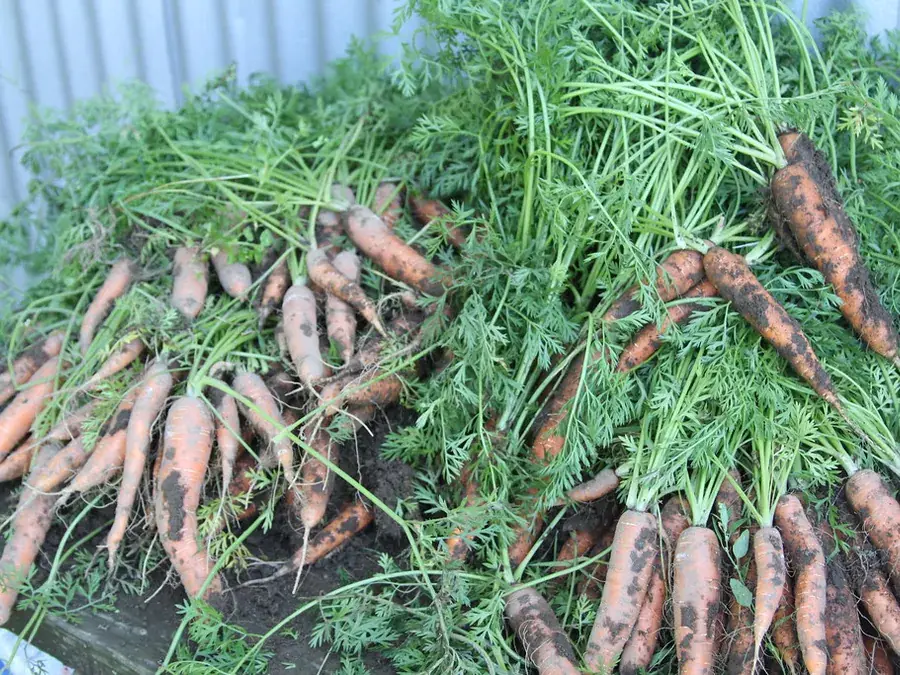 HardyRootsHarvest Jul–Nov
Carrots
The root that gets sweeter the longer autumn goes on — and keeps until spring if you treat it right.
Cold storage · Pressure · FreezingHarvest and storage →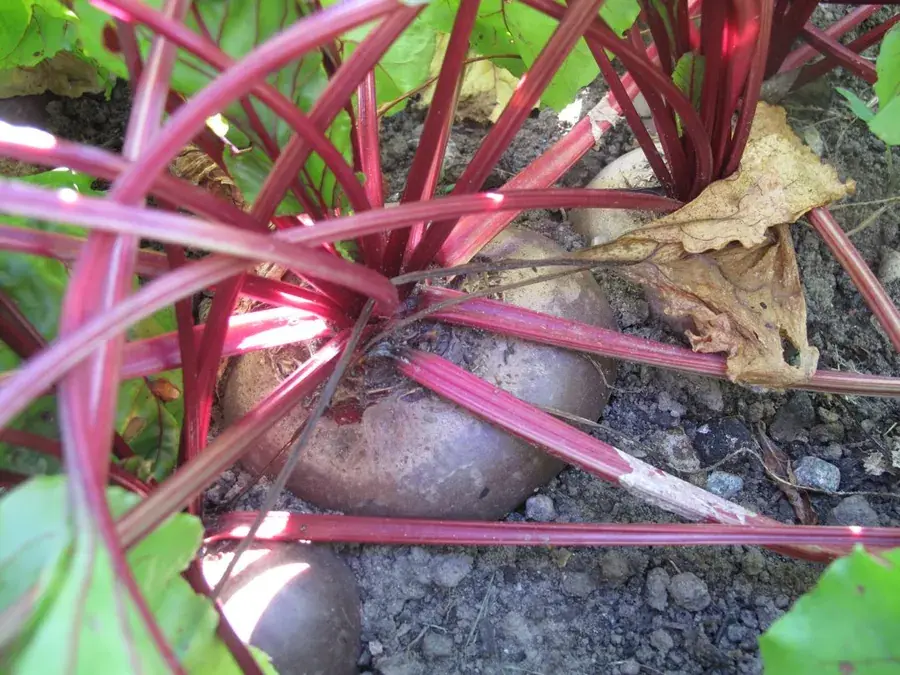 HardyRootsHarvest Jul–Oct
Beets
Two crops in one bed — the roots for the cold room, the greens for tonight.
Pickling · Pressure · FreezingHarvest and storage →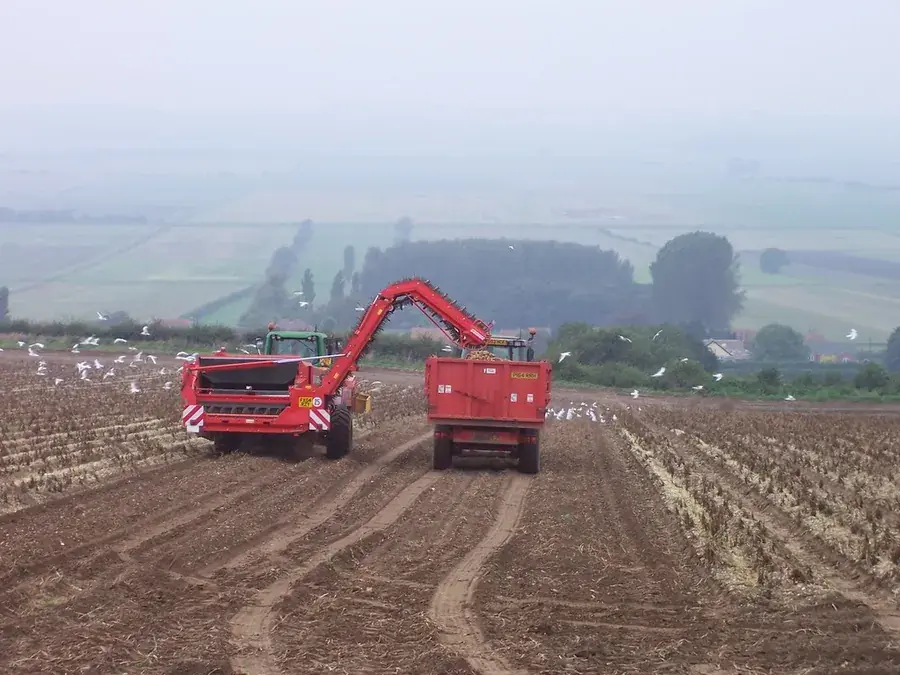 Half-hardyRootsHarvest Jul–Oct
Potatoes
The crop children remember digging — and the one that needs two weeks in the dark before it goes anywhere.
Cold storage · Pressure · FreezingHarvest and storage →
Checked against these sources ·
- UF/IFAS Gardening Solutions: Sweet potatoes
- Iowa State University Extension: How do I harvest and store sweet potatoes?
- OMAFRA Specialty Cropportunities: Sweet potatoes
- NCHFP: Canning sweet potatoes, pieces or whole
- NCHFP: Freezing sweet potatoes
- RHS: How to grow sweet potatoes
- FAO ECOCROP: Ipomoea batatas data sheet
Harvest months are typical for zones 4–6 and shift by weeks north and south. Storage figures assume ideal conditions; without a cold store, expect the shorter end of each range.