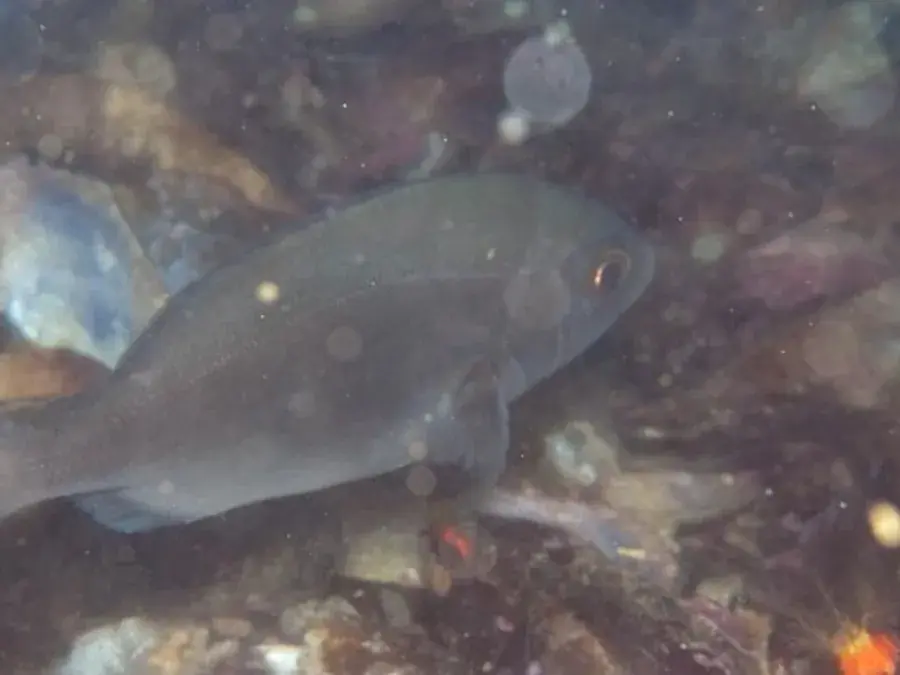
Photo by Georgina Jones on iNaturalist · CC BY-SA 4.0
Hottentot seabream (Cape bream)
Pachymetopon blochii
- When
- Active all year; habitat and behaviour shift with the season.
- Habitat
- Kelp beds and rocky reefs down to about 55 m between Port Nolloth and Cape Agulhas — rock ledges, breakwaters and harbour walls from the shore, and inshore reefs from small boats off the Peninsula and the west coast.
- Identification
- A small, deep-bodied, bronze-grey to brownish seabream with a yellowish eye, a distinct lateral line, small dark fins and a small mouth lined with incisor teeth. Young fish are dusky brown.
- Notes
- The everyday reef fish of the Cape west coast and the most commonly landed reef fish there. A resident that stays on its home reef and spawns year-round, which helps it stand up to fishing; the stock was last assessed as harvested sustainably.
- Method
- Small hooks with red bait, mussel, prawn or a strip of squid (chokka), fished on the bottom close to the kelp.
- Caution
- Ten a day at 22 cm or more, on a DFFE recreational permit (online or at the Post Office), within the overall limit of ten fish a day. No fishing in no-take marine protected areas, including the restricted zones of the Table Mountain MPA.
Seasons, size limits and catch limits change every year and differ by water body. Check the current regulations for the country and the water before fishing.
Hottentot seabream (Cape bream) facts
- Also called
- Hottentot, hotnot or hotnotvis; kaapse galjoen. WWF-SASSI now lists it as Cape bream.
- Family
- Sparidae, the seabreams and porgies.
- Native range
- Endemic to south-western Africa, from Angola to Port Alfred; most abundant between Port Nolloth and Cape Agulhas.
- Habitat
- Rocky reefs and kelp beds from the shallows to about 55 m (180 ft); juveniles stay in shallow kelp. A resident that forms small shoals and keeps to its home reef.
- Water temperature
- Cool temperate water. Reef Life Survey has recorded it in water of 14.8–19.3°C (59–67°F).
- Size
- Most adults 22–35 cm (9–14 in); the largest measured about 54 cm (21 in).
- Record
- IGFA all-tackle world record: 1.7 kg (3 lb 12 oz), Byron Ashington, Cape Point, South Africa, 28 May 1989.
- Lifespan
- Up to 21 years.
- What it eats
- Omnivorous: mainly seaweed, with amphipods, crabs, shrimps, worms, molluscs, sea urchins, red bait and the odd small fish.
- Spawning
- Throughout the year, with peaks in winter and summer, across its whole range. Fish mature at four to five years and about 20–22 cm.
- Teeth and mouth
- Small, with rows of incisor-like teeth for cropping weed and molars for cracking shells.
- Look-alikes
- Blue hottentot (Pachymetopon aeneum) has a cobalt-blue head and a blue-streaked, bronze-yellow body. Bronze bream (Pachymetopon grande, ‘bruin hottentot’) is another close cousin.
- Eating
- Good eating and a WWF-SASSI green-list (best choice) fish when line-caught in South Africa.
- Status
- Least Concern on the IUCN Red List. The West Coast stock was last assessed (2011) at about 55% of its unfished level — optimally exploited.
Interactive
Hottentot seabream: size range
Move the slider from a typical adult to the largest recorded specimen, shown against objects of known size.
Most adults you'll catch: 22–35 cm (9–14 in).
This hottentot seabream (cape bream): 29 cm. About as long as a loaf of bread.
The record
IGFA all-tackle world record: 1.7 kg (3 lb 12 oz), Byron Ashington, Cape Point, South Africa, 28 May 1989.
Questions people ask about hottentot seabream
What is the bag limit for hottentot?
Ten a day at 22 cm or more, on a DFFE recreational permit, within South Africa’s overall limit of ten fish per person per day.
Where do you catch hottentot?
Over rocky reef and kelp on the Cape west coast and around the Peninsula — from rock ledges, breakwaters and harbour walls, or on inshore reefs from a small boat. It is most common between Port Nolloth and Cape Agulhas.
What is the best bait for hottentot?
Red bait, mussel, prawn or a small strip of squid on a small hook, fished on the bottom beside the kelp. It is an omnivore that eats more seaweed than anything else, so it bites gently.
Found in these regions
Checked against these sources ·
- FishBase — Pachymetopon blochii
- Mann (ed.), Southern African Marine Linefish Species Profiles — ORI Special Publication 9 (2013)
- WWF-SASSI — Cape bream (hottentot)
- Reef Life Survey — Pachymetopon blochii
- IGFA — World Records search
Sizes, records and ranges are for the species as a whole; local populations and rules vary. Records change; the record-keeper named above holds the current one.
Local activity
This week's guide for a place
Enter a town, postal code or ZIP for this week's conditions there, based on the local climate, this week's weather and the ecological region.
Also active in October
 FishYear-round
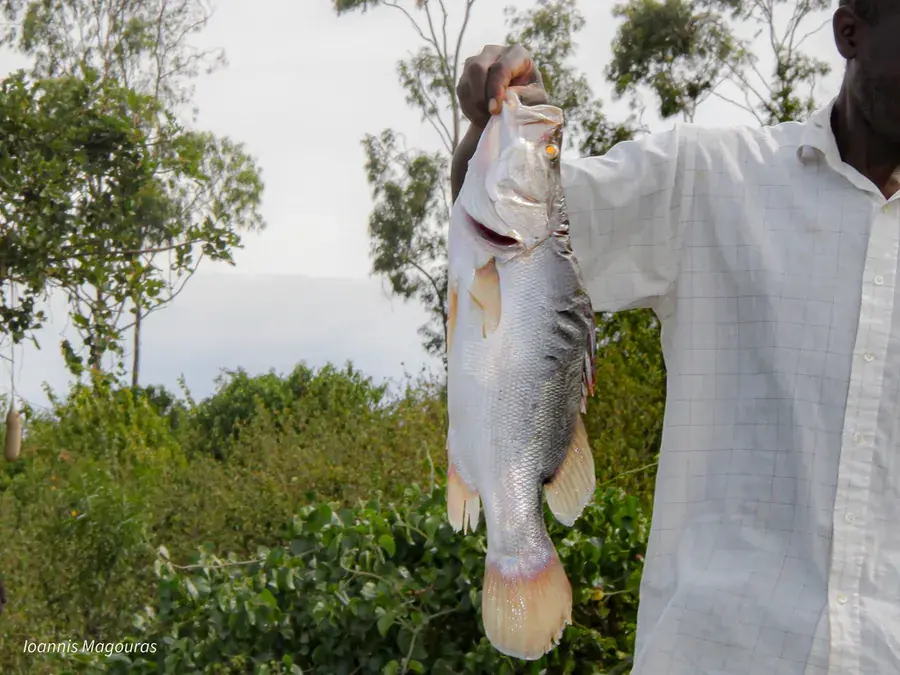
Nile perch
Lates niloticus
A huge silver perch with a blue sheen, a dorsal fin cut deeply into spiny and soft halves, a rounded tail, and a dark eye ringed in bright yellow.
Habitat and methods →Photo: Ioannis Magouras · CC BY 4.0
 FishYear-round
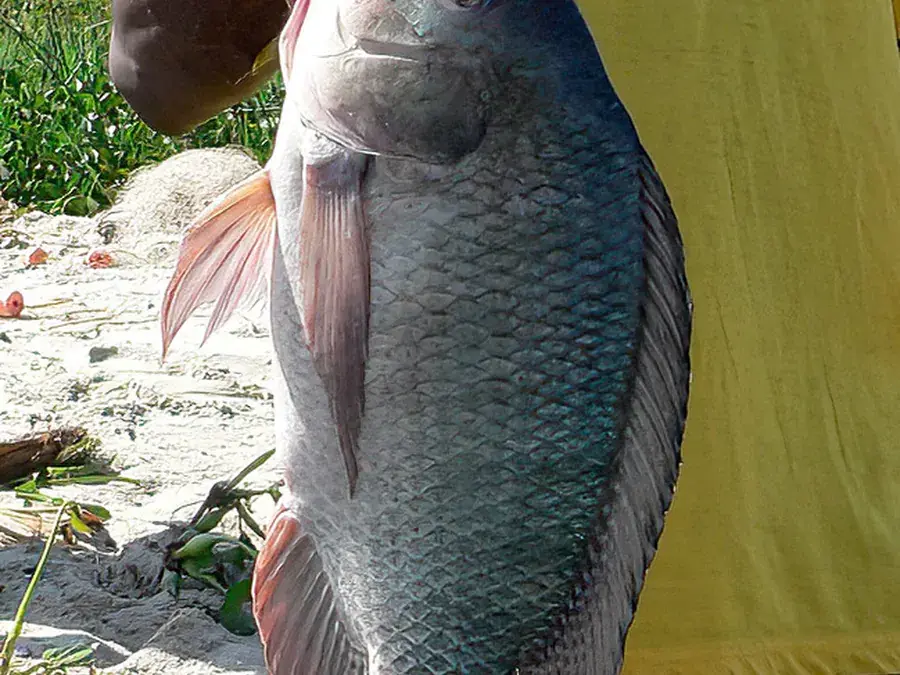
Nile tilapia
Oreochromis niloticus
Deep-bodied and grey-brown with faint bars, and the tell: regular dark vertical stripes right across the tail fin. Breeding males turn reddish, especially on the fins.
Habitat and methods →Photo: Pål A. Olsvik · CC BY 4.0
 FishSep–Apr
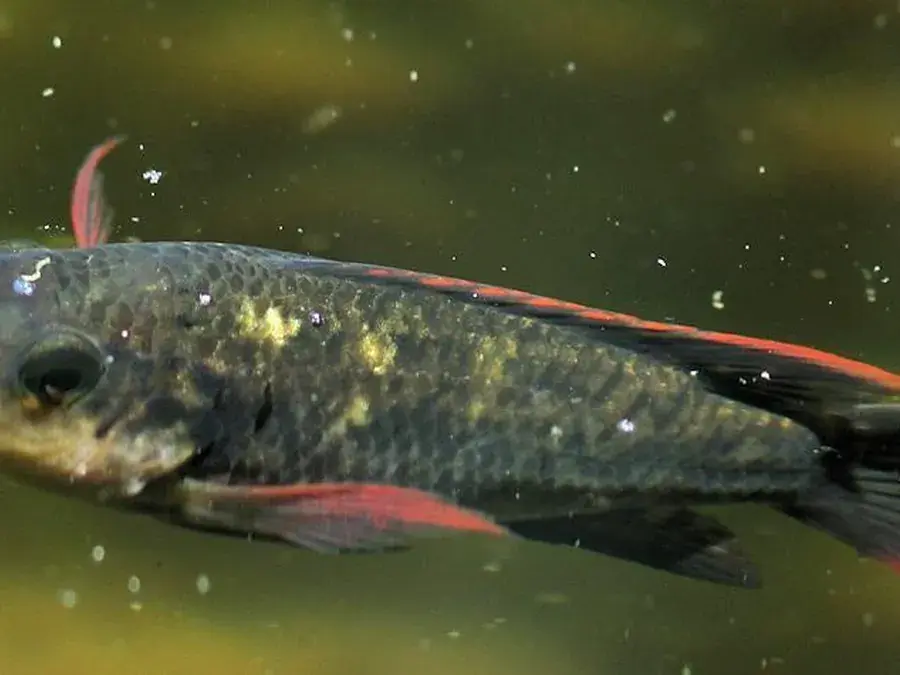
Mozambique tilapia (blue kurper)
Oreochromis mossambicus
Deep-bodied and dull silvery-olive with a few dark blotches along the side and no regular stripes on the tail. Breeding males turn black with a white throat, red-edged fins and a pointed, duck-bill snout.
Habitat and methods →Photo: Wynand Uys · CC BY 4.0