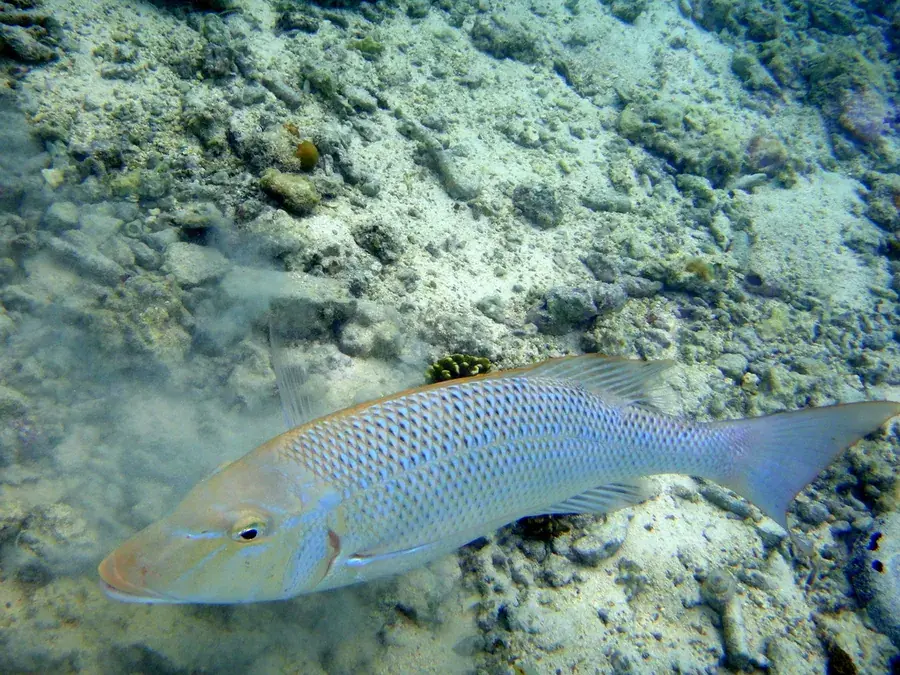
Photo by Darren Obbard on iNaturalist · CC BY 4.0
Spangled emperor
Lethrinus nebulosus
- When
- Active all year; habitat and behaviour shift with the season.
- Habitat
- Coral and rocky reefs, sand between reefs, seagrass beds and lagoon channels from about 10 to 75 m along the East African coast, around Madagascar and the Indian Ocean islands, and south to southern Mozambique and Sodwana Bay — mostly fished from boats, and from the shore from Kosi Bay northwards.
- Identification
- A deep, yellowish-bronze emperor with a long, sloping snout and thick lips, a white or pale blue spot at the centre of many scales and three blue streaks or rows of blue spots running forward and down from the eye. The fins are whitish to yellow and the dorsal fin is edged red; there is no red on the gill cover.
- Notes
- One of the most important line fish of the tropical Indian Ocean, feeding over sand and reef on sea urchins, shellfish, crabs and worms. Young fish school over shallow sand and seagrass; adults move deeper as they grow. The similar emperors caught south of Sodwana Bay, off KwaZulu-Natal and the Eastern Cape, were described as a separate species in 2022.
- Method
- Squid, crab, prawn or cut fish on a two-hook bottom rig fished on sand beside the reef; small jigs and soft plastics dragged slowly along the bottom.
- Caution
- Ciguatera has been reported — ask locally before eating a big reef fish. In South Africa ten a day within the overall daily limit of ten fish, on a DFFE recreational permit; most of its South African range lies inside the iSimangaliso marine protected area, which has its own rules. No fishing in Kenya’s marine national parks.
Seasons, size limits and catch limits change every year and differ by water body. Check the current regulations for the country and the water before fishing.
Spangled emperor facts
- Also called
- Blue emperor, mata-hari or scavenger in South Africa; changu on the Swahili coast; sand snapper, north-west snapper and yellow sweetlip in Australia; sheri in the Persian Gulf.
- Family
- Lethrinidae, the emperors.
- Native range
- The Indo-West Pacific, from the Red Sea, the Persian Gulf and East Africa to southern Japan, Samoa and Australia. In South Africa it is confirmed only as far south as Sodwana Bay; emperors further south were described in 2022 as a separate species, Lethrinus scoparius.
- Habitat
- Coral and rocky reefs, sand between reefs, coralline lagoons, seagrass beds and mangroves, from about 10 to 75 m (33–250 ft). Adults live alone or in small schools and move deeper as they age.
- Water temperature
- Tropical. AquaMaps puts its preferred surface water at about 23–29°C (73–84°F).
- Size
- Most adults 40–70 cm (16–28 in); the largest measured about 87 cm (34 in).
- Record
- IGFA all-tackle world record: 9.45 kg (20 lb 13 oz), Takuya Kano, Muroto, Kochi, Japan, 19 September 2002.
- Lifespan
- Up to 28 years (FishBase).
- What it eats
- Sea urchins and other echinoderms, molluscs and crustaceans, with some worms and small fish.
- Spawning
- Not studied in African waters. Studies elsewhere report spawning through the year or with spring and summer peaks, on shallow reefs. Fish mature at about 28–46 cm, at three to nine years; some appear to change from female to male while still young.
- Young fish
- Juveniles form large schools over shallow, sheltered sand, seagrass and mangroves.
- Teeth and mouth
- A long snout with thick lips, canine teeth at the front of the jaws and rounded or molar-like teeth at the sides for crushing shells.
- Look-alikes
- Pink ear emperor (Lethrinus lentjan) is smaller, with a red edge to the gill cover and sometimes a red pectoral base. Lethrinus scoparius, the emperor of KwaZulu-Natal south of Sodwana and of the Eastern Cape, was long taken for the spangled emperor.
- Eating
- Excellent, and a highly commercial fish. FishBase notes that Indian Ocean fish may have a coppery or iodine taste or smell. Ciguatera has been reported.
- Status
- Least Concern on the IUCN Red List (2023).
Interactive
Spangled emperor: size range
Move the slider from a typical adult to the largest recorded specimen, shown against objects of known size.
Most adults you'll catch: 40–70 cm (16–28 in).
This spangled emperor: 55 cm. Longer than a loaf of bread, shorter than a four-year-old.
The record
IGFA all-tackle world record: 9.45 kg (20 lb 13 oz), Takuya Kano, Muroto, Kochi, Japan, 19 September 2002.
Questions people ask about spangled emperor
Is the spangled emperor found in South Africa?
Only in the far north of KwaZulu-Natal: it is confirmed south to Sodwana Bay and caught from the shore from Kosi Bay northwards. The similar emperors caught further south, off KwaZulu-Natal and the Eastern Cape, were described as a separate species, Lethrinus scoparius, in 2022.
What is the best bait for spangled emperor?
Squid, crab, prawn or cut fish on the bottom over sand next to reef. It feeds on sea urchins, shellfish and crabs, so a crab bait is hard to beat; small jigs and soft plastics dragged slowly along the bottom also work.
How big do spangled emperors get?
Most are 40–70 cm (16–28 in), and the largest reach 87 cm (34 in). The IGFA world record is 9.45 kg (20 lb 13 oz), from Muroto, Japan, in 2002.
Found in these regions
Checked against these sources ·
- FishBase — Lethrinus nebulosus
- FishBase — Lethrinus lentjan
- Mann (ed.), Southern African Marine Linefish Species Profiles — ORI Special Publication 9 (2013)
- ORI — Marine recreational fishing regulations in South Africa
- Wikipedia — Lethrinus nebulosus
- IGFA — World Records search
Sizes, records and ranges are for the species as a whole; local populations and rules vary. Records change; the record-keeper named above holds the current one.
Local activity
This week's guide for a place
Enter a town, postal code or ZIP for this week's conditions there, based on the local climate, this week's weather and the ecological region.
Also active in October
 FishYear-round
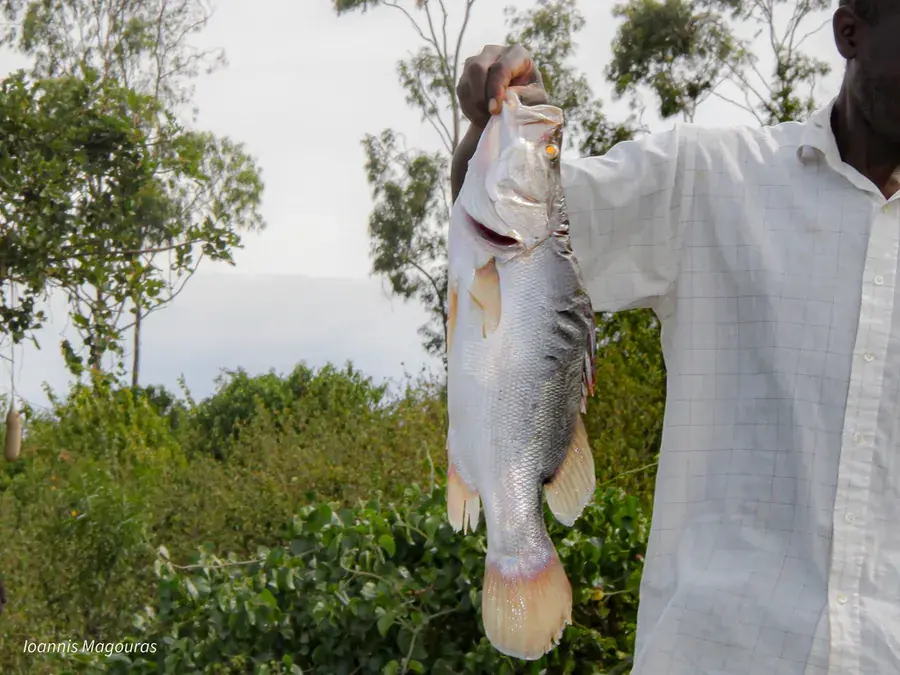
Nile perch
Lates niloticus
A huge silver perch with a blue sheen, a dorsal fin cut deeply into spiny and soft halves, a rounded tail, and a dark eye ringed in bright yellow.
Habitat and methods →Photo: Ioannis Magouras · CC BY 4.0
 FishYear-round
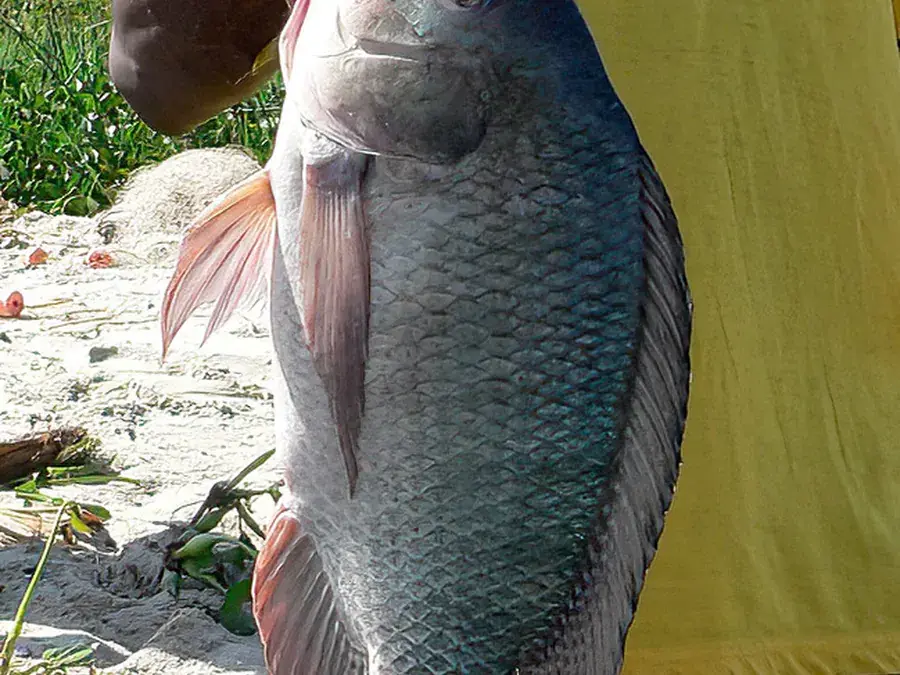
Nile tilapia
Oreochromis niloticus
Deep-bodied and grey-brown with faint bars, and the tell: regular dark vertical stripes right across the tail fin. Breeding males turn reddish, especially on the fins.
Habitat and methods →Photo: Pål A. Olsvik · CC BY 4.0
 FishSep–Apr
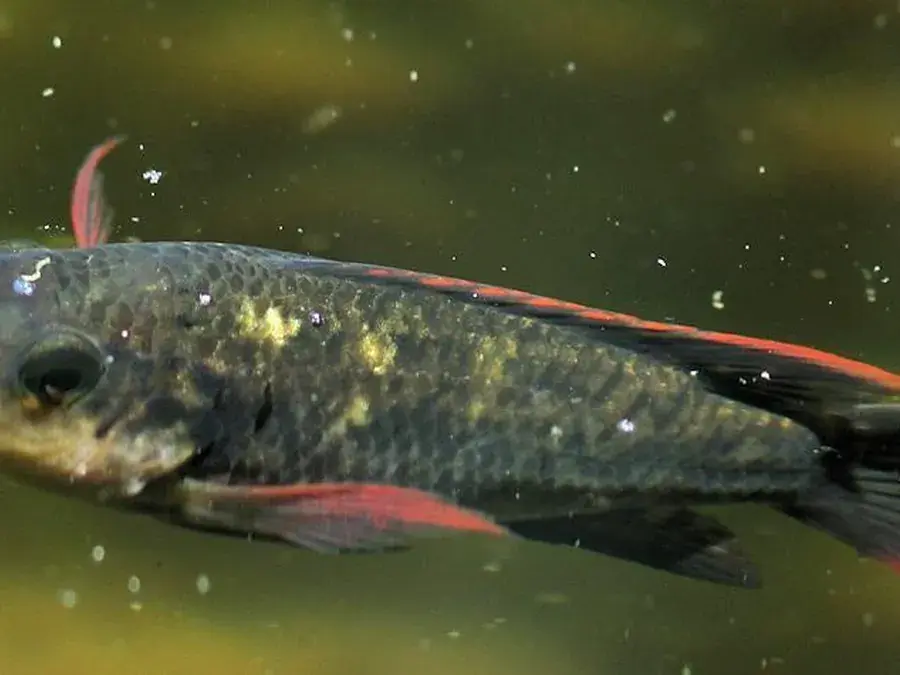
Mozambique tilapia (blue kurper)
Oreochromis mossambicus
Deep-bodied and dull silvery-olive with a few dark blotches along the side and no regular stripes on the tail. Breeding males turn black with a white throat, red-edged fins and a pointed, duck-bill snout.
Habitat and methods →Photo: Wynand Uys · CC BY 4.0