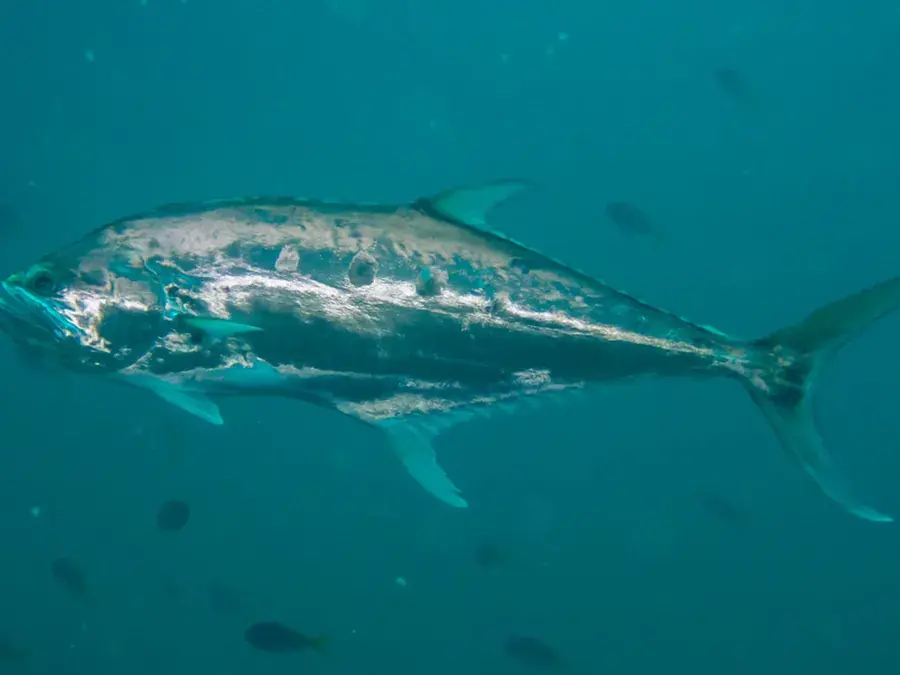
Talang queenfish (largemouth queenfish)
Scomberoides commersonnianus
- When
- Active all year; habitat and behaviour shift with the season.
- Habitat
- Clear coastal water around reefs, points, river mouths and offshore islands, and estuary channels on the push of the tide — the reef edges and creek mouths of Kenya, Tanzania and Mozambique, Madagascar, and in South Africa from Algoa Bay north, above all Durban Bay, Richards Bay and St Lucia.
- Identification
- A long, flat-sided, silvery fish, blue-grey on the back, with a single row of large, oval dark blotches along or just above the lateral line, a big mouth whose upper jaw reaches past the eye, a deeply forked tail and semi-detached, finlet-like rays at the back of the dorsal and anal fins. The skin feels like leather: its tiny scales are buried in it.
- Notes
- A fast, acrobatic hunter of small fish, squid, mantis shrimps and swimming crabs that often leaps when hooked. Young fish live by rasping scales off other fish. In South Africa it is most plentiful in KwaZulu-Natal in summer, and the IGFA world record came from Umkomaas.
- Method
- Poppers, stickbaits and fast spoons worked across the surface near reef edges and river mouths, or a live baitfish on a short wire trace; on fly, a fast-stripped baitfish pattern.
- Caution
- The spines in front of the dorsal and anal fins are sharp and can give a painful wound — handle the fish with a cloth. In South Africa ten a day within the overall daily limit of ten fish, on a DFFE recreational permit. No fishing in Kenya’s marine national parks.
Seasons, size limits and catch limits change every year and differ by water body. Check the current regulations for the country and the water before fishing.
Talang queenfish (largemouth queenfish) facts
- Also called
- Largemouth queenfish, giant queenfish, giant leatherskin, leatherskin or leatherjacket; often simply queenfish or queenie.
- Family
- Carangidae, the jacks and pompanos; some recent classifications place the queenfishes with the pompanos in Trachinotidae.
- Native range
- The Indo-West Pacific, from South Africa, the Red Sea and the Persian Gulf east through Indonesia and Papua New Guinea to New Caledonia, north to southern Japan and south to Western Australia and New South Wales. In southern Africa from Algoa Bay north through KwaZulu-Natal and Mozambique; it was first described from Fort Dauphin (Tolagnaro), Madagascar.
- Habitat
- Coastal water down to about 50 m (165 ft), often near reefs and offshore islands, usually in small groups. It enters estuaries and turbid water but avoids very low salinity.
- Water temperature
- Tropical. AquaMaps puts its preferred surface water at about 24–29°C (76–85°F).
- Size
- Most adults 60–100 cm (24–39 in); the largest measured about 120 cm (47 in).
- Record
- IGFA all-tackle world record: 17.89 kg (39 lb 7 oz), Craig Oliver, Umkomaas, South Africa, 23 May 2010.
- Lifespan
- Up to 15–16 years in northern Australia.
- What it eats
- Small pelagic and bottom fish, squid, mantis shrimps and swimming crabs. Young fish rasp scales and skin from other fish, then move on to mysids, small prawns and fish.
- Spawning
- Not studied in African waters. In northern Australia it spawns over a long season, from about August or September to March, and females mature at four to five years and about 64 cm fork length.
- Young fish
- Small juveniles have not been recorded in South African estuaries, but sub-adults are fairly common in St Lucia, Durban Bay and Richards Bay.
- Teeth and mouth
- A large mouth with several rows of very sharp teeth; young fish have specialised teeth for scraping scales.
- Look-alikes
- Doublespotted queenfish (Scomberoides lysan) is usually smaller, with a row of dark spots on each side of the lateral line; needlescaled queenfish (Scomberoides tol) is smaller still, with the outer half of the dorsal-fin lobe black. The talang has a single row of big blotches and no dark tip to the dorsal lobe.
- Eating
- Edible, with firm white flesh, and best bled and eaten fresh. In South Africa it is mainly a sport fish, seldom caught commercially.
- Status
- Least Concern on the IUCN Red List (2015). Not assessed in South Africa; in northern Australia a 2006 assessment found the stock overfished.
Interactive
Talang queenfish: size range
Move the slider from a typical adult to the largest recorded specimen, shown against objects of known size.
Most adults you'll catch: 60–100 cm (24–39 in).
This talang queenfish (largemouth queenfish): 80 cm. Longer than a loaf of bread, shorter than a four-year-old.
The record
IGFA all-tackle world record: 17.89 kg (39 lb 7 oz), Craig Oliver, Umkomaas, South Africa, 23 May 2010.
Questions people ask about talang queenfish
How big do queenfish get?
Most are 60–100 cm (24–39 in), and the species reaches 120 cm (47 in). The IGFA world record, 17.89 kg (39 lb 7 oz), was caught at Umkomaas, KwaZulu-Natal, in 2010.
Are queenfish spines venomous?
Their dorsal and anal spines are sharp, and anglers report painful wounds from them; FishBase records venomous fin spines in a smaller relative, the needlescaled queenfish. Handle any queenfish with a cloth or lip grip and keep clear of the spines.
When is the best time for queenfish in South Africa?
Summer. They are most plentiful in KwaZulu-Natal in the warm months, when shore, ski-boat and estuary anglers catch them, particularly in St Lucia and Durban Bay.
Found in these regions
Checked against these sources ·
- FishBase — Scomberoides commersonnianus
- FishBase — Scomberoides lysan
- Wikipedia — Doublespotted queenfish
- FishBase — Scomberoides tol
- Mann (ed.), Southern African Marine Linefish Species Profiles — ORI Special Publication 9 (2013)
- ORI — Marine recreational fishing regulations in South Africa
- Wikipedia — Scomberoides commersonnianus
- IGFA — World Records search
Sizes, records and ranges are for the species as a whole; local populations and rules vary. Records change; the record-keeper named above holds the current one.
Local activity
This week's guide for a place
Enter a town, postal code or ZIP for this week's conditions there, based on the local climate, this week's weather and the ecological region.
Also active in October
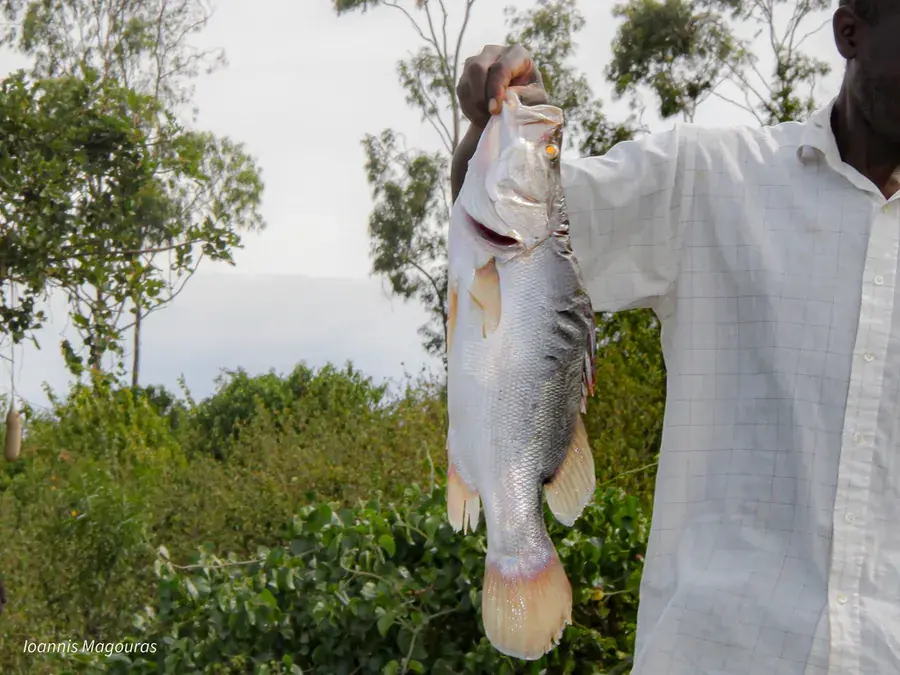 FishYear-round
Nile perch
Lates niloticus
A huge silver perch with a blue sheen, a dorsal fin cut deeply into spiny and soft halves, a rounded tail, and a dark eye ringed in bright yellow.
Habitat and methods →Photo: Ioannis Magouras · CC BY 4.0
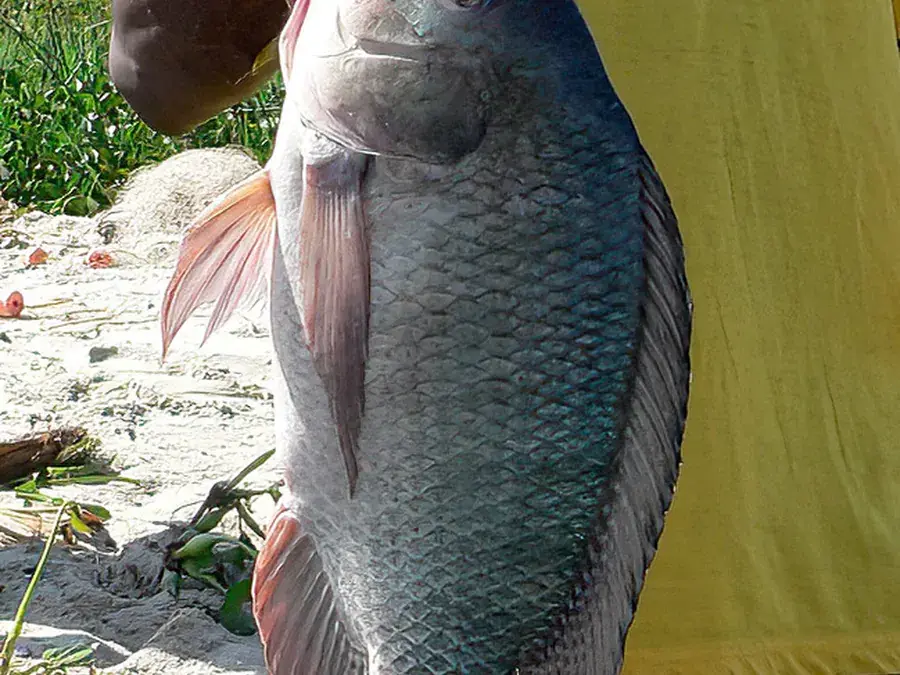 FishYear-round
Nile tilapia
Oreochromis niloticus
Deep-bodied and grey-brown with faint bars, and the tell: regular dark vertical stripes right across the tail fin. Breeding males turn reddish, especially on the fins.
Habitat and methods →Photo: Pål A. Olsvik · CC BY 4.0
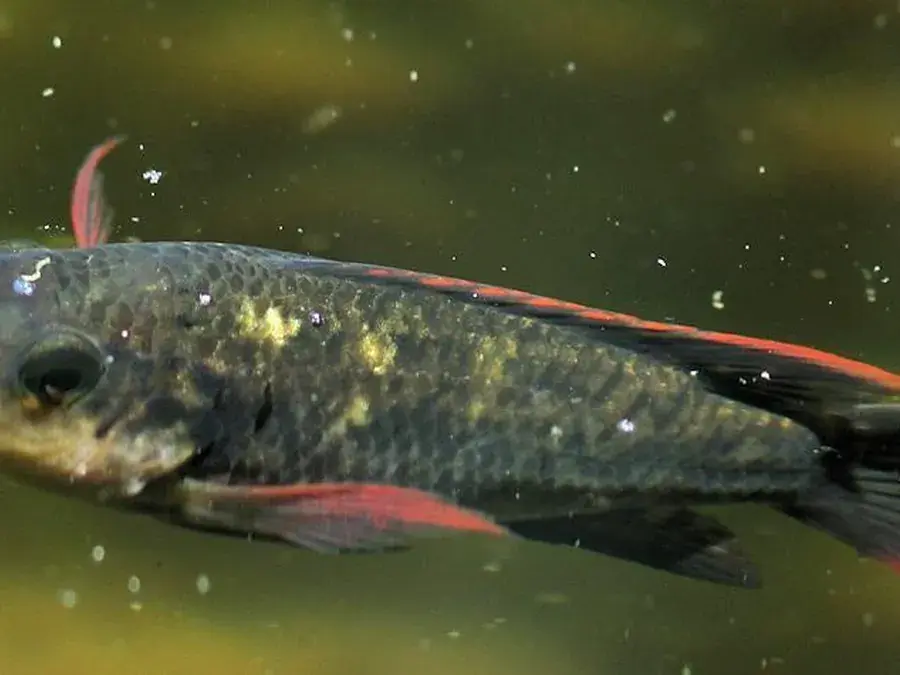 FishSep–Apr
Mozambique tilapia (blue kurper)
Oreochromis mossambicus
Deep-bodied and dull silvery-olive with a few dark blotches along the side and no regular stripes on the tail. Breeding males turn black with a white throat, red-edged fins and a pointed, duck-bill snout.
Habitat and methods →Photo: Wynand Uys · CC BY 4.0