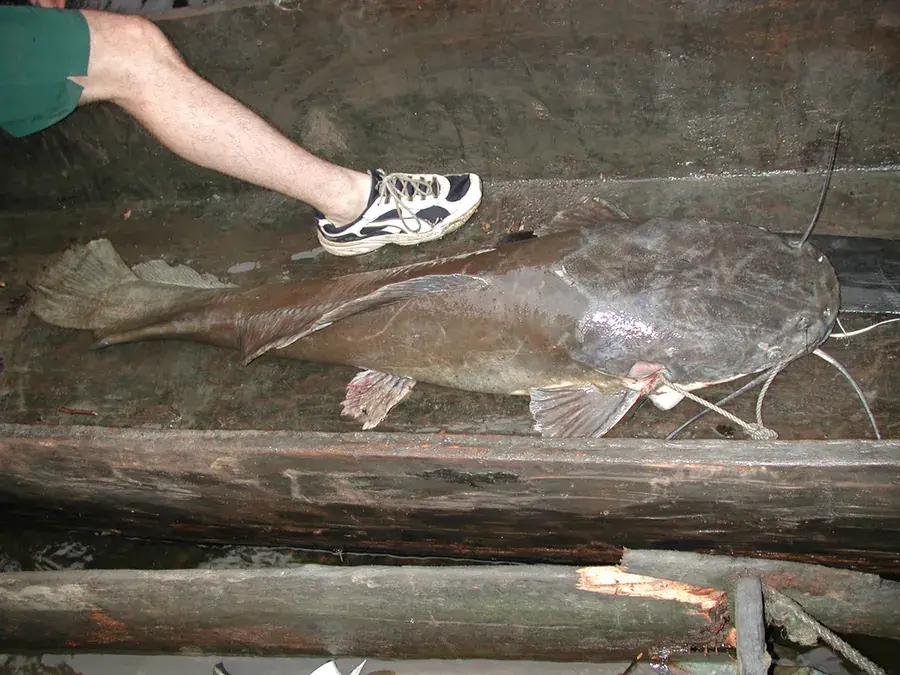
Photo by John P Friel on iNaturalist · CC BY 4.0
Vundu
Heterobranchus longifilis
- When
- Mar–Oct — March, April, May, June, July, August, September, October. Earlier where the water warms first.
- Where it holds
- Deep holes and channels in big rivers and lakes — the Zambezi, Lake Kariba, the Congo, Lake Tanganyika and the Niger. Most active at night.
- How to know it
- A massive olive-brown catfish with whiskers long enough to reach the belly fins, and a fatty (adipose) fin behind the dorsal that is almost as long as the dorsal itself.
- What to know
- The largest true freshwater fish in southern Africa, at up to 1.5 m and 55 kg. A night-time scavenger that takes the smelliest baits going.
- The tactic
- Heavy tackle and a strong-smelling bait — fatty meat, blood bait or, famously on Kariba, blue soap — on the bottom of a deep hole after dark.
- Caution
- Night fishing on Kariba and the Zambezi means crocodiles and hippos: stay in the boat or well back from the edge, with a good light.
Seasons, size limits and catch limits change every year and differ by water body. Check the current regulations for the country and the water before you fish.
Vundu facts
- Also called
- Also called sampa, cur, lenda or certa in parts of its range.
- Family
- Clariidae, the air-breathing catfishes.
- Native range
- The Nile (rare in its lower reaches), the Congo system, the upper and middle Zambezi, Lakes Tanganyika, Edward and Rukwa, and in West Africa the Gambia, Senegal, Niger, Benue, Volta and Lake Chad basins and coastal rivers from Guinea to Gabon.
- Habitat
- Large, deep rivers — in the main channel or deep pools — and big lakes and backwaters, including Lake Kariba. Uncommon wherever it lives.
- Water temperature
- Warm, tropical water: FishBase gives 22–23°C (72–73°F).
- Size
- Most adults 60–120 cm (24–47 in); the largest measured about 150 cm (59 in).
- Record
- IGFA all-tackle world record: 32.5 kg (71 lb 10 oz), Rob Konschel, Lake Kariba, Zimbabwe, 26 December 2000. The species is reported to reach 55 kg.
- Lifespan
- 12 years or more.
- What it eats
- Anything: insects and invertebrates when small; fish and small vertebrates when large. It scavenges carcasses and the offal from riverside villages, finding food by smell and vibration more than sight.
- Spawning
- Little is published about how wild vundu spawn. Fish farms breed it routinely, and cross it with the sharptooth catfish.
- Teeth and mouth
- A wide mouth with broad tooth plates and very long barbels that reach back almost to the pelvic fins. The pectoral spine has strong, downward-pointing serrations.
- Look-alikes
- Sharptooth catfish has no adipose fin and shorter whiskers. The vundu’s tail often shows a pale cross-bar, and the back of its adipose fin is blackish.
- Eating
- Eaten wherever it is caught, and farmed in West Africa.
- Status
- Least Concern on the IUCN Red List, though it has declined locally.
Try it
How big does a vundu get?
Slide it from an ordinary adult to the biggest one ever measured, next to things you know the size of.
Most adults you'll catch: 60–120 cm (24–47 in).
This vundu: 90 cm. Longer than a loaf of bread, shorter than a four-year-old.
The record
IGFA all-tackle world record: 32.5 kg (71 lb 10 oz), Rob Konschel, Lake Kariba, Zimbabwe, 26 December 2000. The species is reported to reach 55 kg.
Questions people ask about vundu
What is the largest freshwater fish in southern Africa?
The vundu, at up to 1.5 m (5 ft) and 55 kg (121 lb). Bull sharks that run up rivers grow bigger, but they are sea fish. The IGFA vundu record is 32.5 kg (71 lb 10 oz), from Lake Kariba in 2000.
What bait do you use for vundu?
Something that smells. Kariba anglers use fatty meat, blood baits — and, famously, bars of blue soap — fished on the bottom of deep holes at night, on heavy tackle with steel leaders and big hooks.
Where do vundu live?
In big, deep rivers and lakes across sub-Saharan Africa and up the Nile: the Zambezi and Lake Kariba, the Congo, Lake Tanganyika, the Niger and Volta. It is uncommon everywhere, and most active at night.
Found in these regions
Checked against these sources ·
- FishBase — Heterobranchus longifilis
- Wikipedia — Vundu
- IGFA — World Records search
- KastKing — That vundu that you do (Kariba baits and methods)
Sizes, records and ranges are for the species as a whole; local fish, and local rules, vary. Records change — the record-keeper named above has the current one.
Is it active near you?
Get this week's guide for your area
Enter a town, postal code or ZIP and we'll tell you what's happening right there this week — from your local climate, this week's weather and your ecological region.
Also active in October
 FishYear-round
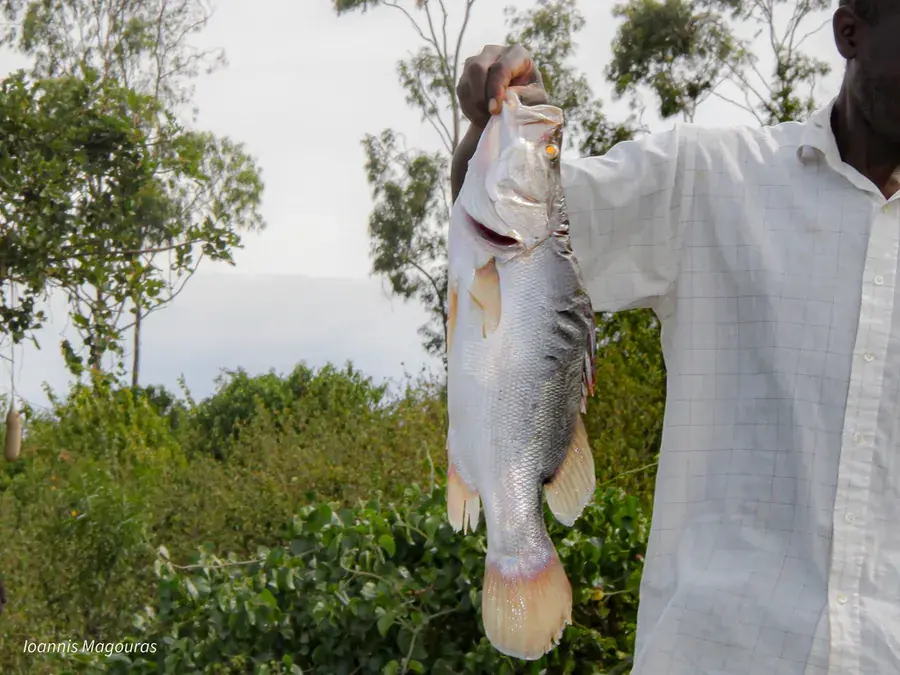
Nile perch
Lates niloticus
A huge silver perch with a blue sheen, a dorsal fin cut deeply into spiny and soft halves, a rounded tail, and a dark eye ringed in bright yellow.
Where and how to catch it →Photo: Ioannis Magouras · CC BY 4.0
 FishYear-round
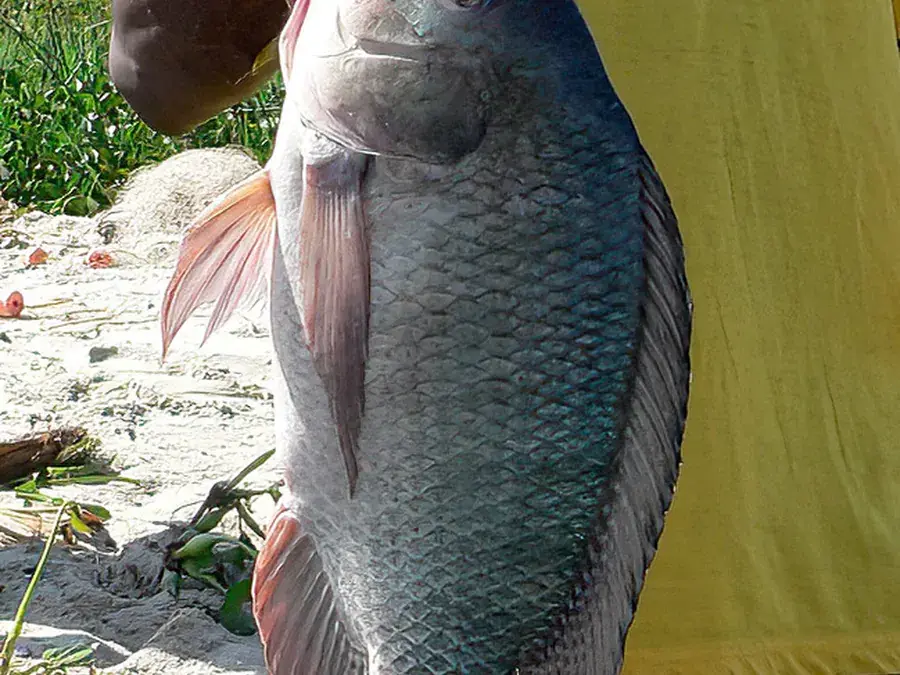
Nile tilapia
Oreochromis niloticus
Deep-bodied and grey-brown with faint bars, and the tell: regular dark vertical stripes right across the tail fin. Breeding males turn reddish, especially on the fins.
Where and how to catch it →Photo: Pål A. Olsvik · CC BY 4.0
 FishSep–Apr
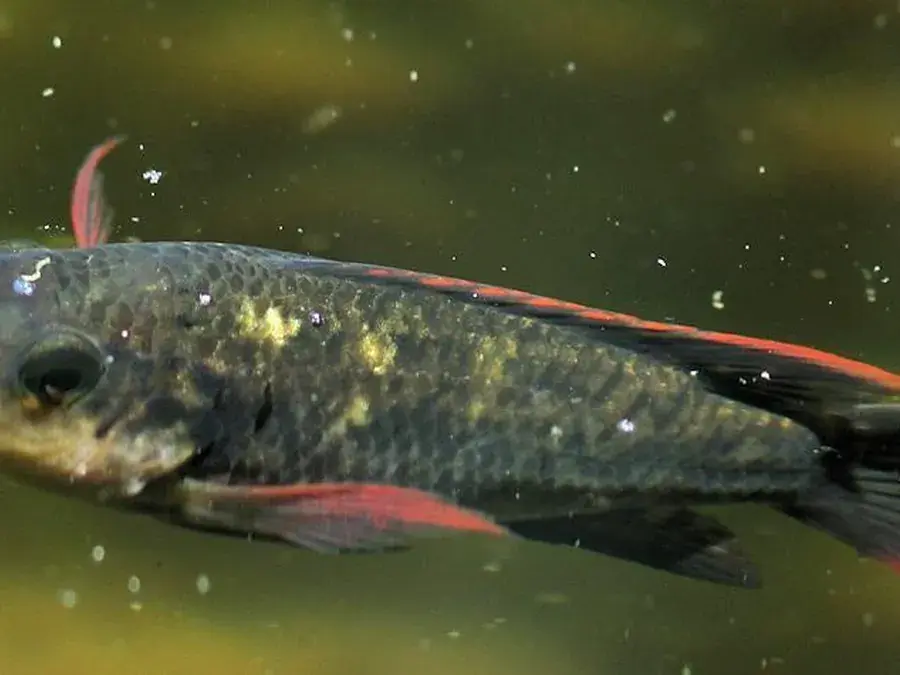
Mozambique tilapia (blue kurper)
Oreochromis mossambicus
Deep-bodied and dull silvery-olive with a few dark blotches along the side and no regular stripes on the tail. Breeding males turn black with a white throat, red-edged fins and a pointed, duck-bill snout.
Where and how to catch it →Photo: Wynand Uys · CC BY 4.0