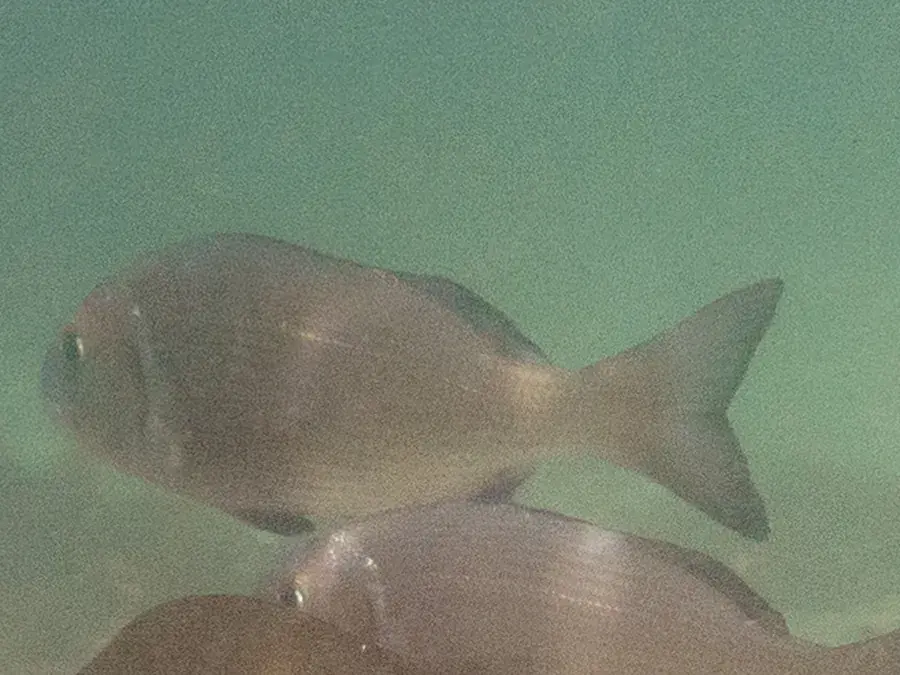
Photo by Public domain (iNaturalist) on iNaturalist · CC0 (public domain)
White musselcracker (brusher)
Sparodon durbanensis
- When
- Jun–Jan — January, June, July, August, September, October, November, December. Earlier where the water warms first.
- Habitat
- High-profile inshore reefs, deep gullies and rocky points down to about 20 m, from False Bay to KwaZulu-Natal — the rocky coast of the Eastern Cape and southern KwaZulu-Natal above all.
- Identification
- A heavy, silver-grey seabream with darker fins, a white belly and massive jaws: four incisor-like teeth at the front of each jaw, the middle two enlarged and curved. In the water it shows a bluish glow.
- Notes
- A trophy fish of the rock anglers and spearfishers, built to crush mussels, sea urchins and snails. It is most common off KwaZulu-Natal in winter (June and July) and along the south-east Cape coast in spring and summer (August to December), when adults gather to spawn.
- Method
- A whole crab, a bunch of mussel or red bait on a strong hook and heavy line, fished right in the white water at the foot of the rocks.
- Caution
- Two a day at 60 cm or more, on a DFFE recreational permit (online or at the Post Office), and it may not be sold. It lives over 30 years and matures late; stocks are thought to be about a fifth of their historical size, so release the big breeders. No fishing in no-take marine protected areas.
Seasons, size limits and catch limits change every year and differ by water body. Check the current regulations for the country and the water before fishing.
White musselcracker (brusher) facts
- Also called
- Brusher, cracker, silver steenbras, beenbek, sandbloue, biskop or wit mosselkraker.
- Family
- Sparidae, the seabreams and porgies — the only species in its genus.
- Native range
- Endemic to South Africa, from Cape Point to the Thukela River in KwaZulu-Natal; the main stock lies between southern KwaZulu-Natal and False Bay. Old records from Djibouti and Mozambique are doubtful.
- Habitat
- High-profile inshore reefs down to about 20 m (65 ft). Juveniles live in rock pools, gullies and shallow reefs.
- Water temperature
- Warm-temperate to subtropical coastal water. AquaMaps puts its preferred surface water at about 14–24°C (58–75°F).
- Size
- Most adults 40–80 cm (16–31 in); the largest measured about 120 cm (47 in).
- Record
- No IGFA all-tackle category. The South African spearfishing record is 22.2 kg (49 lb), from 1974; the largest fish measured in research was 102.9 cm fork length.
- Lifespan
- Up to 31 years.
- What it eats
- Snails, sea urchins, crabs and other crustaceans, bristle worms and green seaweed.
- Spawning
- August to January on the south-east Cape coast, in spawning aggregations; part of the adult stock migrates east to the Transkei and southern KwaZulu-Natal to spawn. Fish mature at about five and a half years and 35 cm fork length.
- Young fish
- Small juveniles live in intertidal rock pools and shallow gullies and stay close to home until they are about 55 cm fork length.
- Teeth and mouth
- Massive, strongly built jaws with four incisor-like teeth at the front of each, the middle two enlarged and curved.
- Look-alikes
- Black musselcracker (poenskop, Cymatoceps nasutus) is darker, and big adults grow a large fleshy ‘nose’; it is a commercial species with a one-a-day limit at 50 cm.
- Eating
- A no-sale species in South Africa: only permit-holding recreational anglers may take it.
- Status
- Near Threatened on the IUCN Red List (2024). Stocks are estimated to have fallen to about 20% of historical levels.
Interactive
White musselcracker: size range
Move the slider from a typical adult to the largest recorded specimen, shown against objects of known size.
Most adults you'll catch: 40–80 cm (16–31 in).
This white musselcracker (brusher): 60 cm. Longer than a loaf of bread, shorter than a four-year-old.
The record
No IGFA all-tackle category. The South African spearfishing record is 22.2 kg (49 lb), from 1974; the largest fish measured in research was 102.9 cm fork length.
Questions people ask about white musselcracker
What is the bag limit for white musselcracker?
Two a day at 60 cm or more, on a DFFE recreational permit. It is a no-sale species.
When is the best time for white musselcracker?
In KwaZulu-Natal, winter — catch rates peak in June and July. On the south-east Cape coast, spring and summer, from about August to December, when the fish gather to spawn.
How old do white musselcrackers get?
Up to 31 years. They take about five and a half years to mature, which, with their habit of gathering to spawn, makes them easy to over-fish.
Found in these regions
Checked against these sources ·
- FishBase — Sparodon durbanensis
- Mann (ed.), Southern African Marine Linefish Species Profiles — ORI Special Publication 9 (2013)
- WWF-SASSI — White musselcracker
- Wikipedia — Sparodon
Sizes, records and ranges are for the species as a whole; local populations and rules vary. Records change; the record-keeper named above holds the current one.
Local activity
This week's guide for a place
Enter a town, postal code or ZIP for this week's conditions there, based on the local climate, this week's weather and the ecological region.
Also active in October
 FishYear-round
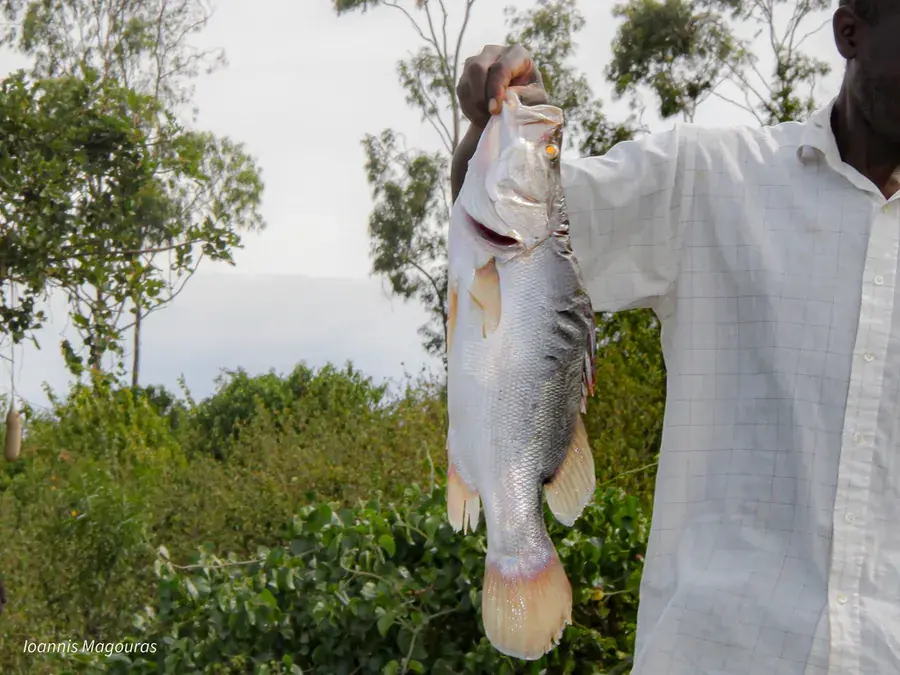
Nile perch
Lates niloticus
A huge silver perch with a blue sheen, a dorsal fin cut deeply into spiny and soft halves, a rounded tail, and a dark eye ringed in bright yellow.
Habitat and methods →Photo: Ioannis Magouras · CC BY 4.0
 FishYear-round
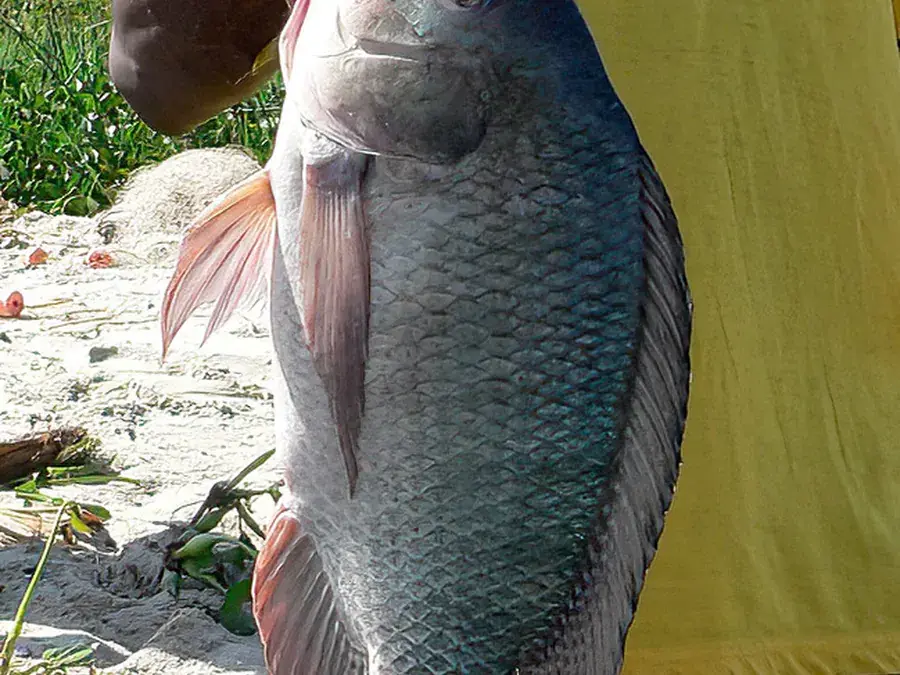
Nile tilapia
Oreochromis niloticus
Deep-bodied and grey-brown with faint bars, and the tell: regular dark vertical stripes right across the tail fin. Breeding males turn reddish, especially on the fins.
Habitat and methods →Photo: Pål A. Olsvik · CC BY 4.0
 FishSep–Apr
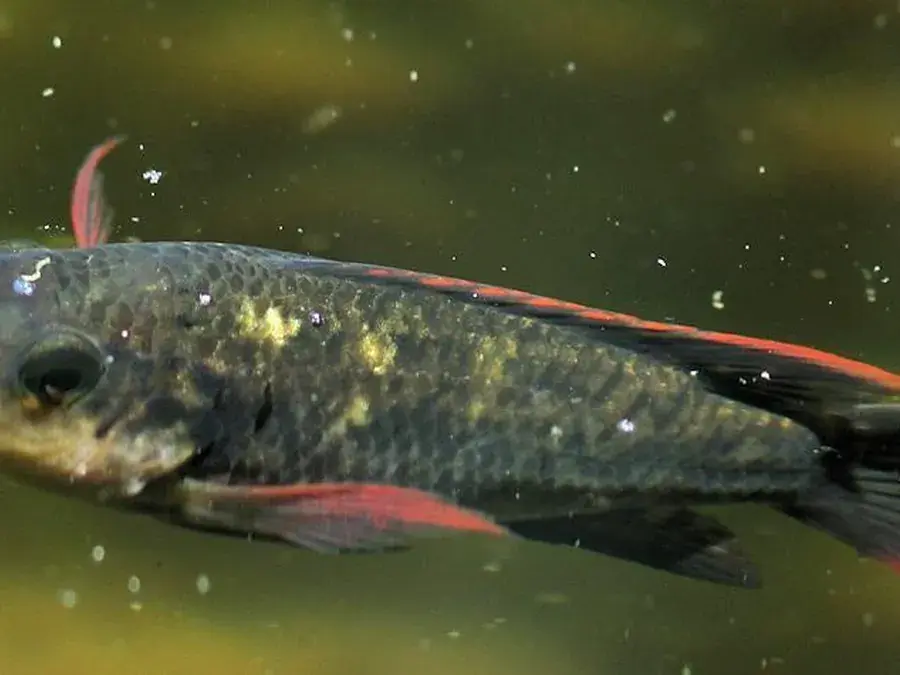
Mozambique tilapia (blue kurper)
Oreochromis mossambicus
Deep-bodied and dull silvery-olive with a few dark blotches along the side and no regular stripes on the tail. Breeding males turn black with a white throat, red-edged fins and a pointed, duck-bill snout.
Habitat and methods →Photo: Wynand Uys · CC BY 4.0