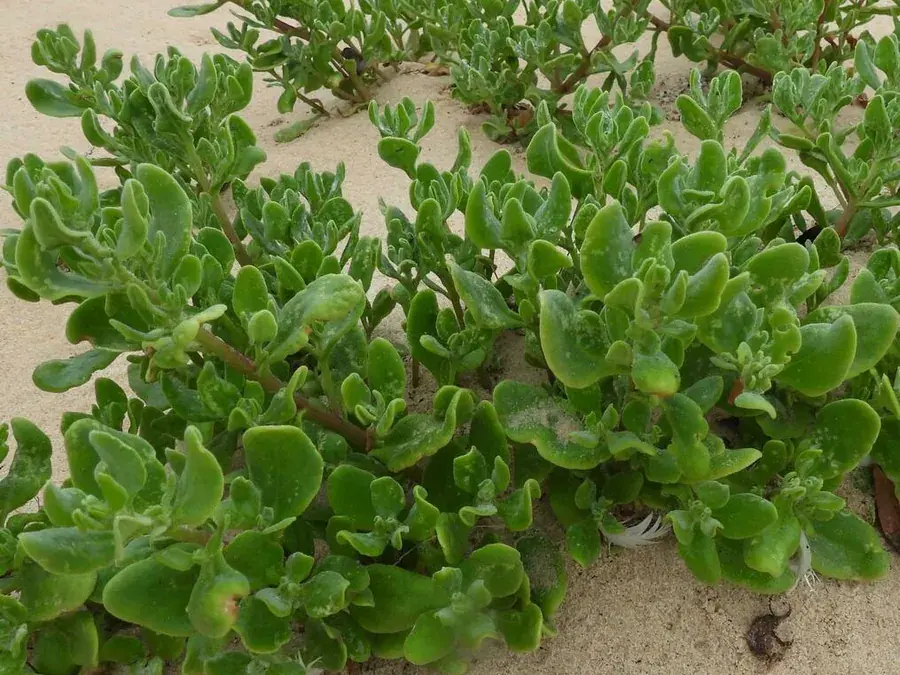
Photo by Henry de Lange on iNaturalist · CC BY 4.0
Coastal·In season (October)
Dune spinach (duinespinasie)
Tetragonia decumbens
- When
- Typically May – October — May, June, July, August, September, October. Earlier in warm, low country; later in the hills.
- Where it grows
- Coastal and estuarine sand dunes from southern Namibia round the Cape to the Eastern Cape, often among the first plants on moist, moving foredunes.
- Identification
- A sprawling, trailing undershrub with thick, pale stems and fat, oval, saddle-shaped leaves 1–6 cm (½–2½ in) long that sit straight on the stem without a stalk and glisten as if wet — the sheen comes from tiny water-storage cells. Small yellow four-petalled flowers sit in groups of three to five in the upper leaf joints from August to November, followed by thickly four-winged fruit.
- Look-alikes
- No dangerous double is known. Other succulents share the dunes, so learn it with the yellow four-petalled flowers or the four-winged fruit on the plant.
- Harvest and use
- Pick the soft new tips and leafy stems that grow in the rainy season, and wash out every grain of sand. Boil or steam them like spinach; the flavour is mild, so the Cape way is to cook them with a little suring and finish with butter. The texture is slightly grainy. Raw leaves are crisp and salty in a salad.
- Caution
- Its close relative New Zealand spinach holds oxalates and is blanched before cooking; doing the same here is a sensible precaution. Take a few tips from each plant and never pull plants up: dune spinach binds moving sand. Much of the Cape coast is reserve or national park, where picking is not allowed; elsewhere in the Western Cape the landowner's written permission is required.
Dune spinach (duinespinasie) at a glance
- Also called
- Duinespinasie (Afrikaans), sea spinach
- Family
- Aizoaceae (the ice-plant family), with New Zealand spinach
- Where it grows
- Coastal and estuarine sand dunes from southern Namibia round the Cape to the Eastern Cape. It has also become established in parts of Australia.
- When to pick
- The new growth of the rainy season, which in the winter-rainfall Cape means roughly May to October, is the best to eat. It flowers from August to November.
- Parts used
- The soft tips and leafy stems, cooked or raw.
- Is any of it poisonous?
- No toxicity is recorded. Its close relative New Zealand spinach (Tetragonia tetragonioides) contains oxalates, removed by blanching for a minute before cooking.
Questions people ask about dune spinach
Can you eat dune spinach?
Yes. Tetragonia decumbens is a local delicacy in southern Africa: the leaves and soft stems are eaten raw in salads, where they taste salty, or cooked like spinach.
How do you cook dune spinach?
Wash it thoroughly to remove the clinging sand, then boil or steam it. Its flavour is mild, so it is traditionally cooked with a little suring (Oxalis pes-caprae) and finished with butter; the texture is slightly grainy.
When is dune spinach at its best?
In the rainy season, when the plant puts out new growth — the winter months in the Cape.
Why shouldn't you pull up dune spinach?
Because it holds the dunes together. It is an early coloniser of moist, moving sand, trapping seed and adding organic matter so that other plants can follow; take only tips, and it re-sprouts.
Found in these regions
Local season
This week's foraging guide for a place
Enter a town, postal code or ZIP for what is in season there this week, based on the local climate, this week's weather and the ecological region.
Also in season in October
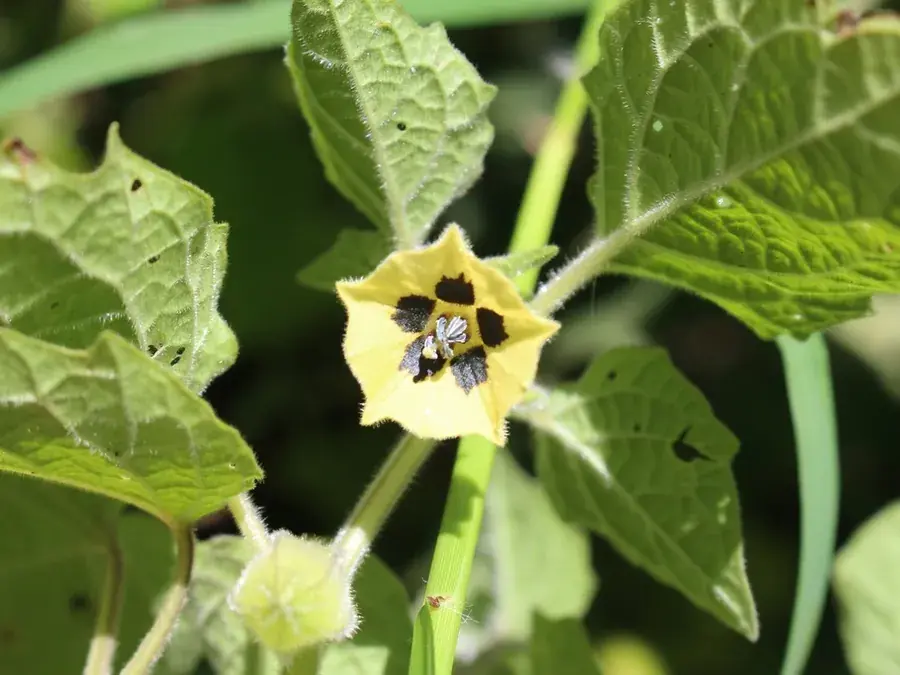 FruitSeptember – December
Cape gooseberry (golden berry)
Physalis peruviana
A soft, spreading, velvety-hairy shrub up to about 1 m (3 ft) with heart-shaped, wavy-edged leaves. The drooping, bell-shaped flowers, 1–2 cm (½–¾ in) across, are yellow with dark purple-brown blotches inside. Each fruit is a smooth, round, golden-orange berry 1.25–2 cm (½–¾ in) across, like a tiny tomato, enclosed in a papery, ten-ribbed husk — a small lantern — that dries from green to straw-brown.
Identification and look-alikes →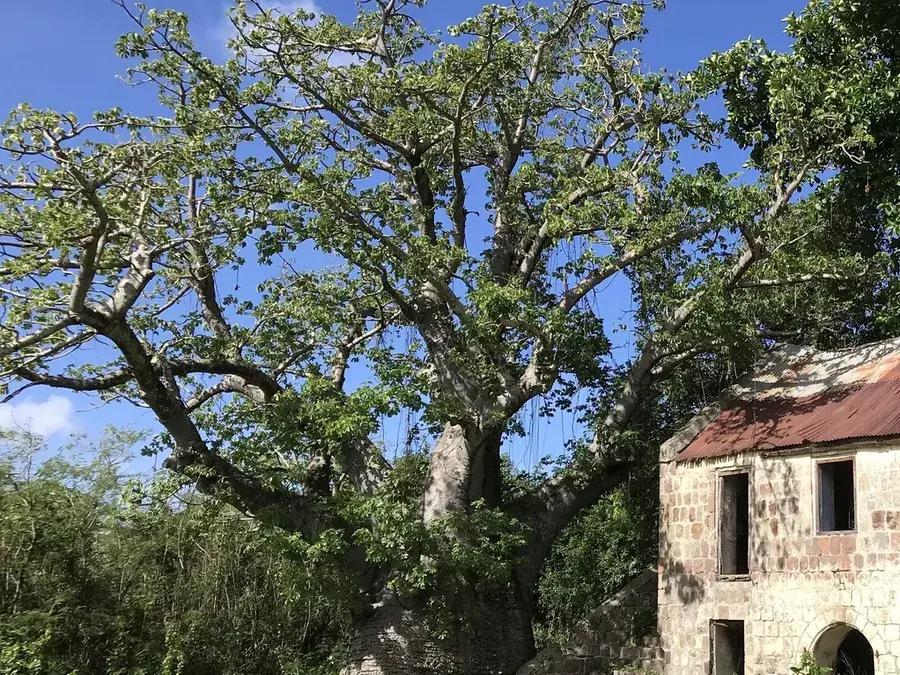 FruitOctober – February
Baobab (fruit and leaves)
Adansonia digitata
A vast, swollen grey trunk with smooth, folded bark and stubby branches that look like roots, bare of leaves for most of the dry season. The leaves are hand-shaped, with five to seven finger-like leaflets. The fruit is a velvety, egg- to sausage-shaped pod up to 25 cm (10 in) long on a long hanging stalk: a hard woody shell around chalky, off-white pulp and black kidney-shaped seeds.
Identification and look-alikes →Photo: Cliff Tyllick · CC BY 4.0
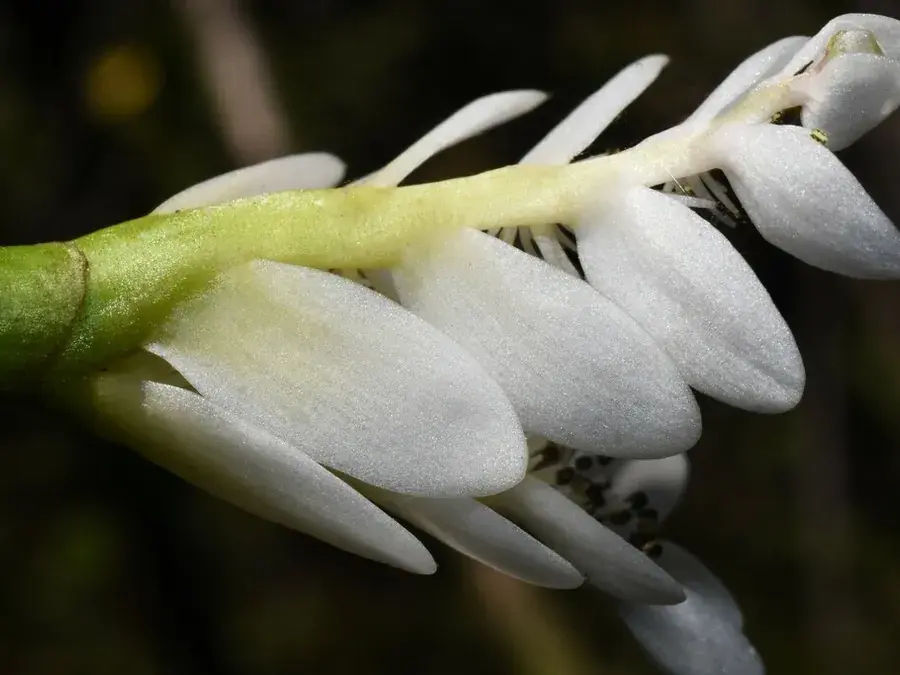 GreenJune – October
Waterblommetjie (Cape pondweed)
Aponogeton distachyos
Long-stalked, narrow-oval leaves floating flat on the water, and above them forked white flower spikes shaped like a 'Y', each branch lined with white petal-like bracts and dark purple-brown stamens, sweetly scented. The plant dies back as the pools dry in summer and regrows with the autumn rain.
Identification and look-alikes →Photo: Gabriel Campbell-Martinez · CC BY 4.0
Checked against these sources ·
- SANBI PlantZAfrica — Tetragonia decumbens
- Wikipedia — Tetragonia decumbens
- Sogoni, Open Agriculture — Tetragonia decumbens, a wild leafy vegetable for bio-saline agriculture in South Africa
- Wikipedia — Tetragonia tetragonioides (oxalates and blanching)
- CapeNature — Flora permits
Seasons are typical for the middle of the range and move by weeks north and south, and up and down hills.
Educational information only. Never eat a wild plant or mushroom identified from a single photograph or description — confirm with a regional field guide or an experienced forager, and know the poisonous species in your area first.