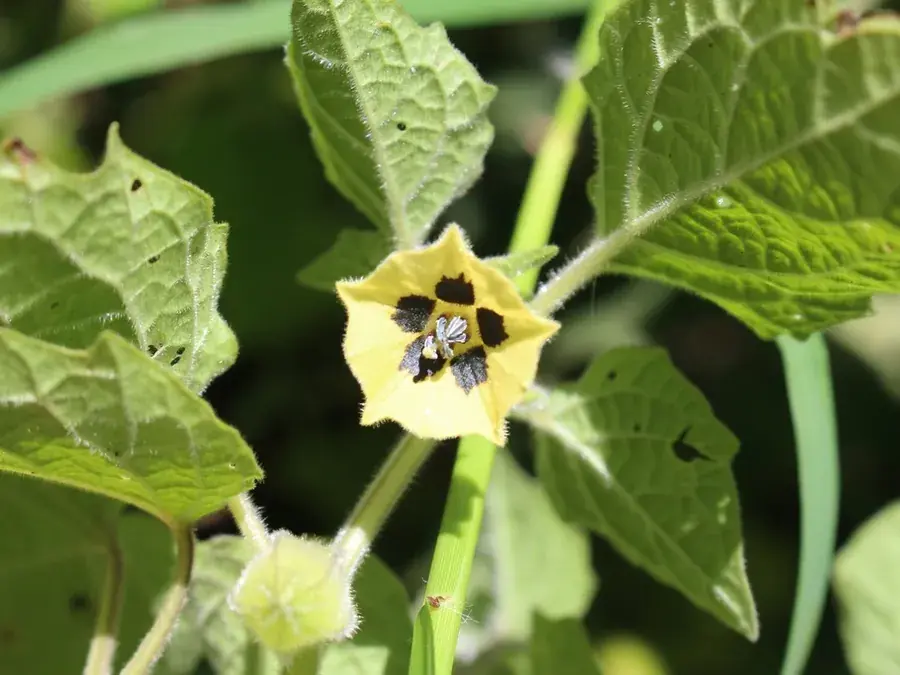
Photo by Public domain (iNaturalist) on iNaturalist · CC0 (public domain)
Fruit·In season (October)
Cape gooseberry (golden berry)
Physalis peruviana
- When
- Typically September – December — September, October, November, December. Earlier in warm, low country; later in the hills.
- Where it grows
- An escape from gardens and farms that has run wild across much of South Africa, from the Cape to KwaZulu-Natal, the Lowveld and the Highveld, and in the East African highlands spreads as a harmless weed of gardens, fields, secondary scrub and abandoned plantations.
- Identification
- A soft, spreading, velvety-hairy shrub up to about 1 m (3 ft) with heart-shaped, wavy-edged leaves. The drooping, bell-shaped flowers, 1–2 cm (½–¾ in) across, are yellow with dark purple-brown blotches inside. Each fruit is a smooth, round, golden-orange berry 1.25–2 cm (½–¾ in) across, like a tiny tomato, enclosed in a papery, ten-ribbed husk — a small lantern — that dries from green to straw-brown.
- Look-alikes
- Wild nightshades (Solanum) with poisonous berries grow in the same places; none wraps its fruit in a papery lantern. No husk, no picking — and inside the husk, only a golden berry.
- Harvest and use
- Pick when the husk has dried to a papery straw colour and the berry inside is fully golden. Peel back the husk and eat the sweet-sharp berry fresh, or cook it into jam, long a South African staple. Left in their husks, the berries travel and keep better.
- Caution
- Unripe fruit, leaves, stems and flowers contain solanine and related alkaloids and are poisonous. Eat only fully ripe, golden berries.
Cape gooseberry (golden berry) at a glance
- Also called
- Golden berry (South Africa), goldenberry, Peruvian groundcherry, poha (Hawaii); uchuva and aguaymanto (South America); ntuntunu (Luganda)
- Family
- Solanaceae (the nightshade family, with tomatoes)
- Where it grows
- Native to the Andes of Peru and Chile. Settlers grew it at the Cape of Good Hope before 1807, and in South Africa it is both cultivated and a common escape: iNaturalist holds some 1,900 research-grade wild records there, from the Western Cape to KwaZulu-Natal, the Lowveld and the Highveld. In East Africa it often runs wild as a harmless weed of gardens, fields, secondary scrub and abandoned plantations.
- When to pick
- In South Africa the fruit ripens mainly from April to June, with some from March. In the East African highlands, seasons follow the local rains rather than these months. Ripe when the husk is dry and straw-coloured and the berry golden.
- Parts used
- The ripe berry, fresh, in jam, chutney, puddings and sauces.
- Is any of it poisonous?
- Unripe fruit, flowers, leaves and stems contain solanine and solanidine alkaloids, which can poison people, cattle and horses.
Questions people ask about cape gooseberry
Is the Cape gooseberry native to the Cape?
No. It comes from the Andes of Peru and Chile, and was grown by settlers at the Cape of Good Hope before 1807. It has since run wild across much of South Africa and East Africa.
When are Cape gooseberries ripe in South Africa?
Mainly from April to June. Pick them when the papery husk has dried to straw colour and the berry inside is fully golden-orange.
Are unripe Cape gooseberries poisonous?
Yes. Unripe fruit, like the leaves, stems and flowers, contains solanine alkaloids. Eat only fully ripe, golden berries.
How do I recognise a Cape gooseberry?
By the lantern: each berry hangs inside a papery, ten-ribbed husk. The plant is soft and velvety with heart-shaped leaves, and the bell-shaped yellow flowers have dark purple-brown blotches inside.
Found in these regions
Local season
This week's foraging guide for a place
Enter a town, postal code or ZIP for what is in season there this week, based on the local climate, this week's weather and the ecological region.
Also in season in October
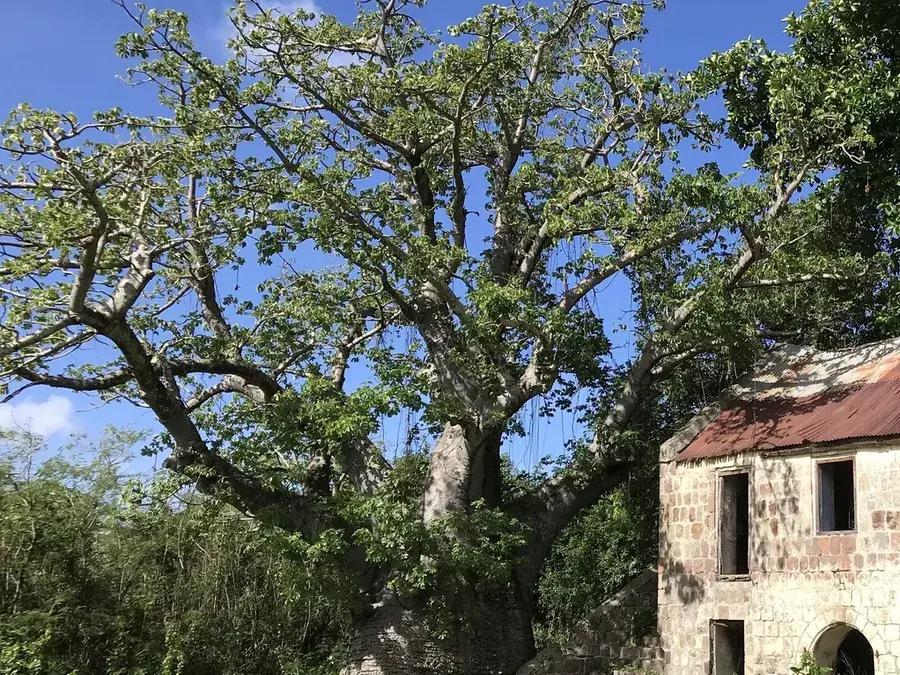 FruitOctober – February
Baobab (fruit and leaves)
Adansonia digitata
A vast, swollen grey trunk with smooth, folded bark and stubby branches that look like roots, bare of leaves for most of the dry season. The leaves are hand-shaped, with five to seven finger-like leaflets. The fruit is a velvety, egg- to sausage-shaped pod up to 25 cm (10 in) long on a long hanging stalk: a hard woody shell around chalky, off-white pulp and black kidney-shaped seeds.
Identification and look-alikes →Photo: Cliff Tyllick · CC BY 4.0
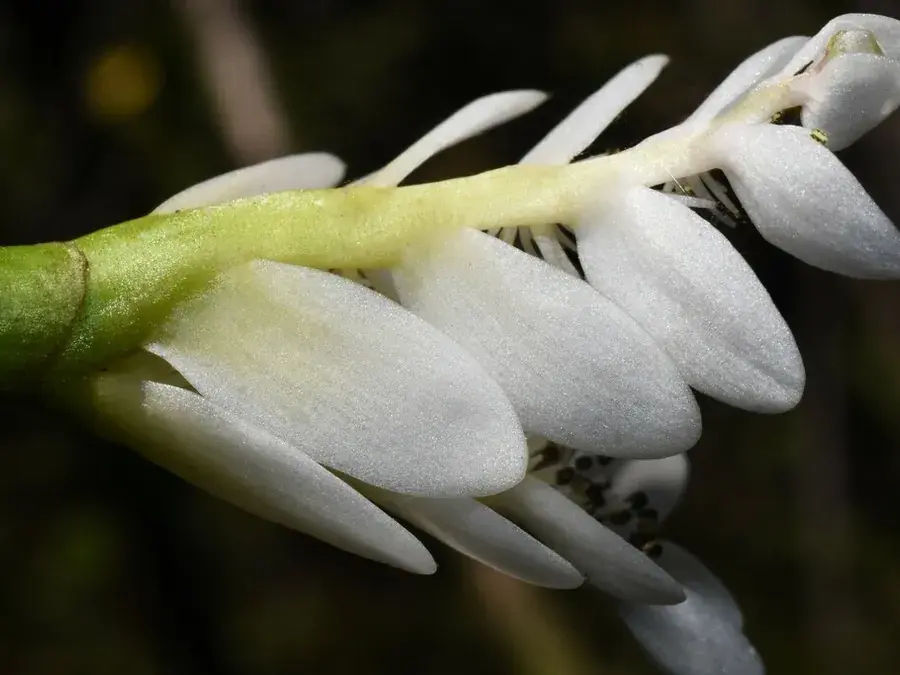 GreenJune – October
Waterblommetjie (Cape pondweed)
Aponogeton distachyos
Long-stalked, narrow-oval leaves floating flat on the water, and above them forked white flower spikes shaped like a 'Y', each branch lined with white petal-like bracts and dark purple-brown stamens, sweetly scented. The plant dies back as the pools dry in summer and regrows with the autumn rain.
Identification and look-alikes →Photo: Gabriel Campbell-Martinez · CC BY 4.0
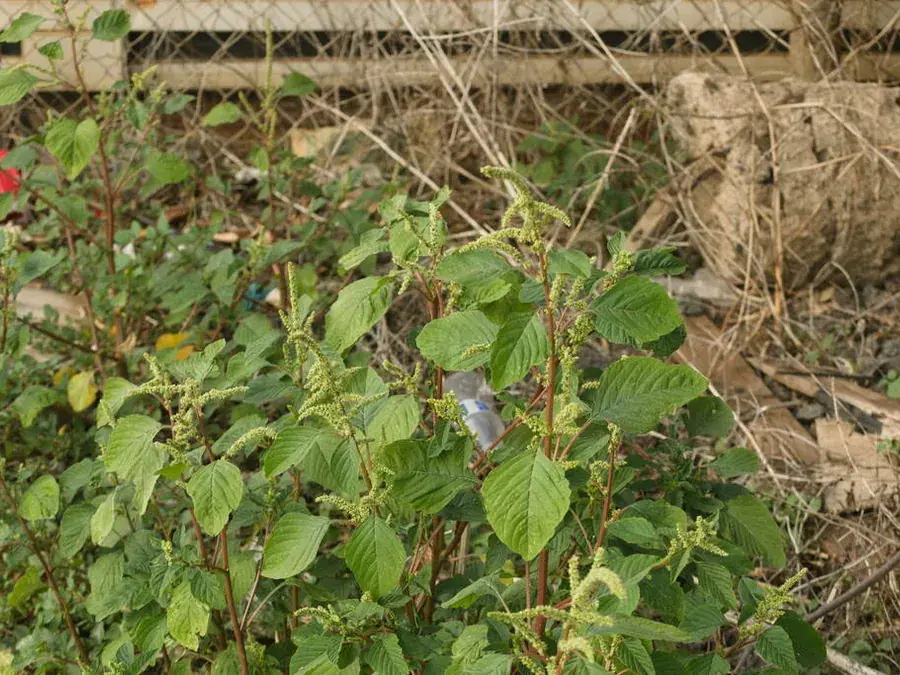 Poisonous look-alikeGreenMay – October
Amaranth greens (morogo, mchicha)
Amaranthus spp.
Upright or sprawling herbs, often with reddish stems, carrying alternate, oval to diamond-shaped, smooth-edged leaves on long stalks, and dense, bristly spikes of tiny green or reddish flowers at the top and in the leaf joints. No milky sap, no berries, no trumpet flowers. Spiny amaranth has a pair of sharp spines at each leaf base.
Identification and look-alikes →Photo: Kevin Faccenda · CC BY 4.0
Checked against these sources ·
- Wikipedia — Physalis peruviana
- Morton, Fruits of Warm Climates — Cape gooseberry
- World Agroforestry (ICRAF) — Useful trees and shrubs of Uganda: Physalis peruviana
- iNaturalist — Physalis peruviana (research-grade observations)
Seasons are typical for the middle of the range and move by weeks north and south, and up and down hills.
Educational information only. Never eat a wild plant or mushroom identified from a single photograph or description — confirm with a regional field guide or an experienced forager, and know the poisonous species in your area first.