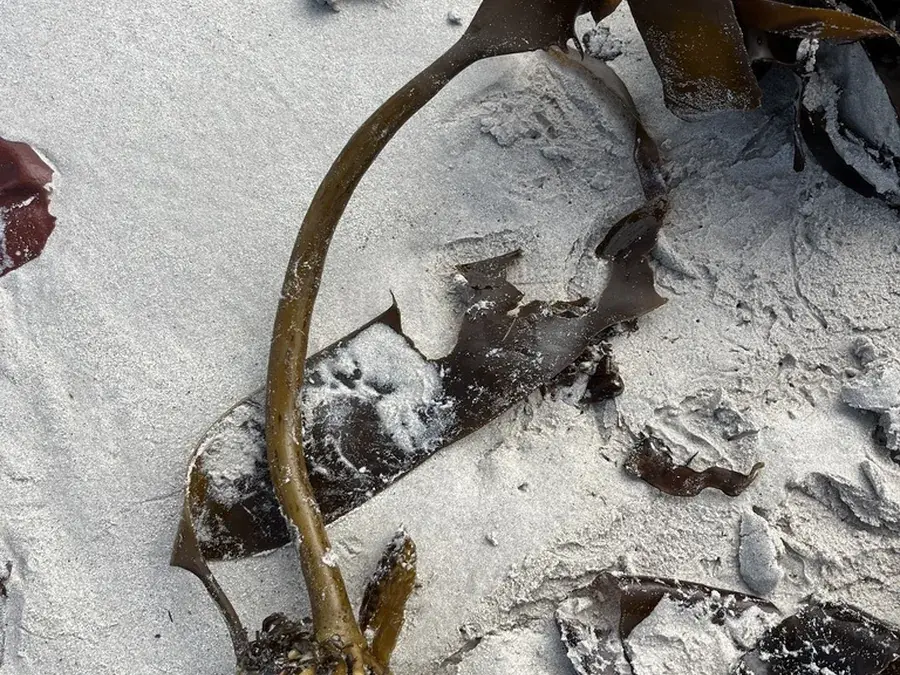
Photo by Charleen Brunke on iNaturalist · CC BY 4.0
Coastal·In season (October)
Sea bamboo (Cape kelp)
Ecklonia maxima
- When
- All year, though what is worth picking changes with the rains and the seasons.
- Where it grows
- The kelp forests of the cold Atlantic coast, from the south of South Africa round the Cape Peninsula and up the West Coast into Namibia, in shallow water to about 8 m (26 ft). After storms, whole plants wash up on the beaches.
- Identification
- South Africa's largest kelp, up to 12–15 m (40–50 ft) long: a root-like holdfast, a single long, hollow, gas-filled stalk and, at the surface, a large bulb carrying a tangle of thick, strap-like fronds. Washed up, it lies on the sand like brown hosepipe with a bulb at one end.
- Look-alikes
- Split-fan kelp (Laminaria pallida), the other big kelp of the West Coast, has no floating bulb; it is harvested commercially too.
- Harvest and use
- Cape foragers wash it well in fresh water, then pickle it or cook it into dishes such as kelp lasagne and falafel. Use it in small amounts, as a seasoning rather than a vegetable.
- Caution
- Very high in iodine, like all brown kelps. France's food-safety agency advises people with thyroid, heart or kidney disease, and pregnant or breastfeeding women without medical advice, not to eat it, and says there are too few data to judge the risk for children. In South Africa, collecting any seaweed needs a permit: the coast is divided into commercial seaweed concession areas whose rules cover washed-up kelp as well as living plants. Ask DFFE before you take any; in Namibia, ask the fisheries ministry.
Sea bamboo (Cape kelp) at a glance
- Also called
- Kelp, Cape kelp, kelp weed
- Family
- Kelps (order Laminariales; long placed in the family Alariaceae)
- Where it grows
- The southern Atlantic coast of Africa, from the far south of South Africa to northern Namibia, most common on the West Coast and in Namibia. It forms kelp forests in shallow water to about 8 m (26 ft).
- When to pick
- All year. Washed-up plants are most plentiful after storms; the fronds can grow up to 13 mm (½ in) a day.
- Parts used
- Fronds and stalk, cooked, pickled or dried, in small amounts.
- Is any of it poisonous?
- Brown kelps can hold very high levels of iodine, enough to exceed safe intakes; France's food-safety agency (ANSES) warns against eating them with thyroid, heart or kidney disease, on iodine or lithium medication, or when pregnant or breastfeeding without medical advice.
Questions people ask about sea bamboo
Can you eat Cape kelp?
Yes, in small amounts. Cape foragers pickle it and cook it into dishes such as kelp lasagne and falafel. Commercially, it is harvested mainly as feed for farmed abalone and for agricultural supplements.
Can I collect washed-up kelp in South Africa?
Not without a permit. The Marine Living Resources Act regulations forbid collecting or removing any aquatic plant without one, and the coast from Port Nolloth to Port St Johns is divided into seaweed concession areas whose rules cover beach-cast kelp as well as living plants. Ask DFFE first.
How big does sea bamboo grow?
Up to 12–15 m (40–50 ft) long, the largest kelp in South Africa. A hollow, gas-filled stalk lifts a bulb and a tangle of strap-like fronds to the surface.
Is kelp high in iodine?
Yes. Brown kelps are among the richest sources of iodine in the diet, enough to exceed the safe upper intake; eat kelp as a seasoning, and not at all with a thyroid condition or in pregnancy without medical advice.
Found in these regions
Local season
This week's foraging guide for a place
Enter a town, postal code or ZIP for what is in season there this week, based on the local climate, this week's weather and the ecological region.
Also in season in October
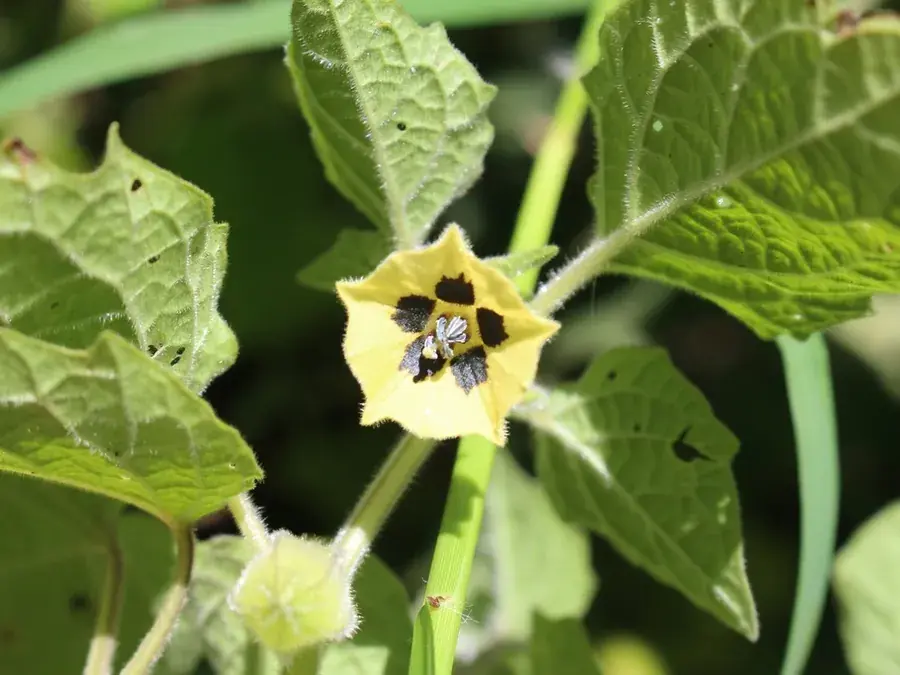 FruitSeptember – December
Cape gooseberry (golden berry)
Physalis peruviana
A soft, spreading, velvety-hairy shrub up to about 1 m (3 ft) with heart-shaped, wavy-edged leaves. The drooping, bell-shaped flowers, 1–2 cm (½–¾ in) across, are yellow with dark purple-brown blotches inside. Each fruit is a smooth, round, golden-orange berry 1.25–2 cm (½–¾ in) across, like a tiny tomato, enclosed in a papery, ten-ribbed husk — a small lantern — that dries from green to straw-brown.
Identification and look-alikes →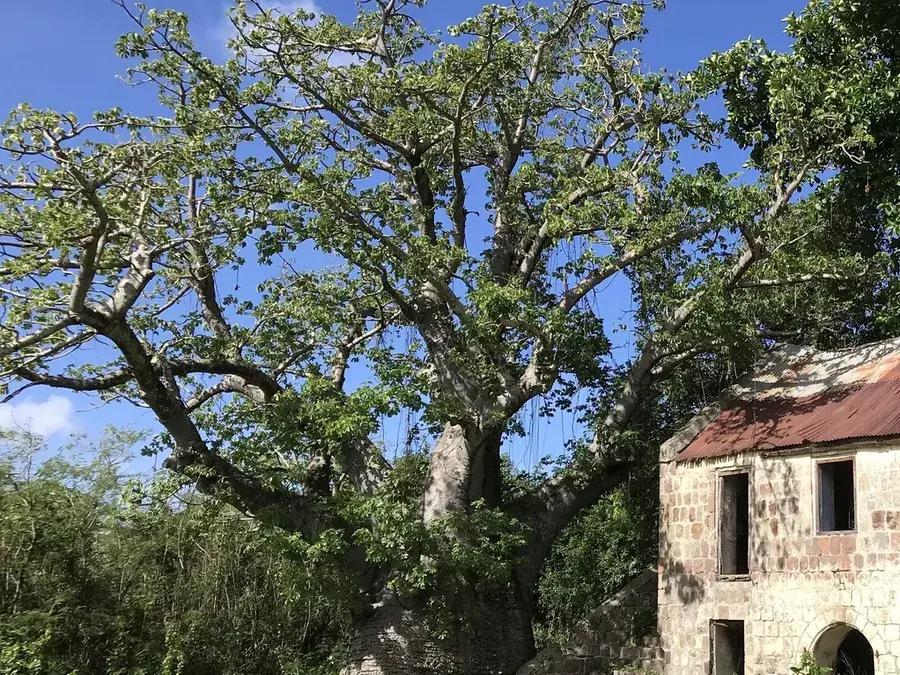 FruitOctober – February
Baobab (fruit and leaves)
Adansonia digitata
A vast, swollen grey trunk with smooth, folded bark and stubby branches that look like roots, bare of leaves for most of the dry season. The leaves are hand-shaped, with five to seven finger-like leaflets. The fruit is a velvety, egg- to sausage-shaped pod up to 25 cm (10 in) long on a long hanging stalk: a hard woody shell around chalky, off-white pulp and black kidney-shaped seeds.
Identification and look-alikes →Photo: Cliff Tyllick · CC BY 4.0
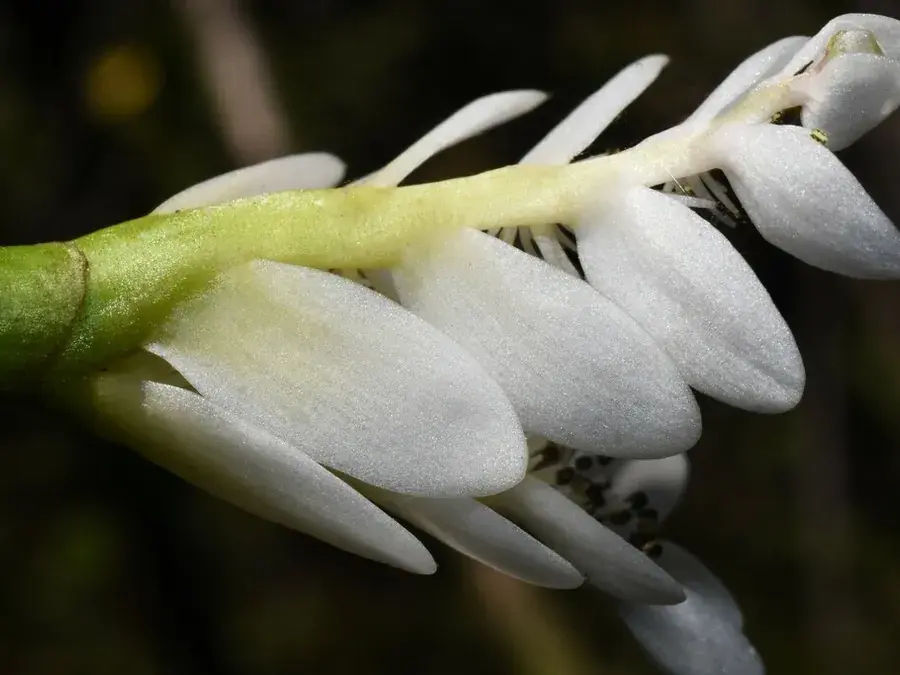 GreenJune – October
Waterblommetjie (Cape pondweed)
Aponogeton distachyos
Long-stalked, narrow-oval leaves floating flat on the water, and above them forked white flower spikes shaped like a 'Y', each branch lined with white petal-like bracts and dark purple-brown stamens, sweetly scented. The plant dies back as the pools dry in summer and regrows with the autumn rain.
Identification and look-alikes →Photo: Gabriel Campbell-Martinez · CC BY 4.0
Checked against these sources ·
- Wikipedia — Ecklonia maxima
- Two Oceans Aquarium — Sea bamboo
- Save Our Seas Foundation — Underwater forests
- Department of Agriculture, Forestry and Fisheries — Seaweed fishery policy, Government Gazette 2015 (FAOLEX)
- Marine Living Resources Act regulations, reg. 57 — Aquatic plants
- ANSES — Seaweed consumption: remain vigilant to the risk of excess iodine intake
- People and Plants International — Kelp (Ecklonia maxima, Laminaria pallida)
Seasons are typical for the middle of the range and move by weeks north and south, and up and down hills.
Educational information only. Never eat a wild plant or mushroom identified from a single photograph or description — confirm with a regional field guide or an experienced forager, and know the poisonous species in your area first.