Green·Season: May – September
Sorrel (suring)
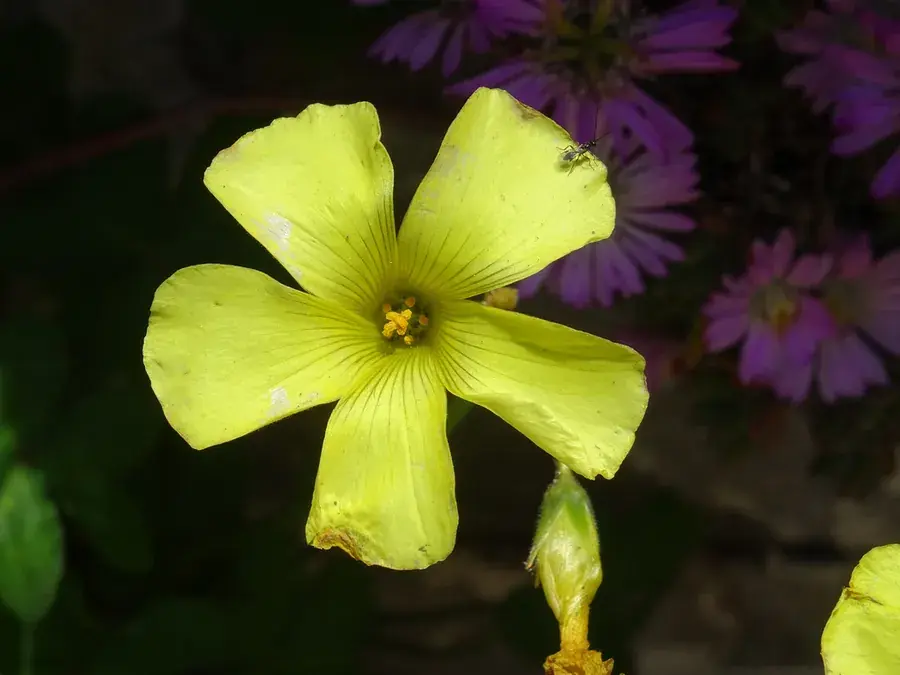
Oxalis pes-caprae
- When
- Typically May – September — May, June, July, August, September. Earlier in warm, low country; later in the hills.
- Where it grows
- Roadsides and grassy places through the winter-rainfall Cape, Namaqualand and Namibia, where it is very common. It grows from small bulbs, comes up with the autumn rain and dies back to the bulbs in the dry summer.
- Identification
- A low, almost stemless plant with clover-like leaves of three heart-shaped leaflets, each notched at the tip, on long stalks. Bright yellow, funnel-shaped flowers with a whitish tube stand above the leaves in loose heads of three to twenty on bare stalks, from about June to October. Leaves and stalks taste sharply sour.
- Look-alikes
- The Cape has many other wild Oxalis; suring is the common bright-yellow one of roadsides, flowering in winter. Clover has rounded, unnotched leaflets and no yellow funnel flowers.
- Harvest and use
- Snap off leaves and juicy flower stalks and leave the bulbs. Cape children chew the stalks for their sour juice; cooks use leaves and stalks as a souring herb in waterblommetjiebredie and other winter stews, or in a pot of dune spinach with butter. Surings boiled in milk were once a favourite breakfast.
- Caution
- Rich in oxalic acid, like every sorrel: a seasoning, not a plateful. Hungry livestock that gorge on it have died of oxalate poisoning. In the Western Cape, picking on land that is not yours needs the owner's written permission, and picking within 90 m of the centre of a public road needs a permit.
Sorrel (suring) at a glance
- Also called
- Geelsuring (Afrikaans), Cape sorrel, Bermuda buttercup, soursob, sourgrass, goat's-foot. 'Suring', from the Dutch zuring, is the Cape name for any sour-sapped sorrel, but in Cape cooking it means this one.
- Family
- Oxalidaceae (the wood-sorrels)
- Where it grows
- Native from Namibia through Namaqualand to the Western and Eastern Cape, very common on roadsides and in grassy places. It has become an invasive weed in coastal California, Mediterranean Europe, North Africa, the Middle East and Australia, spreading by its many small bulbs.
- When to pick
- The Cape winter. It sprouts from its bulbs with the autumn rain, flowers from about June to October, and dies back to the bulbs in early summer; leaves and stalks are picked through the wet months.
- Parts used
- Leaves and flower stalks, raw or cooked, as a souring herb. The petals give a yellow dye. Not the bulbs.
- Is any of it poisonous?
- Rich in oxalic acid, which gives the sour taste. Stock that gorge on it have died of chronic oxalate poisoning; for people, it is safe as a seasoning in small amounts, and boiling may reduce the risk.
Questions people ask about sorrel
What is suring?
Suring is the Afrikaans word for sorrel. In Cape dishes it means the leaves of the yellow-flowered Oxalis pes-caprae that blooms in autumn and winter, though the word is also used for other sour-sapped plants such as docks.
Is Oxalis pes-caprae edible?
Yes, in moderation. Its sour leaves and stalks are a traditional Cape seasoning — in waterblommetjiebredie, with dune spinach, or boiled in milk — and children chew the stalks. It is rich in oxalic acid, so treat it as a seasoning rather than a vegetable.
When is suring in season?
In the Cape winter: it comes up with the autumn rain, flowers from about June to October, and dies back in early summer.
Is suring a weed?
Not in South Africa, where it is native to the winter-rainfall Cape and Namibia. Abroad it is an invasive weed of coastal California, the Mediterranean, the Middle East and Australia.
Found in these regions
Local season
This week's foraging guide for a place
Enter a town, postal code or ZIP for what is in season there this week, based on the local climate, this week's weather and the ecological region.
Also in season in October
 FruitSeptember – December
Cape gooseberry (golden berry)
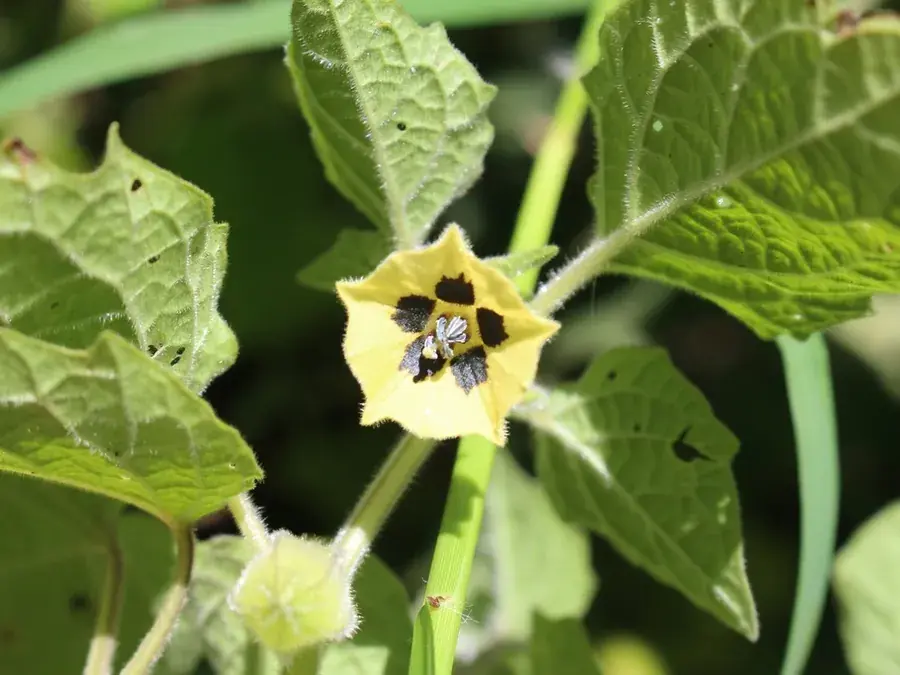
Physalis peruviana
A soft, spreading, velvety-hairy shrub up to about 1 m (3 ft) with heart-shaped, wavy-edged leaves. The drooping, bell-shaped flowers, 1–2 cm (½–¾ in) across, are yellow with dark purple-brown blotches inside. Each fruit is a smooth, round, golden-orange berry 1.25–2 cm (½–¾ in) across, like a tiny tomato, enclosed in a papery, ten-ribbed husk — a small lantern — that dries from green to straw-brown.
Identification and look-alikes →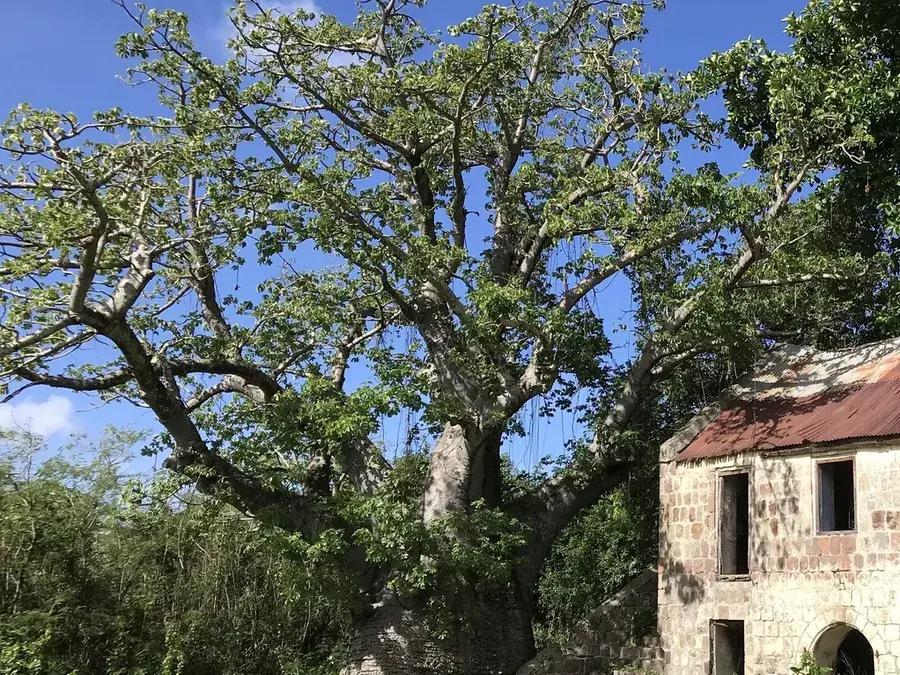 FruitOctober – February
Baobab (fruit and leaves)
Adansonia digitata
A vast, swollen grey trunk with smooth, folded bark and stubby branches that look like roots, bare of leaves for most of the dry season. The leaves are hand-shaped, with five to seven finger-like leaflets. The fruit is a velvety, egg- to sausage-shaped pod up to 25 cm (10 in) long on a long hanging stalk: a hard woody shell around chalky, off-white pulp and black kidney-shaped seeds.
Identification and look-alikes →Photo: Cliff Tyllick · CC BY 4.0
 GreenJune – October
Waterblommetjie (Cape pondweed)
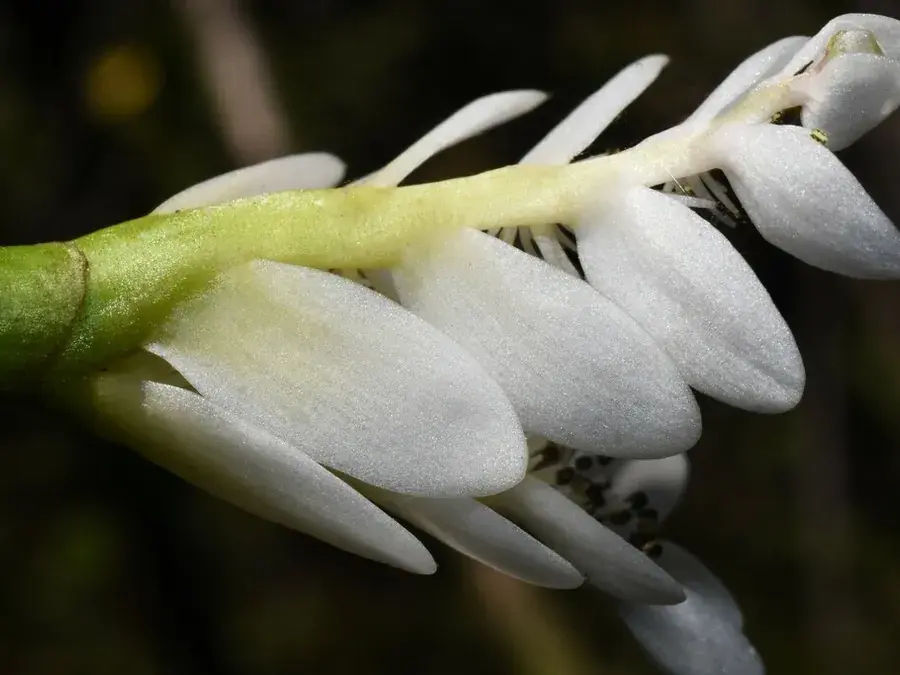
Aponogeton distachyos
Long-stalked, narrow-oval leaves floating flat on the water, and above them forked white flower spikes shaped like a 'Y', each branch lined with white petal-like bracts and dark purple-brown stamens, sweetly scented. The plant dies back as the pools dry in summer and regrows with the autumn rain.
Identification and look-alikes →Photo: Gabriel Campbell-Martinez · CC BY 4.0
Checked against these sources ·
- Wikipedia — Oxalis pes-caprae
- Kew, Plants of the World Online — Oxalis pes-caprae
- Fernkloof Nature Reserve (Hermanus) — Oxalis pes-caprae var. pes-caprae
- Dictionary of South African English — suring
- SANBI PlantZAfrica — Tetragonia decumbens (suring as the traditional seasoning)
- CapeNature — Flora permits (picking rules, section 63 of the Ordinance)
Seasons are typical for the middle of the range and move by weeks north and south, and up and down hills.
Educational information only. Never eat a wild plant or mushroom identified from a single photograph or description — confirm with a regional field guide or an experienced forager, and know the poisonous species in your area first.