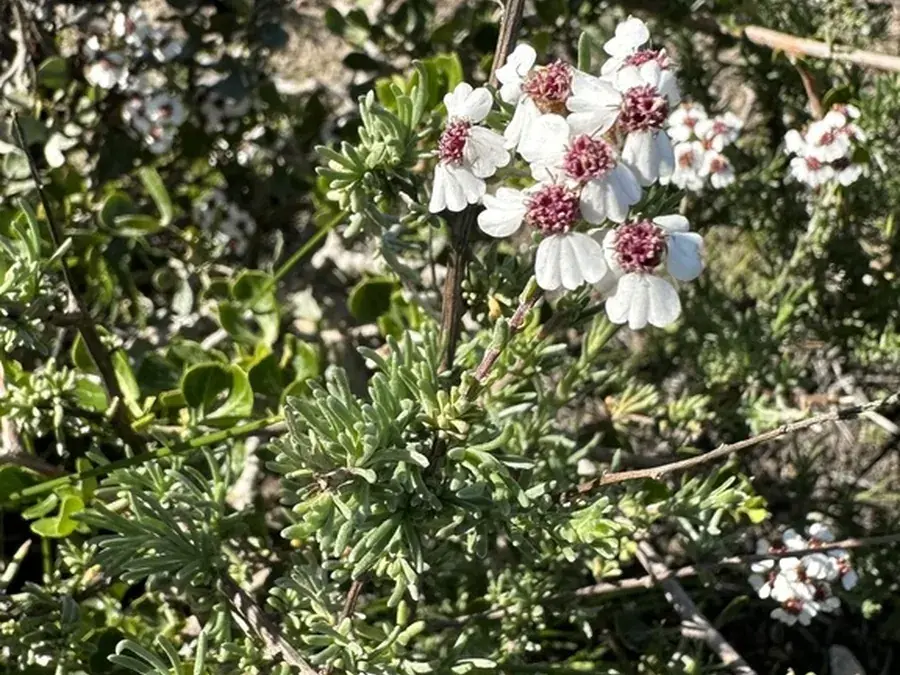
Photo by Deon van Eeden on iNaturalist · CC BY-SA 4.0
Green·Season: April – September
Wild rosemary (kapokbos)
Eriocephalus africanus
- When
- Typically April – September — April, May, June, July, August, September. Earlier in warm, low country; later in the hills.
- Where it grows
- Clay and granite slopes, coastal scrub and dry veld through the Western and Eastern Cape and Namaqualand; one of the commonest shrubs of the Cape.
- Identification
- A bushy, evergreen, silvery-grey shrub up to about 1 m (3 ft) with small, narrow, needle-like leaves in tufts along the branches — fleshier on plants near the sea — that smell of camphor, like Vicks, when crushed. In autumn and winter it covers itself in small flowers of two or three white petals round a purple centre, followed by seed heads wrapped in long white hairs like cotton wool: kapok is the Afrikaans for snow.
- Look-alikes
- Southern Africa has 34 species of Eriocephalus, all with woolly seed heads, and many small grey shrubs look alike out of flower. Pick only from a bush that smells strongly of camphor when crushed and that you have seen in flower or in seed.
- Harvest and use
- Use a sprig in cooking as you would garden rosemary, and sparingly. For the traditional tea, long taken for coughs, colds and colic, steep one sprig in a cup of boiling water. Snip sprigs with scissors and leave the bush to regrow.
- Caution
- A herb, not a vegetable. SANBI's monograph records no known side effects, but 'none known' is not proof of safety: it is a traditional diuretic and a remedy for women's complaints, so avoid medicinal amounts in pregnancy. Like many daisy-family plants it contains sesquiterpene lactones, which can irritate sensitive skin. In the Western Cape, picking needs the landowner's written permission, and a permit within 90 m of a public road; never pick in a reserve.
Wild rosemary (kapokbos) at a glance
- Also called
- Kapokbos, kapokbossie, wilderoosmaryn (Afrikaans)
- Family
- Asteraceae (the daisy family; garden rosemary, despite the name, belongs to the mint family)
- Where it grows
- The Western and Eastern Cape and Namaqualand, mostly on clay and granite slopes. Coastal plants (subsp. africanus) have succulent leaves; inland plants (subsp. paniculatus) thinner ones.
- When to pick
- Sprigs can be cut at any time of year. It flowers mainly in autumn and winter, and the flowering tops are the part traditionally used.
- Parts used
- Leafy sprigs and flowering tops, as a herb and for tea. Not eaten as a vegetable.
- Is any of it poisonous?
- SANBI's monograph lists no known contraindications or adverse reactions. It contains sesquiterpene lactones, essential oil and tannins, and no alkaloids or cyanogenic glycosides were detected.
Questions people ask about wild rosemary
Is wild rosemary the same as rosemary?
No. Wild rosemary, or kapokbos, is Eriocephalus africanus, a South African member of the daisy family; garden rosemary is a Mediterranean mint. They share a resinous scent, and kapokbos can be used in cooking in much the same way.
How do you make wild rosemary tea?
Pour a cup of boiling water over one sprig. As a medicine, SANBI's monograph gives a third of a teacup (60 ml) three times a day of an infusion made with a tablespoon of dried herb to a litre of boiling water.
Why is it called kapokbos?
Because after flowering the seed heads are wrapped in long white hairs that look like cotton wool or snow — kapok means snow in Afrikaans.
Can I pick wild rosemary in the Western Cape?
Only with the landowner's written permission on land that is not yours, and with a permit within 90 m of the centre of a public road. It is common and not threatened, but never pick in a reserve.
Found in these regions
Local season
This week's foraging guide for a place
Enter a town, postal code or ZIP for what is in season there this week, based on the local climate, this week's weather and the ecological region.
Also in season in October
 FruitSeptember – December
Cape gooseberry (golden berry)
Physalis peruviana
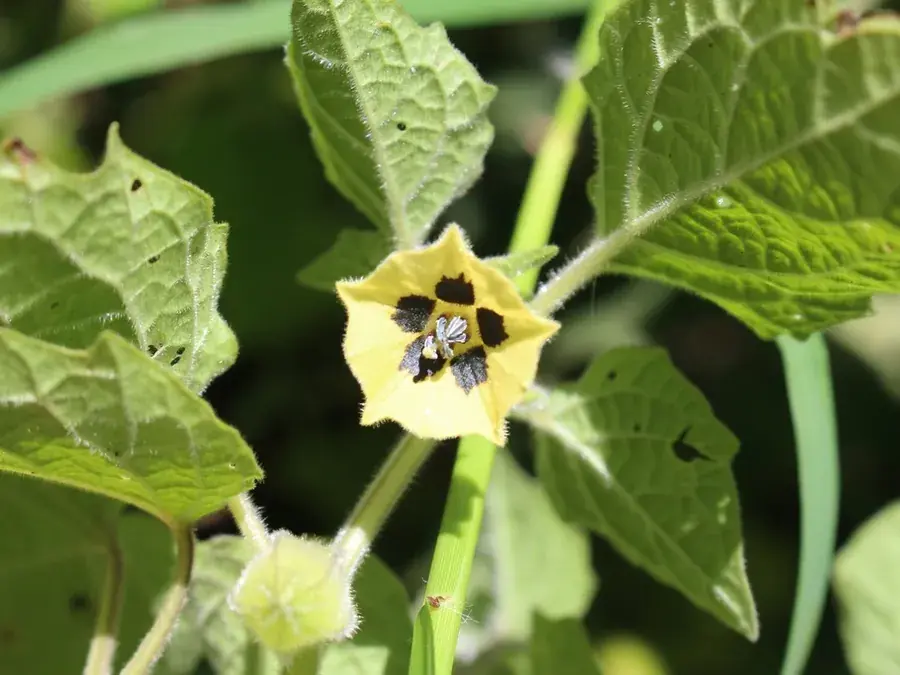
A soft, spreading, velvety-hairy shrub up to about 1 m (3 ft) with heart-shaped, wavy-edged leaves. The drooping, bell-shaped flowers, 1–2 cm (½–¾ in) across, are yellow with dark purple-brown blotches inside. Each fruit is a smooth, round, golden-orange berry 1.25–2 cm (½–¾ in) across, like a tiny tomato, enclosed in a papery, ten-ribbed husk — a small lantern — that dries from green to straw-brown.
Identification and look-alikes →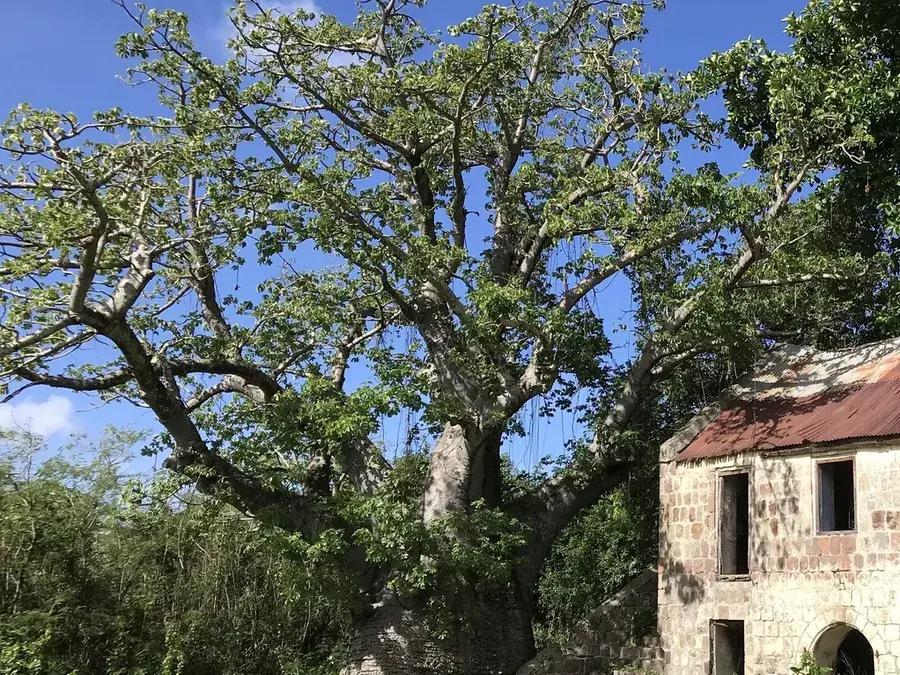 FruitOctober – February
Baobab (fruit and leaves)
Adansonia digitata
A vast, swollen grey trunk with smooth, folded bark and stubby branches that look like roots, bare of leaves for most of the dry season. The leaves are hand-shaped, with five to seven finger-like leaflets. The fruit is a velvety, egg- to sausage-shaped pod up to 25 cm (10 in) long on a long hanging stalk: a hard woody shell around chalky, off-white pulp and black kidney-shaped seeds.
Identification and look-alikes →Photo: Cliff Tyllick · CC BY 4.0
 GreenJune – October
Waterblommetjie (Cape pondweed)
Aponogeton distachyos
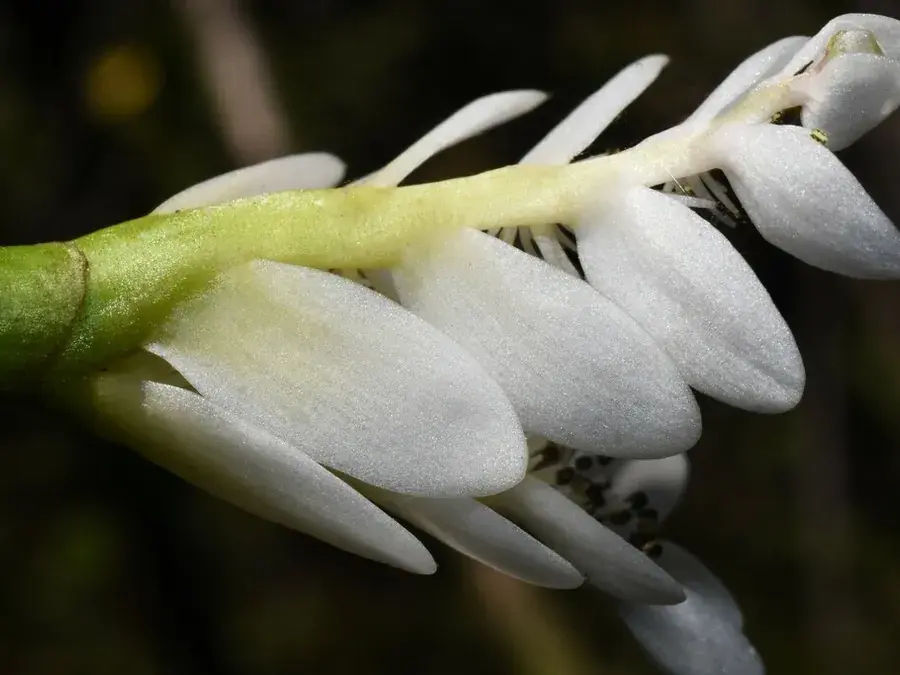
Long-stalked, narrow-oval leaves floating flat on the water, and above them forked white flower spikes shaped like a 'Y', each branch lined with white petal-like bracts and dark purple-brown stamens, sweetly scented. The plant dies back as the pools dry in summer and regrows with the autumn rain.
Identification and look-alikes →Photo: Gabriel Campbell-Martinez · CC BY 4.0
Checked against these sources ·
- SANBI PlantZAfrica — Eriocephalus africanus
- SANBI — Eriocephalus herba (medicinal plant monograph)
- Wikipedia — Eriocephalus africanus
- CapeNature — Nature Conservation Ordinance 19 of 1974 (section 63 and Schedule 4)
- CapeNature — Western Cape Biodiversity Act
Seasons are typical for the middle of the range and move by weeks north and south, and up and down hills.
Educational information only. Never eat a wild plant or mushroom identified from a single photograph or description — confirm with a regional field guide or an experienced forager, and know the poisonous species in your area first.