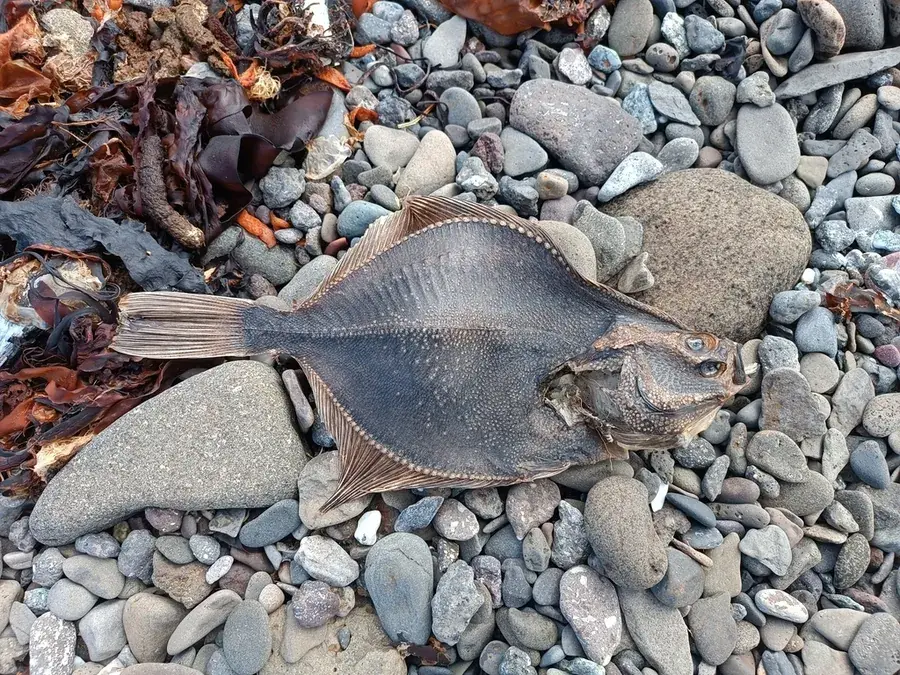
Photo by Daniel Benák on iNaturalist · CC BY 4.0
European flounder
Platichthys flesus
- When
- May–Dec — May, June, July, August, September, October, November, December. Earlier where the water warms first.
- Habitat
- Estuaries, harbours, shallow sandy bays and the lower reaches of rivers, often in very shallow water close to the edge. In Britain flounder have been found far up the Severn, Dovey and Wyre.
- Identification
- An oval flatfish, usually with both eyes on the right side, dull brown or olive above with darker blotches and sometimes reddish spots, pearly white below. The skin is rough, with rows of prickly bumps along the lateral line and the bases of the fins.
- Notes
- The one European flatfish that lives much of its life in fresh and brackish water. It feeds on the bottom, mostly by night, on worms, shrimps and shellfish, and moves to deeper water at sea in winter to spawn in spring.
- Method
- Ragworm or lugworm on a light, two- or three-hook flapper rig with beads or a small spoon, cast short into the channel edges.
- Caution
- Minimum sizes vary — 20 cm on France’s Atlantic and Channel coasts — and rules differ between tidal and fresh water; check locally.
Seasons, size limits and catch limits change every year and differ by water body. Check the current regulations for the country and the water before fishing.
European flounder facts
- Also called
- Flounder or white fluke; flet in French.
- Family
- Pleuronectidae, the righteye flounders.
- Native range
- Coastal and brackish waters of Europe from the White Sea and the Baltic to the Mediterranean, the Black Sea and the North African coast; established in Iceland since 1999.
- Introduced to
- Carried to the North American Great Lakes in ships’ ballast water in the 1970s, but only a few were ever found and it probably did not breed there.
- Habitat
- Mud and sand from the shore down to about 100 m (330 ft), and estuaries, where it spends much of the year; it often runs far up rivers into fresh water.
- Water temperature
- Cool temperate. AquaMaps puts its preferred surface water at about 9–16°C (48–61°F); FishBase gives a tolerance of 5–25°C.
- Size
- Most adults 25–40 cm (10–16 in); the largest measured about 60 cm (24 in).
- Record
- IGFA all-tackle world record: 2.93 kg (6 lb 7 oz), Anne Karin Lothe, Maurangerfjorden, Norway, 10 January 2004.
- Lifespan
- Up to 15 years.
- What it eats
- Worms, shrimps, snails and bivalves, and small fish; young fish eat plankton and insect larvae.
- Spawning
- Adults move to deeper, warmer water at sea in winter and spawn there in spring; each female sheds 0.4–2 million eggs. The larvae ride the tides into estuaries and up rivers.
- Young fish
- Larvae and young flounder ride the tides upstream into rivers, cued by salinity, food and water temperature.
- Teeth and mouth
- Small, at the end of a bluntly pointed snout.
- Look-alikes
- Plaice has smooth skin, a bony ridge behind the eyes and bright orange spots. The flounder may show reddish spots too, but its rough skin and the prickly bumps along the lateral line and fin bases give it away. The two sometimes hybridise.
- Eating
- A commercial food fish, sold fresh and frozen in Europe.
- Status
- Least Concern on the IUCN Red List (2022).
Interactive
European flounder: size range
Move the slider from a typical adult to the largest recorded specimen, shown against objects of known size.
Most adults you'll catch: 25–40 cm (10–16 in).
This european flounder: 33 cm. Longer than a loaf of bread, shorter than a four-year-old.
The record
IGFA all-tackle world record: 2.93 kg (6 lb 7 oz), Anne Karin Lothe, Maurangerfjorden, Norway, 10 January 2004.
Questions people ask about european flounder
Can flounder live in fresh water?
Yes. Unlike other European flatfish, the flounder regularly runs up rivers and feeds in fresh water before returning to the sea to spawn. In Britain it has been found as far inland as Montgomeryshire on the River Severn.
How do you tell a flounder from a plaice?
Run a finger along the lateral line: a flounder is rough, with rows of prickly bumps along it and at the base of the fins. A plaice is smooth, with bright orange spots and a bony ridge behind the eyes.
When is the best time to catch flounder?
Spring through autumn in estuaries and shallow bays. In late winter and early spring many adults are offshore spawning, and catches drop.
Found in these regions
Checked against these sources ·
- FishBase — Platichthys flesus
- Wikipedia — European flounder
- British Sea Fishing — Flounder
- Fishes of the Great Lakes Region (University of Michigan) — European flounder
- The tale of the founder flounder: origin of a recently established fish in Icelandic waters
- IGFA — World Records search
Sizes, records and ranges are for the species as a whole; local populations and rules vary. Records change; the record-keeper named above holds the current one.
Local activity
This week's guide for a place
Enter a town, postal code or ZIP for this week's conditions there, based on the local climate, this week's weather and the ecological region.
Also active in October
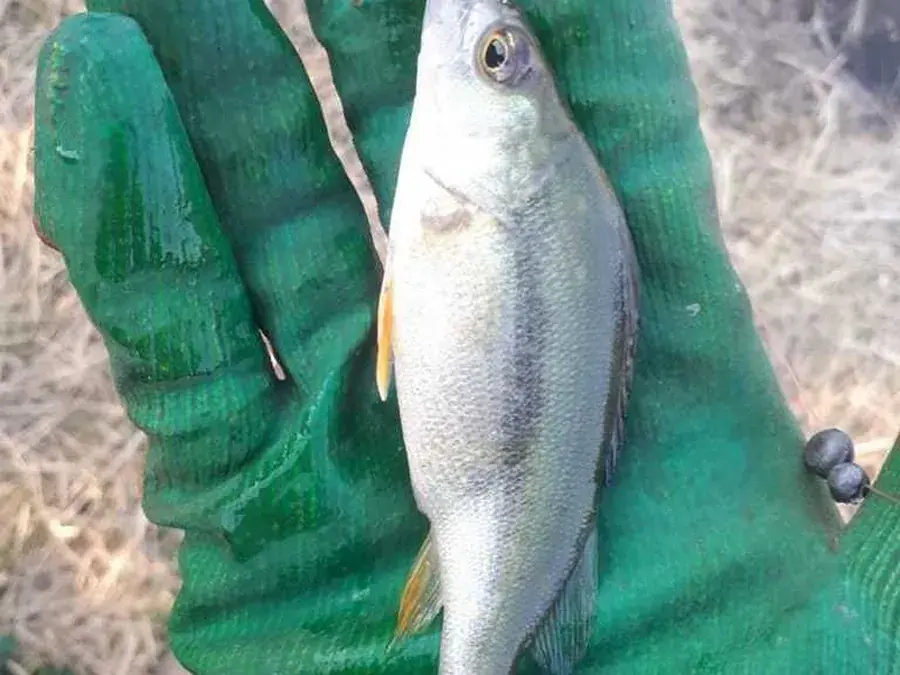 FishJun–Mar
European perch
Perca fluviatilis
Five to eight dark bars on a greenish flank, bright red-orange lower fins, and a spiny first dorsal fin with a black blotch at the back.
Habitat and methods →Photo: Дауд Арсанукаев · CC BY 4.0
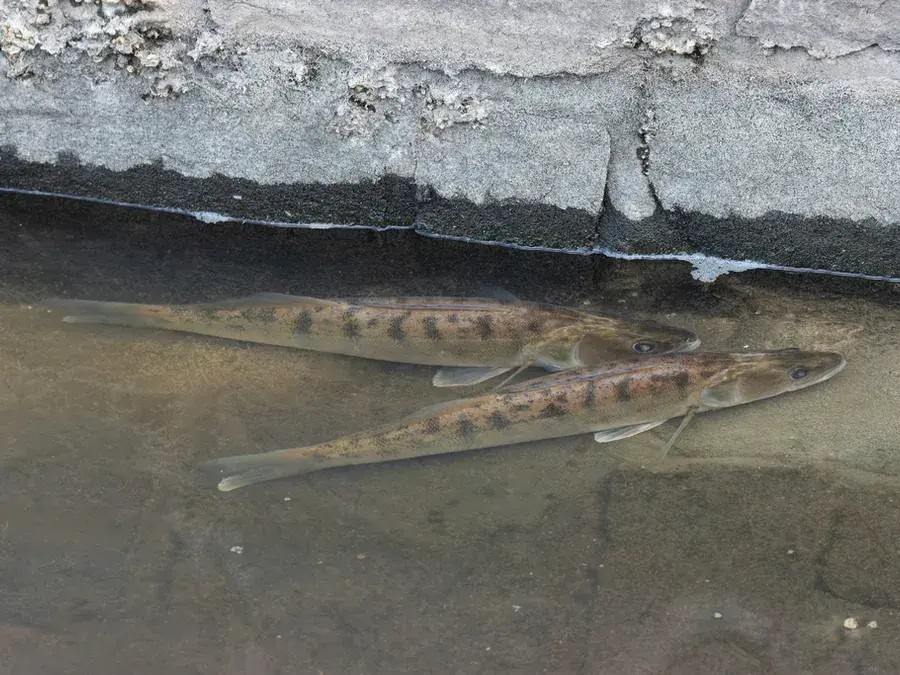 FishJun–Mar
Zander
Sander lucioperca
Slim and glassy-eyed, with grey-brown saddles, rows of black spots on the spiny dorsal fin, and long fang-like canine teeth.
Habitat and methods →Photo: Tomas Broucek · CC BY 4.0
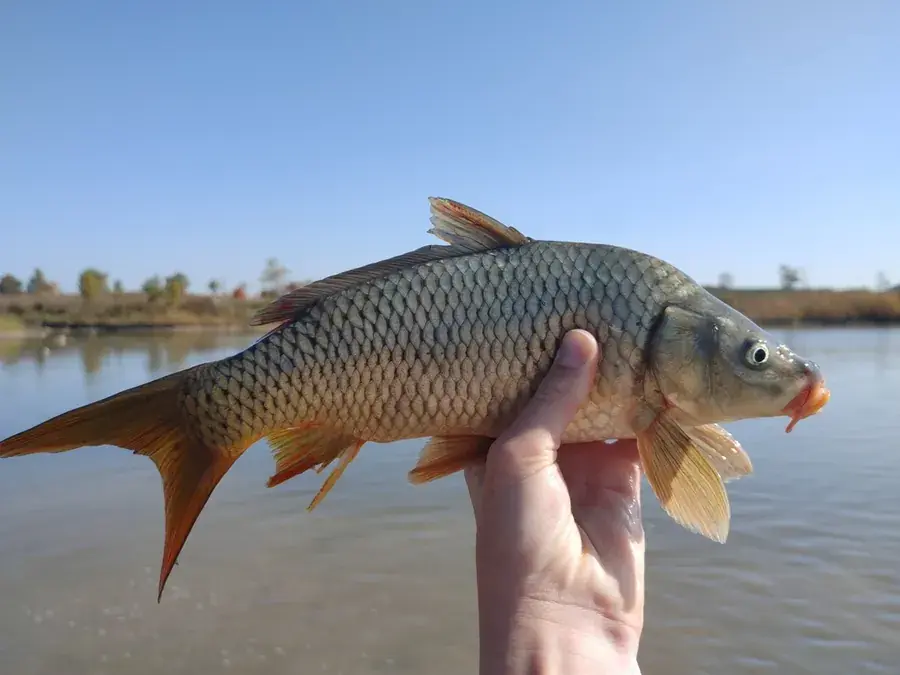 FishApr–Oct
Common carp
Cyprinus carpio
Big bronze scales (or the scattered big scales of a mirror carp), a long dorsal fin, and two pairs of barbels at a rubbery, tube-like mouth.
Habitat and methods →