Fishing in Swakopmund
Erongo · Namib, Kalahari & Karoo · hardiness zone 11a
New here? Start with the fishing introNow
13°C · Clear
Today
18° / 11°
Sun
06:36 – 19:02
Moon
Waning Crescent · anglers' solunar: good
Weather read at 12:35 a.m..
Writing your field guide — reading the forecast, the moon and the map…
In the water now · October
What's biting
The sport fish active near Swakopmund, Namibia in October — where they hold, how to know one on the line, and the tactic that usually works. Check your licence and the current limits before you go.
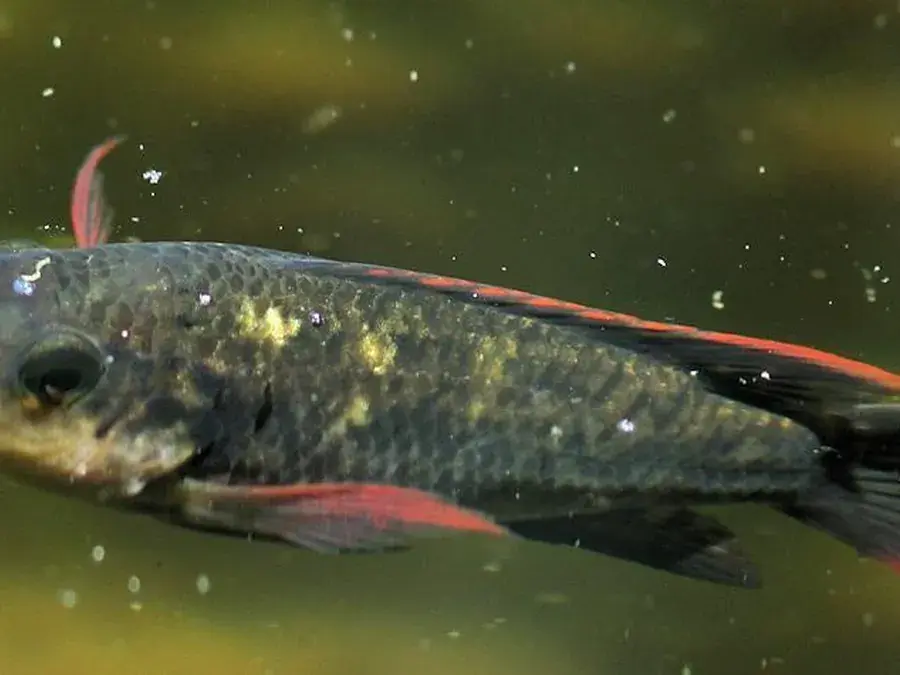 FishSep–Apr
Mozambique tilapia (blue kurper)
Oreochromis mossambicus
Deep-bodied and dull silvery-olive with a few dark blotches along the side and no regular stripes on the tail. Breeding males turn black with a white throat, red-edged fins and a pointed, duck-bill snout.
Where and how to catch it →Photo: Wynand Uys · CC BY 4.0
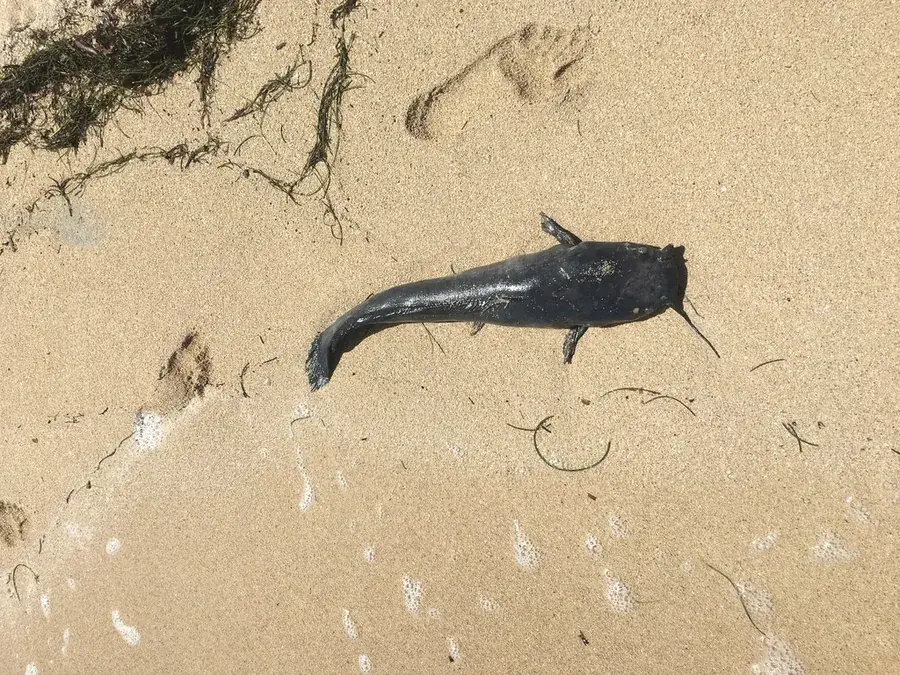 FishSep–Apr
Sharptooth catfish (barbel)
Clarias gariepinus
A long, eel-like body, a flat bony head, four pairs of whiskers, and one very long dorsal fin with no small fatty fin behind it. Dark grey to olive above, white below.
Where and how to catch it →Photo: Lukas Zangl · CC BY 4.0
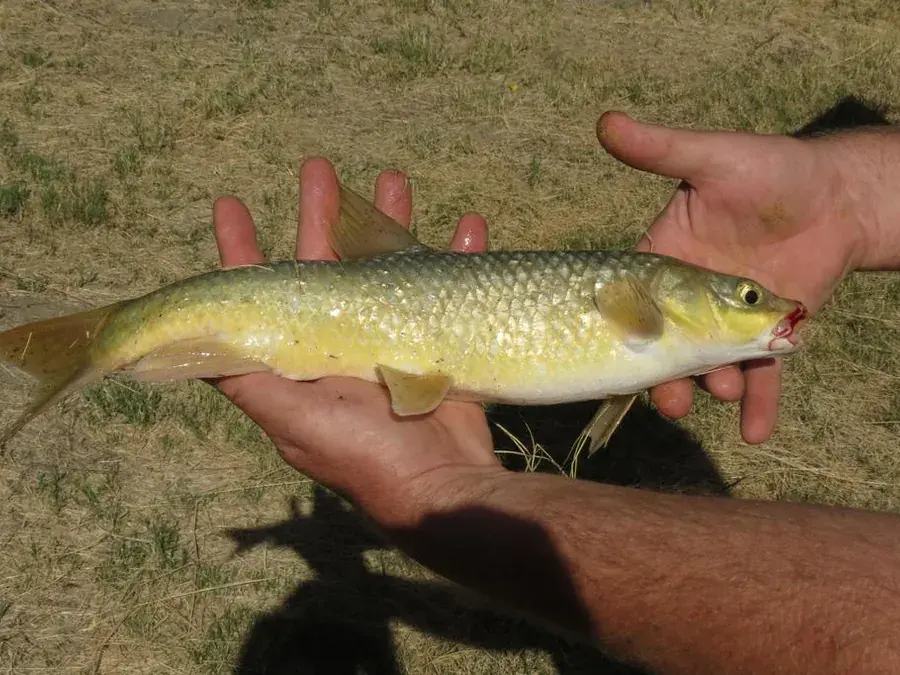 FishMar–May, Sep–Nov
Smallmouth yellowfish
Labeobarbus aeneus
A big, streamlined, bronze-gold barb with large scales, golden fins and a small mouth.
Where and how to catch it →Photo: Brian du Preez · CC BY-SA 4.0
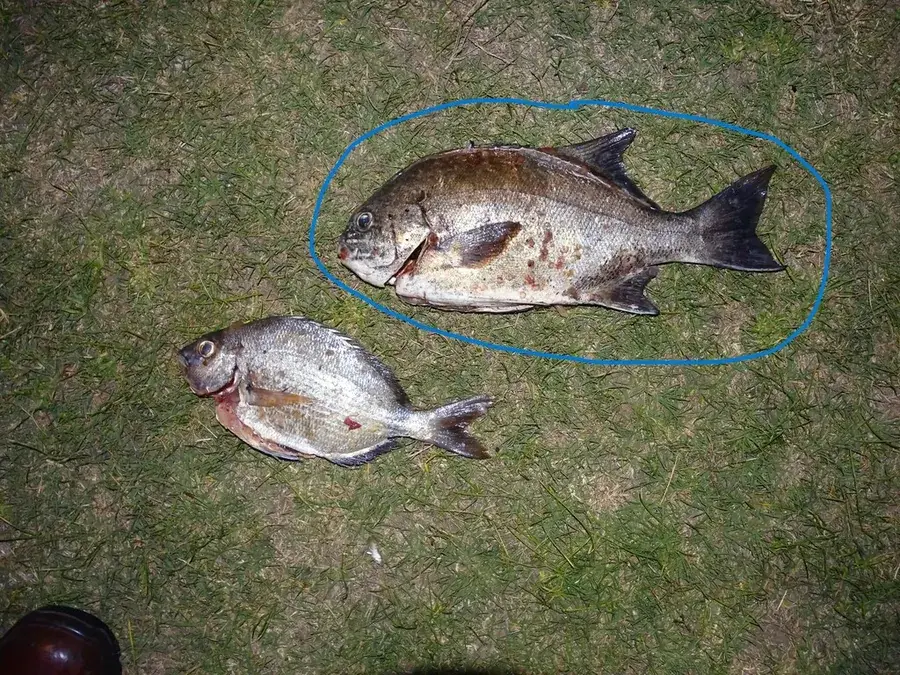 FishMar–Oct
Galjoen
Dichistius capensis
A deep, short, heavily scaled fish with thick lips and spiny fins; black among the rocks and silver-bronze over sand, changing colour almost instantly.
Where and how to catch it →Photo: Shaun Swanepoel · CC BY 4.0
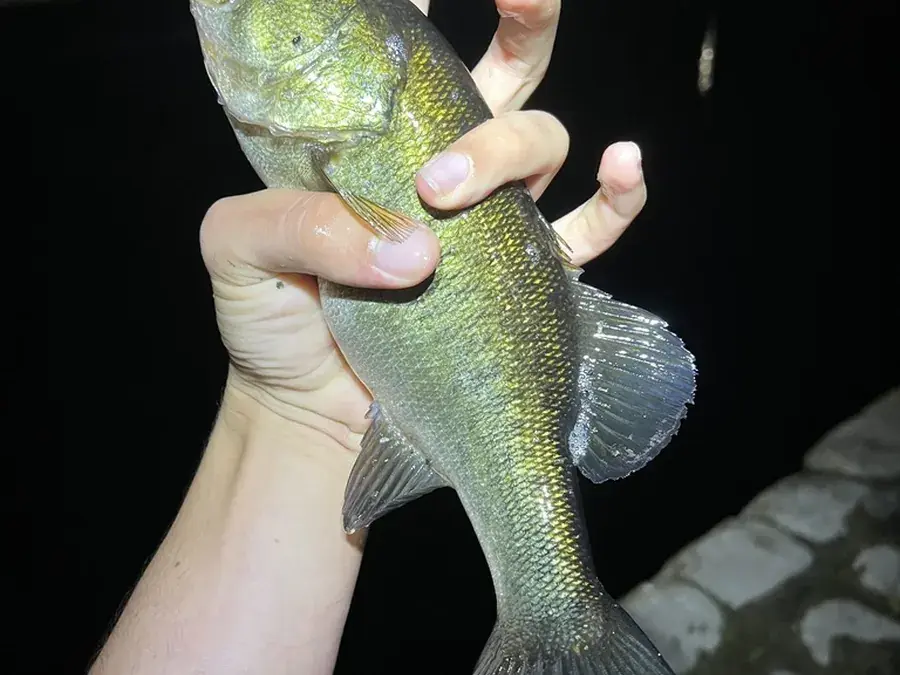 FishOct–Apr
Largemouth bass
Micropterus nigricans
Green with a dark lateral stripe, and an upper jaw that extends past the back of the eye.
Where and how to catch it →Photo: Nick Tobler (Cowturtle) · CC BY 4.0
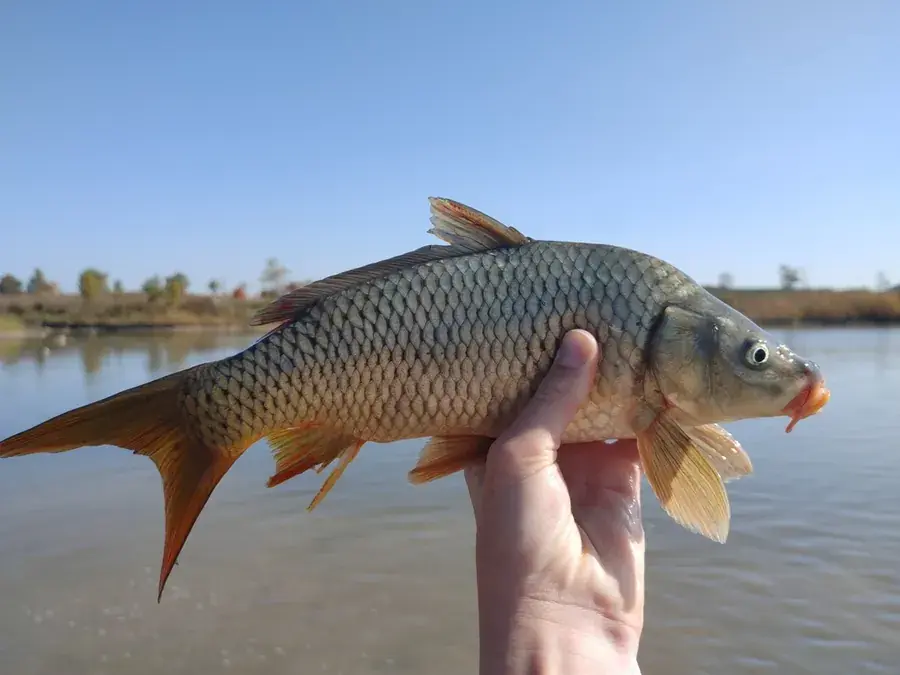 FishOct–Apr
Common carp
Cyprinus carpio
Big bronze scales (or the scattered big scales of a mirror carp), a long dorsal fin, and two pairs of barbels at a rubbery, tube-like mouth.
Where and how to catch it →
Photographs are research-grade observations from iNaturalist, each credited to its photographer. Ranges and timing are typical, not guaranteed — 87 species are covered across North America, Europe and Africa.
Behind this week's fishing
The day, the ground and the sky over Swakopmund
Bright and still pushes fish deep, into shade and under structure. Work the edges of the day.
Overhead · Swakopmund, Namibia
The sky over the water
The two clocks nothing on the ground can argue with: the length of the day, and the phase of the moon.
The sun
12h 25m of light
Sunrise
06:37
Solar noon
12:50
Sunset
19:02
A month from now the day will be 0h 37m longer. Enough light for steady growth.
The moon
Waning Crescent
15% lit · waning · day 26 of 29.5
- Next full
- Oct 26 · 20d
- Hunter's Moon
- Next new
- Oct 10 · 4d
- Darkest nights
Planting by the moon: Last quarter to new: a resting phase — weed, prune, harvest, turn compost and prepare beds.
Anglers' solunar rating: good — the tradition says fish feed hardest in the days either side of new and full, and around moonrise and moonset. The evidence is mixed; light and weather matter more.
Turn of the season
Summer solstice
Dec 21 · 76 days away
Frost is rare here — most years see none, or a night or two at most.
Next moons
- New MoonOct 10
- First QuarterOct 18
- Full Moon · Hunter's MoonOct 26
- Last QuarterNov 1
Right now · Swakopmund, Namibia
Forces at work
Nothing here is a guess. Each of these is read from this week's forecast and this location's climate record, and each one is pushing the season one way or the other.
- Worth watching
The moon
Waning Crescent · 15%
Waning, 26 days old. Full moon in 19 days. Anglers' solunar rating: good (a tradition).
It moves water — in the sea, in a lake's edge, and, by long tradition, in the sap of a plant. Fish feed hardest on the days around new and full.
- Working for you
Wind
9 km/h now · 23 peak
A working breeze: it ripples the surface, drifts a boat at a fishable speed, and stacks bait on the windward shore. Anglers call it a walleye chop.
It pollinates corn and grasses, dries soil, breaks stems — and it decides where the bait, and therefore the fish, end up.
- Holding things back
Rain
0.0 mm / 7 days
Only 0.0 mm over seven days. A garden wants roughly 25 mm a week — water deeply twice rather than lightly every day.
Sets the pace for everything: germination, fungal fruiting, slug nights, and how a river runs for the next three days.
- Working for you
Soil warmth
21.7 °C
Warm enough for beans, corn, squash, cucumber and transplanted tomato and pepper. Roots run hard at this temperature.
Seeds read soil temperature, not the calendar. Six centimetres down is where the decision gets made.
- Working for you
Day length
12h 25m
Gaining about 1 minutes of daylight a day. Every extra minute is growth you don't have to pay for.
The one thing weather can't change. Plants count photoperiod to decide when to bolt, bulb, flower and go dormant.
- Quiet right now
Frost
363 frost-free days
Frost is rare here. Coldest night in the next week: 9.9 °C.
The hard edge of the growing season. Ice inside a leaf ruptures its cells — one night ends a tomato and sweetens a parsnip.
Read and watch with your kids
All the books and videos for Swakopmund →Stories about where you live

The fishing note for Swakopmund, every week
One email, Sunday evening. Unsubscribe anytime.