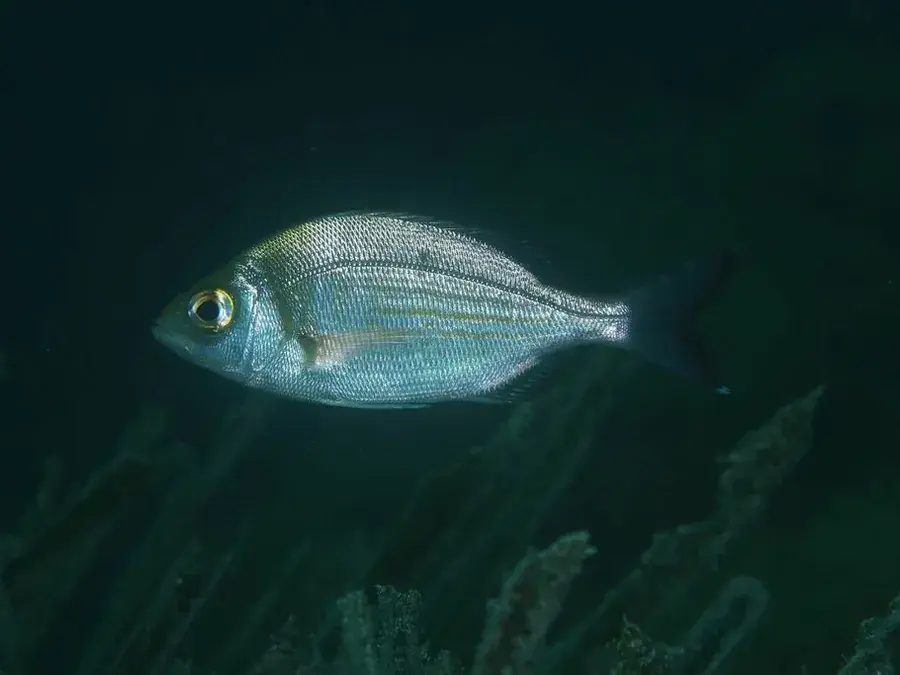
Photo by Julien Renoult on iNaturalist · CC BY 4.0
Black seabream
Spondyliosoma cantharus
- When
- May–Oct — May, June, July, August, September, October. Earlier where the water warms first.
- Habitat
- Rough ground, reefs and seagrass over sand and gravel; in Britain the south coast of England, Sussex above all, in late spring and summer, when adults come inshore to nest; around the Mediterranean, rocky coasts and harbours.
- Identification
- An oval, grey-silver seabream with a small head and mouth, faint lengthwise lines and six to nine dark vertical bars, and no dark spots. Males guarding nests turn almost black.
- Notes
- In spring adults move inshore and the males dig crater-shaped nests in sand or gravel over flat bedrock, then guard the eggs. Sussex’s Kingmere Rocks is the most important known nesting site in Britain. Summer is the season; catches dry up when the fish go deep for the winter.
- Method
- Strips of squid, mackerel or sandeel on a light two-hook flapper rig over rough ground; ragworm and mussel also take them.
- Caution
- In the Sussex IFCA district the minimum size is 23 cm, and inside Kingmere Marine Conservation Zone part of the ground is closed to angling from 1 April to 30 June, with four bream a day allowed elsewhere in the zone. Other areas set their own limits.
Seasons, size limits and catch limits change every year and differ by water body. Check the current regulations for the country and the water before fishing.
Black seabream facts
- Also called
- Black bream in Britain; griset or dorade grise in French.
- Family
- Sparidae, the seabreams and porgies.
- Native range
- The eastern Atlantic from Scandinavia to northern Namibia, including Madeira, the Canaries and Cape Verde, the Mediterranean and the western Black Sea.
- Habitat
- Seagrass beds and rocky and sandy bottoms from about 5 to 300 m (16–985 ft). It often gathers in large schools and spends the winter in deeper water offshore.
- Water temperature
- Temperate to warm-temperate. AquaMaps puts its preferred surface water at about 12–25°C (53–77°F).
- Size
- Most adults 25–35 cm (10–14 in); the largest measured about 60 cm (24 in).
- Record
- IGFA all-tackle world record: 1.9 kg (4 lb 3 oz), Patrick Sebile, Bonifacio, Corsica, France, 16 September 2002.
- Lifespan
- Up to about 14 years.
- What it eats
- Seaweed and small bottom animals, especially crustaceans.
- Spawning
- April to July in Britain, earlier further south. The male digs a crater-like nest in sand or gravel over flat bedrock, the female lays in it, and he guards the eggs until they hatch. A protogynous hermaphrodite: fish mature first as females.
- Teeth and mouth
- A small mouth with several rows of thin, conical teeth, the outer ones enlarged at the front.
- Look-alikes
- Gilthead seabream has a large black spot on the gill cover; the black seabream has no dark spots, only faint lines and bars.
- Eating
- A valued food fish, especially in Portugal and around the Mediterranean.
- Status
- Least Concern on the IUCN Red List (2009). Nest sites are vulnerable to disturbance, and removing the guarding males reduces breeding success.
Interactive
Black seabream: size range
Move the slider from a typical adult to the largest recorded specimen, shown against objects of known size.
Most adults you'll catch: 25–35 cm (10–14 in).
This black seabream: 30 cm. About as long as a loaf of bread.
The record
IGFA all-tackle world record: 1.9 kg (4 lb 3 oz), Patrick Sebile, Bonifacio, Corsica, France, 16 September 2002.
Questions people ask about black seabream
When is black bream season in the UK?
Late spring and summer, when adults come inshore to nest along the south coast. In winter they move to deeper water offshore and shore catches dry up.
What are the rules at Kingmere?
Kingmere Rocks off Sussex is a Marine Conservation Zone protecting Britain’s most important known black bream nesting site. Part of it is closed to angling from 1 April to 30 June, anglers may keep four bream a day in the rest of the zone, and the Sussex IFCA minimum size is 23 cm.
Why do black bream make nests?
The males dig crater-shaped nests in gravel or sand for the females’ eggs, then guard them from predators and keep them clean until they hatch.
Found in these regions
Checked against these sources ·
- FishBase — Spondyliosoma cantharus
- FishBase — Spondyliosoma cantharus population characteristics
- Wikipedia — Black seabream
- Marine Conservation Society Good Fish Guide — Black bream
- Angling Trust — Kingmere Marine Conservation Zone
- IGFA — World Records search
Sizes, records and ranges are for the species as a whole; local populations and rules vary. Records change; the record-keeper named above holds the current one.
Local activity
This week's guide for a place
Enter a town, postal code or ZIP for this week's conditions there, based on the local climate, this week's weather and the ecological region.
Also active in October
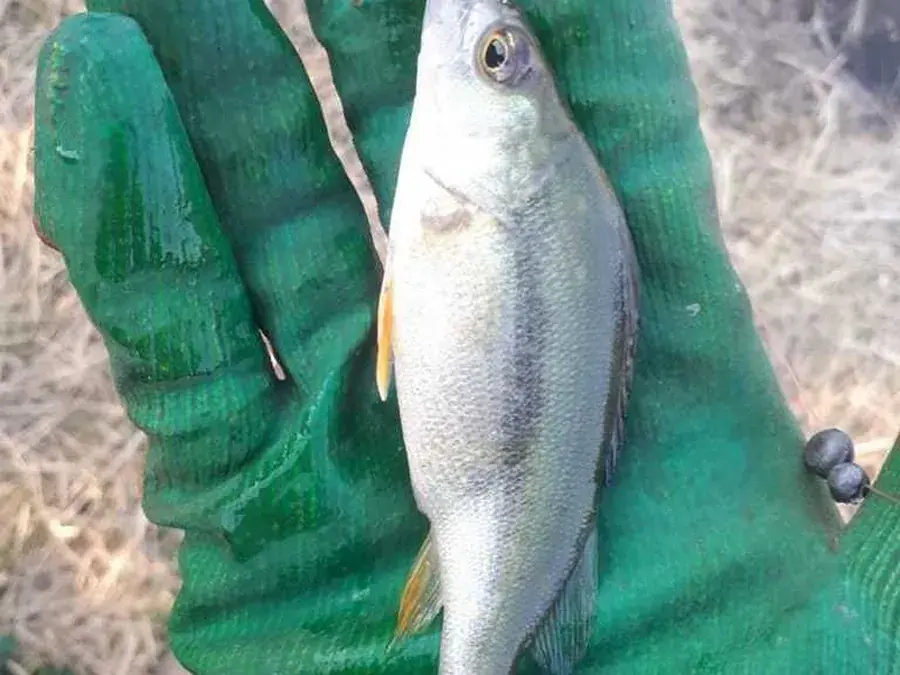 FishJun–Mar
European perch
Perca fluviatilis
Five to eight dark bars on a greenish flank, bright red-orange lower fins, and a spiny first dorsal fin with a black blotch at the back.
Habitat and methods →Photo: Дауд Арсанукаев · CC BY 4.0
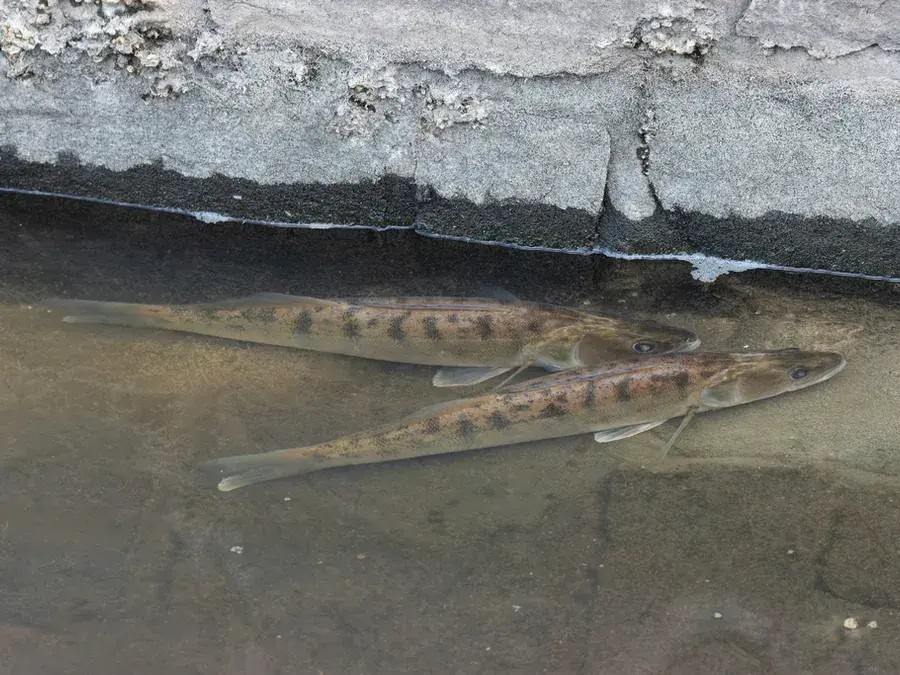 FishJun–Mar
Zander
Sander lucioperca
Slim and glassy-eyed, with grey-brown saddles, rows of black spots on the spiny dorsal fin, and long fang-like canine teeth.
Habitat and methods →Photo: Tomas Broucek · CC BY 4.0
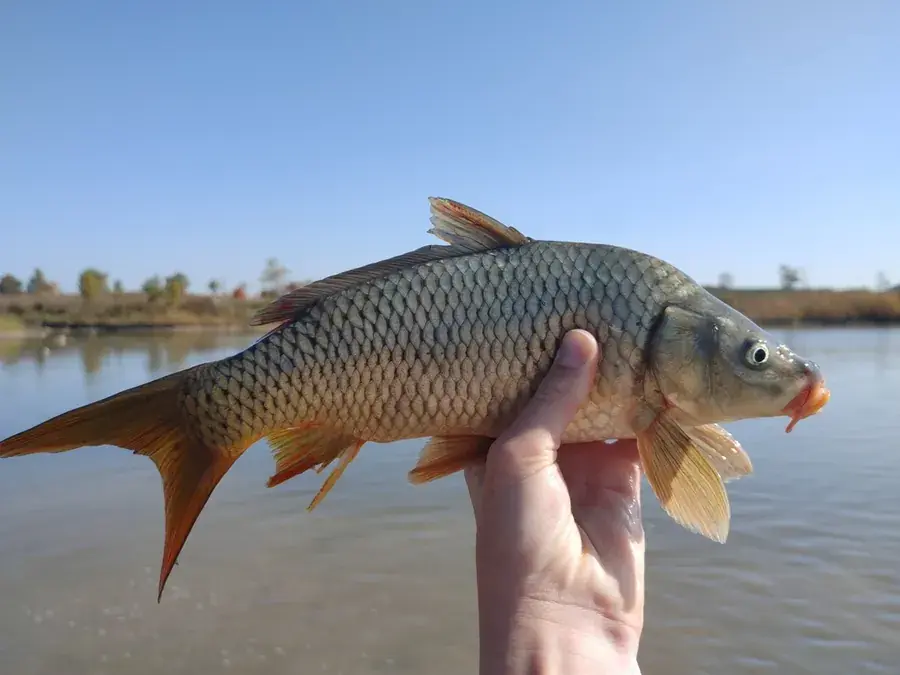 FishApr–Oct
Common carp
Cyprinus carpio
Big bronze scales (or the scattered big scales of a mirror carp), a long dorsal fin, and two pairs of barbels at a rubbery, tube-like mouth.
Habitat and methods →