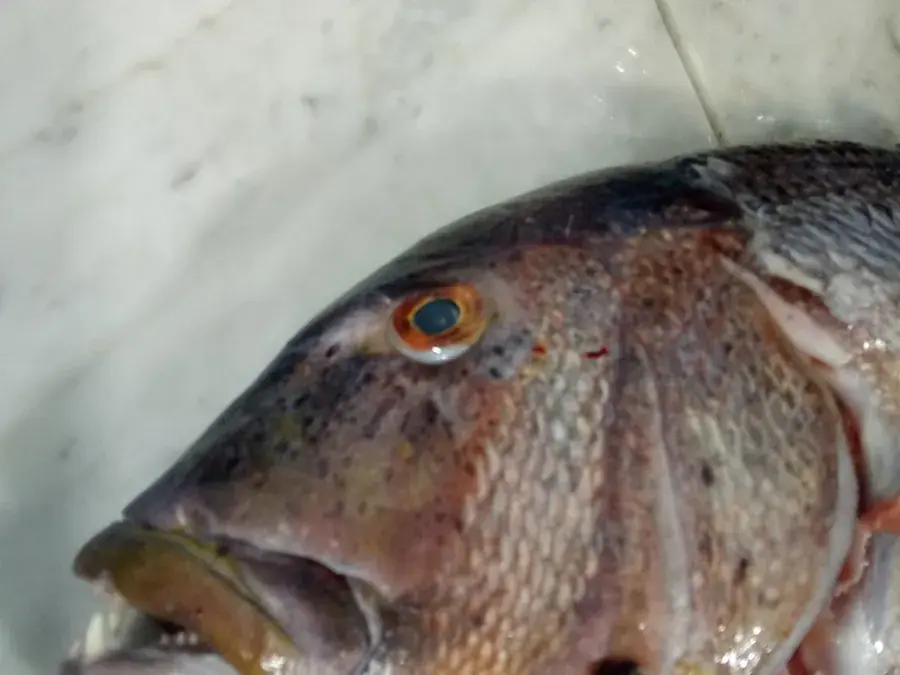
Photo by Karim Haddad on iNaturalist · CC BY 4.0
Common dentex
Dentex dentex
- When
- May–Oct — May, June, July, August, September, October. Earlier where the water warms first.
- Habitat
- Rocky reefs, rubble and drop-offs, mostly 15–50 m deep, around the Mediterranean, the Canaries and Madeira — fished from boats with live bait, jigs and big lures.
- Identification
- A big, oval, flat-sided seabream with rows of strong canine teeth, the front ones largest. Young fish are grey with black spots on the back; they turn pink as they mature, and old fish are bluish-grey with the spots faded.
- Notes
- The dentice of Mediterranean boat anglers: a solitary hunter of fish, squid and octopus that gathers in groups only for a few weeks to spawn in spring. Caught all year, but warm-season days are best. Long-lived, slow-growing and now scarce outside marine reserves.
- Method
- A live squid or small fish slow-trolled or drifted along the reef edge, or a heavy jig worked close to the bottom.
- Caution
- Listed as Vulnerable. Minimum sizes and bag limits vary by country and marine reserve — check local rules, and release big breeding fish.
Seasons, size limits and catch limits change every year and differ by water body. Check the current regulations for the country and the water before fishing.
Common dentex facts
- Also called
- Dentex; IGFA also lists dentice, denton and dente.
- Family
- Sparidae, the seabreams and porgies.
- Native range
- The north-eastern Atlantic from the Bay of Biscay to Cape Blanc in Mauritania, the Canaries and Madeira, and the whole Mediterranean into the western Black Sea; commonest south of 40°N. Rare as far north as the British Isles.
- Habitat
- Hard bottoms — rock and rubble — down to 200 m (650 ft), but usually 15–50 m (50–165 ft). Adults are solitary; young fish school.
- Water temperature
- Warm-temperate. AquaMaps puts its preferred surface water at about 16–22°C (61–72°F).
- Size
- Most adults 35–70 cm (14–28 in); the largest measured about 100 cm (39 in).
- Record
- IGFA all-tackle world record: 14.25 kg (31 lb 6 oz), Torsten Wetzel, Los Cristianos, Tenerife, Canary Islands, Spain, 29 January 1999.
- Lifespan
- Long-lived: fish up to 36 years old have been aged off Corsica.
- What it eats
- Fish, squid, octopus and other molluscs.
- Spawning
- In spring — March to May in the Mediterranean — when adults gather for two or three weeks in the warmer water near the surface. Both sexes mature at two to four years.
- Young fish
- Young fish are greyish with black spots on the back and upper flanks, and turn pink as they grow.
- Teeth and mouth
- Rows of canine-like teeth, the outer row largest and the four to six at the front of each jaw strongly enlarged.
- Look-alikes
- Other dentex, such as the pink dentex (Dentex gibbosus), are easily confused with it. The common dentex’s tells are its rows of strong canine teeth and, in young fish, black spots on the back.
- Eating
- A highly valued food fish around the Mediterranean; Spain and Bosnia and Herzegovina also report farming it.
- Status
- Vulnerable on the IUCN Red List: numbers fell by more than 30% over the three generations to 2009. It is far more abundant inside marine protected areas than outside them.
Interactive
Common dentex: size range
Move the slider from a typical adult to the largest recorded specimen, shown against objects of known size.
Most adults you'll catch: 35–70 cm (14–28 in).
This common dentex: 53 cm. Longer than a loaf of bread, shorter than a four-year-old.
The record
IGFA all-tackle world record: 14.25 kg (31 lb 6 oz), Torsten Wetzel, Los Cristianos, Tenerife, Canary Islands, Spain, 29 January 1999.
Questions people ask about common dentex
How big does a dentex get?
Most are about 50 cm (20 in); the species reaches 1 m (39 in) and over 14 kg (31 lb). The IGFA world record is 14.25 kg (31 lb 6 oz), from Tenerife in the Canary Islands in 1999.
When is the best time to fish for dentex?
Dentex are caught all year, but warm-season days are favoured, and most fishing is done in daylight with live bait, big lures or jigs worked near the bottom.
Why is the dentex Vulnerable?
It is long-lived, slow-growing and large, which makes it easy to over-fish. Mediterranean catches fell by about a third and West African catches by about two-thirds, and it is now scarce outside marine reserves.
Found in these regions
Checked against these sources ·
- FishBase — Dentex dentex
- FishBase — Dentex dentex population characteristics
- Wikipedia — Common dentex
- BaitYourHook — Dentex fishing
- IGFA — World Records search
Sizes, records and ranges are for the species as a whole; local populations and rules vary. Records change; the record-keeper named above holds the current one.
Local activity
This week's guide for a place
Enter a town, postal code or ZIP for this week's conditions there, based on the local climate, this week's weather and the ecological region.
Also active in October
 FishJun–Mar
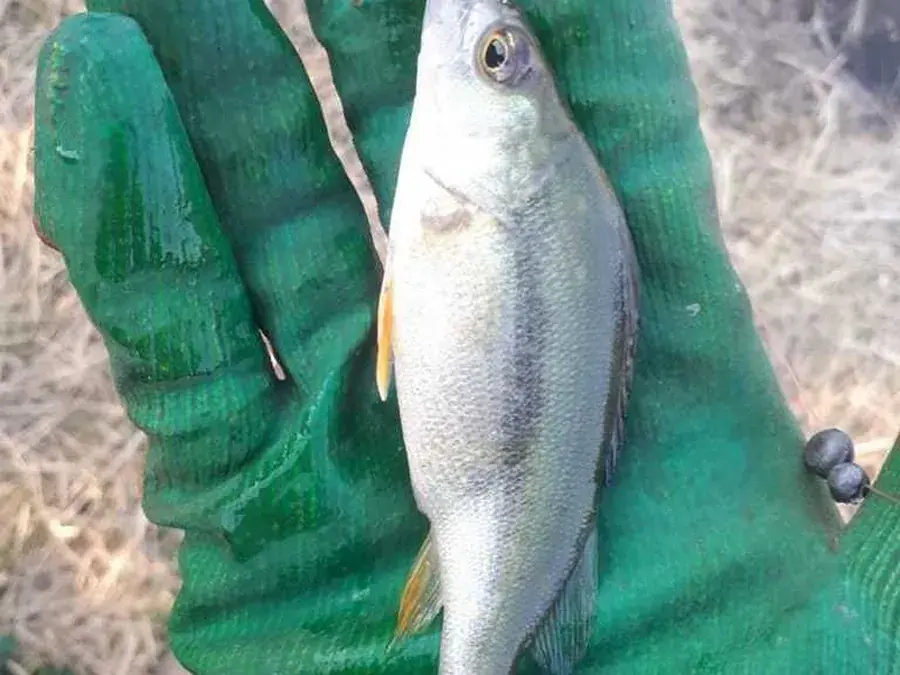
European perch
Perca fluviatilis
Five to eight dark bars on a greenish flank, bright red-orange lower fins, and a spiny first dorsal fin with a black blotch at the back.
Habitat and methods →Photo: Дауд Арсанукаев · CC BY 4.0
 FishJun–Mar
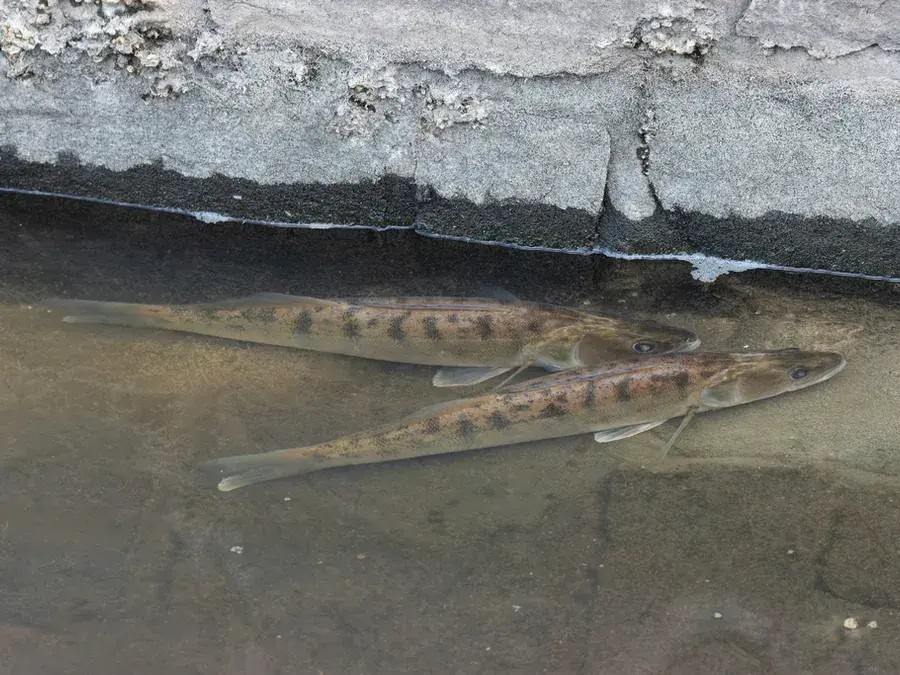
Zander
Sander lucioperca
Slim and glassy-eyed, with grey-brown saddles, rows of black spots on the spiny dorsal fin, and long fang-like canine teeth.
Habitat and methods →Photo: Tomas Broucek · CC BY 4.0
 FishApr–Oct
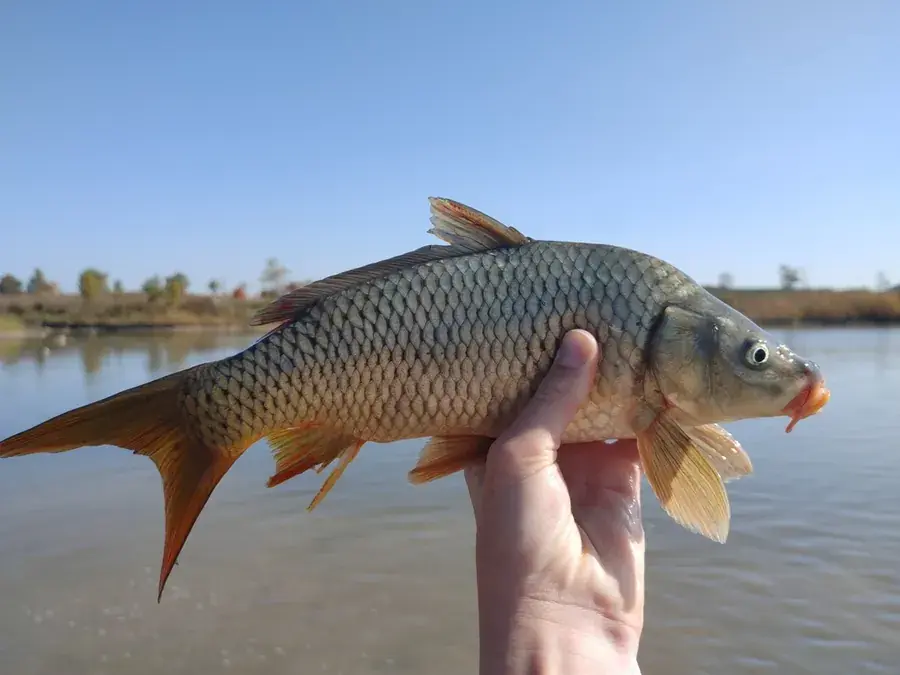
Common carp
Cyprinus carpio
Big bronze scales (or the scattered big scales of a mirror carp), a long dorsal fin, and two pairs of barbels at a rubbery, tube-like mouth.
Habitat and methods →