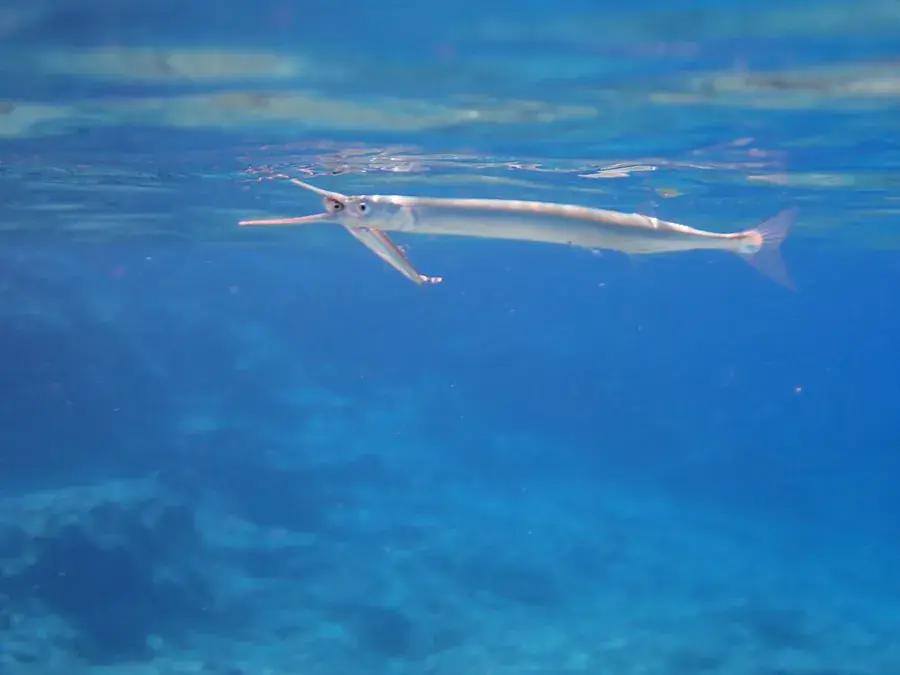
Photo by Sarah Faulwetter on iNaturalist · CC BY 4.0
Garfish
Belone belone
- When
- Apr–Oct — April, May, June, July, August, September, October. Earlier where the water warms first.
- Habitat
- Open water close inshore in summer — off piers, breakwaters, rocky points and over seagrass, often with the mackerel; the shallow, brackish coasts of Denmark and the Baltic in May and June.
- Identification
- Long and thin, bluish-green above with a silver-grey belly, both jaws drawn out into a narrow beak lined with widely spaced teeth, and the dorsal and anal fins set well back on the body. The bones are green.
- Notes
- It arrives inshore in April and May to spawn over seagrass, sticking its eggs to the blades with long threads, and heads back to open sea in autumn. Hooked, it leaps and tail-walks across the surface.
- Method
- A strip of mackerel or fish under a small float set shallow, or a small spinner or a bright fly retrieved just under the surface.
- Caution
- Some countries set a minimum size — 30 cm on France’s Atlantic and Channel coasts. Handle the beak with care: it is lined with teeth.
Seasons, size limits and catch limits change every year and differ by water body. Check the current regulations for the country and the water before fishing.
Garfish facts
- Also called
- Garpike (its IGFA name), sea needle, needlefish; hornfisk in Danish.
- Family
- Belonidae, the needlefishes.
- Native range
- The north-eastern Atlantic, from Norway and the Baltic to the Canaries and Cape Verde, the Mediterranean and the Black Sea.
- Habitat
- Near the surface in open coastal water; it moves into shallow, often brackish, water over seagrass in spring to spawn and returns to the open sea in autumn.
- Water temperature
- Cool to warm-temperate. AquaMaps puts its preferred surface water at about 9–20°C (48–68°F).
- Size
- Most adults 45–75 cm (18–30 in); the largest measured about 104 cm (41 in).
- Record
- IGFA all-tackle world record (as garpike): 1.18 kg (2 lb 9 oz), David Mesure, La Teste, France, 14 May 2002.
- Lifespan
- About 8 years.
- What it eats
- Small fish — herring, sprats, sandeels, anchovies and sticklebacks — and free-swimming crustaceans.
- Spawning
- May and June in seagrass beds. The eggs carry long, sticky threads that anchor them to the blades of seagrass.
- Young fish
- Young garfish have greatly elongated jaws and lack the black lobe at the back of the dorsal fin.
- Teeth and mouth
- Both jaws drawn out into a long beak with comparatively large, widely spaced teeth; the lower jaw is slightly longer.
- Look-alikes
- The needlefishes of warmer seas belong to the same family and look much the same; in European waters the garfish is the common one.
- Eating
- Good, and very popular in Denmark. The bones are green from a harmless pigment, biliverdin, which puts some people off.
- Status
- Least Concern on the IUCN Red List (2012).
Interactive
Garfish: size range
Move the slider from a typical adult to the largest recorded specimen, shown against objects of known size.
Most adults you'll catch: 45–75 cm (18–30 in).
This garfish: 60 cm. Longer than a loaf of bread, shorter than a four-year-old.
The record
IGFA all-tackle world record (as garpike): 1.18 kg (2 lb 9 oz), David Mesure, La Teste, France, 14 May 2002.
Questions people ask about garfish
Why are garfish bones green?
Because of biliverdin, a bile pigment. The colour is harmless and the fish is good to eat — garfish is popular in Denmark — but the green skeleton puts some people off.
When do garfish come inshore?
In April and May, ahead of spawning in May and June over seagrass beds. In Denmark and the Baltic they arrive in May and early June; they stay through the summer and head back to the open sea in autumn.
How big do garfish get?
Most are 45–75 cm (18–30 in) and well under 1 kg; the largest recorded reach about 1 m (3 ft 5 in) and 1.4 kg. The IGFA world record, listed as garpike, is 1.18 kg (2 lb 9 oz), from La Teste, France, in 2002.
Found in these regions
Checked against these sources ·
- FishBase — Belone belone
- FishBase — Belone belone population characteristics
- Wikipedia — Garfish
- Global FlyFisher — Belone belone, Danish inshore species
- IGFA — World Records search
Sizes, records and ranges are for the species as a whole; local populations and rules vary. Records change; the record-keeper named above holds the current one.
Local activity
This week's guide for a place
Enter a town, postal code or ZIP for this week's conditions there, based on the local climate, this week's weather and the ecological region.
Also active in October
 FishJun–Mar
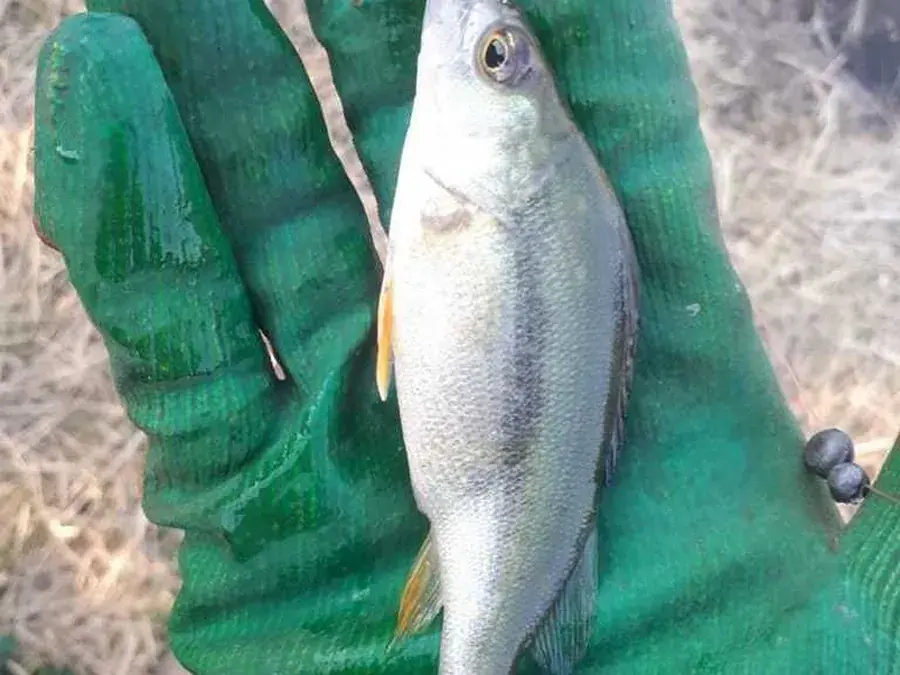
European perch
Perca fluviatilis
Five to eight dark bars on a greenish flank, bright red-orange lower fins, and a spiny first dorsal fin with a black blotch at the back.
Habitat and methods →Photo: Дауд Арсанукаев · CC BY 4.0
 FishJun–Mar
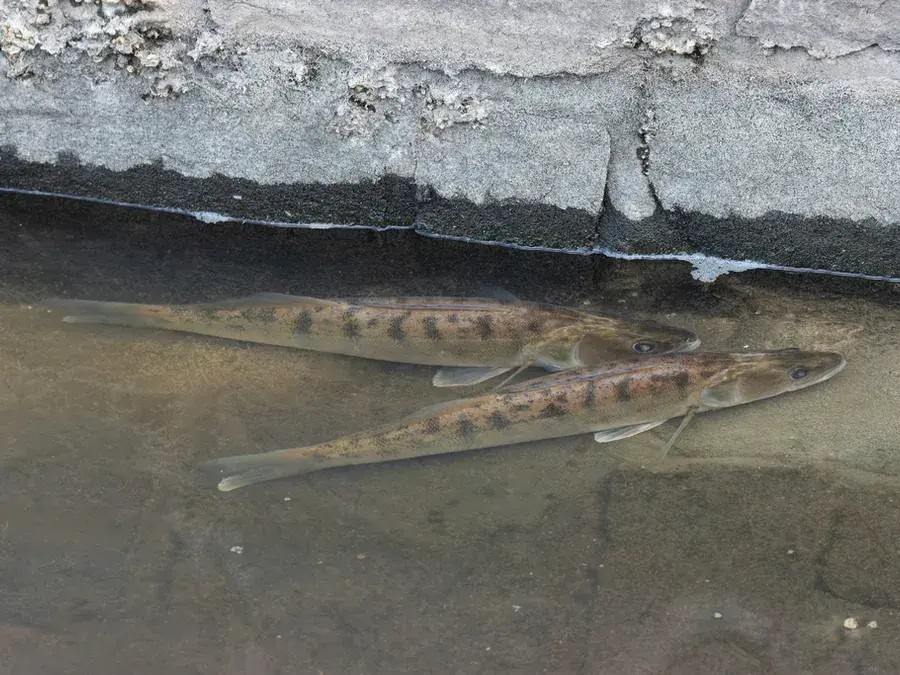
Zander
Sander lucioperca
Slim and glassy-eyed, with grey-brown saddles, rows of black spots on the spiny dorsal fin, and long fang-like canine teeth.
Habitat and methods →Photo: Tomas Broucek · CC BY 4.0
 FishApr–Oct
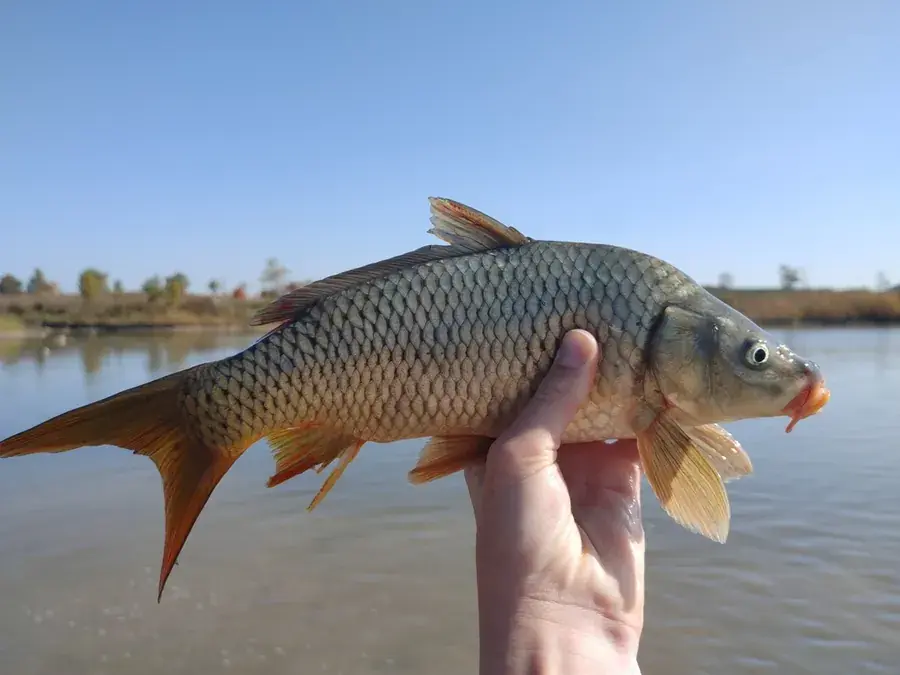
Common carp
Cyprinus carpio
Big bronze scales (or the scattered big scales of a mirror carp), a long dorsal fin, and two pairs of barbels at a rubbery, tube-like mouth.
Habitat and methods →