The trailhead
Start here. Where do you want to go?
Every trail below is Kinshasa right now — this month's fish, this week's soil and frost, what's ready in the woods, tonight's sky. Tap a place on the map to see what's waiting there, or let us plan a trail for today.
Tap a place on the map to see what’s there — tap it again to go.Point at a place on the map, or tap it, to see what’s there.
The map faces south, like you at midday: the sun comes up on your left, in the east, and goes down on your right, in the west.
Pick your trail for today
Who's coming?
How long have you got?
What do you feel like?
Answer any of these and we’ll draw you a trail on the map — one stop for an hour, two for half a day, three for all day.
Today at the trailhead
Slugs work all day, not just at night, and blight moves in wet warm air.
- Ground beetlebest now — Running the soil surface after dark, taking slugs, cutworms and larvae. One of the best predators a garden has.
- Earthwormbest now — At the surface after dark and in wet weather, pulling leaves down into the burrow.
Right now
26°C / 79°F
Overcast · wind 5 km/h · 76% RH
Soil (6 cm)
31°C / 87°F
Warm-season seeds go
Hardiness zone
13b
est. from 9-yr extreme low 18°C
Frost window
Rare – Rare
~366 frost-free days (avg)
Sun
05:42 – 17:51
sunrise – sunset today
Moon
Waning Crescent
15% lit · anglers' solunar: good · full 2026-10-26
7-day forecast
Africa/Kinshasa
Tue
Showers
30° / 23°
4 mm
Wed
Overcast
33° / 24°
dry
Thu
Drizzle
34° / 25°
1.7 mm
Fri
Showers
30° / 24°
5.4 mm
Sat
Drizzle
30° / 24°
1.2 mm
Sun
Drizzle
31° / 24°
2.7 mm
Mon
Showers
29° / 23°
11.2 mm
Writing your field guide — reading the forecast, the moon and the map…
Overhead · Kinshasa, DR Congo
The sky over the garden
The two clocks nothing on the ground can argue with: the length of the day, and the phase of the moon.
The sun
12h 10m of light
Sunrise
05:41
Solar noon
11:46
Sunset
17:51
A month from now the day will be 0h 07m longer. Enough light for steady growth.
The moon
Waning Crescent
15% lit · waning · day 26 of 29.5
- Next full
- Oct 26 · 20d
- Hunter's Moon
- Next new
- Oct 10 · 4d
- Darkest nights
Planting by the moon: Last quarter to new: a resting phase — weed, prune, harvest, turn compost and prepare beds.
Anglers' solunar rating: good — the tradition says fish feed hardest in the days either side of new and full, and around moonrise and moonset. The evidence is mixed; light and weather matter more.
Turn of the season
Summer solstice
Dec 21 · 76 days away
Frost is rare here — most years see none, or a night or two at most.
Next moons
- New MoonOct 10
- First QuarterOct 18
- Full Moon · Hunter's MoonOct 26
- Last QuarterNov 1
Right now · Kinshasa, DR Congo
Forces at work right now
Frost, soil warmth, light, rain and the moon set the pace for the garden, the water and the woods alike. Every reading below comes from this location's own forecast and climate record.
- Quiet right now
Frost
366 frost-free days
Frost is rare here. Coldest night in the next week: 23.2 °C.
The hard edge of the growing season. Ice inside a leaf ruptures its cells — one night ends a tomato and sweetens a parsnip.
- Worth watching
Soil warmth
30.5 °C
Hot soil: germination drops off above 30 °C and roots slow. Mulch, shade the row, and sow late in the day.
Seeds read soil temperature, not the calendar. Six centimetres down is where the decision gets made.
- Working for you
Day length
12h 10m
Gaining about under a minute of daylight a day. Every extra minute is growth you don't have to pay for.
The one thing weather can't change. Plants count photoperiod to decide when to bolt, bulb, flower and go dormant.
- Worth watching
Heat units
122 GDD / 7 days
A lot of heat. Growth is fast but tomatoes drop blossom above about 32 °C and lettuce turns bitter.
Growing degree days: the running total of warmth above 10 °C. Crops and insects both run on this clock rather than on dates.
- Working for you
Rain
26.2 mm / 7 days
26.2 mm across 6 days. About right; leave the hose coiled.
Sets the pace for everything: germination, fungal fruiting, slug nights, and how a river runs for the next three days.
- Working for you
Pollination
5 of 7 flying days
5 good flying days ahead. Open flowers will get worked — leave a shallow water dish out and hold off on any spray until dusk.
A third of what you eat needs an insect to have visited first. Bees fly on temperature and wind, not on your schedule.
In season now · October
What you can pick right now
4 wild edibles typically ready in October near Kinshasa, DR Congo. Seasons shift a week or two with the weather — check each one before you go.
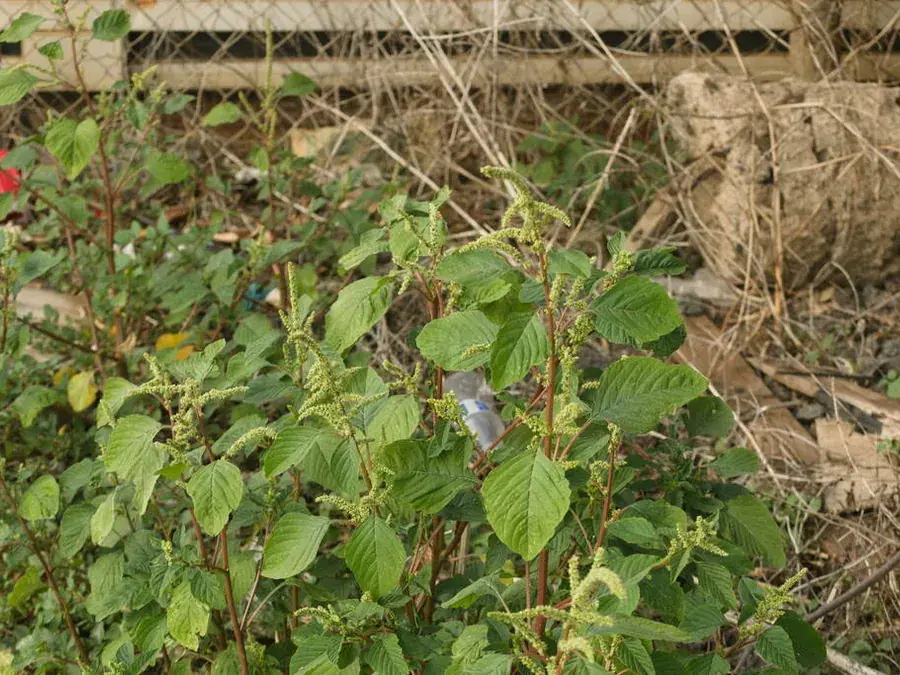 Has a dangerous look-alikeGreenMay – October
Amaranth greens (morogo, mchicha)
Amaranthus spp.
Upright or sprawling herbs, often with reddish stems, carrying alternate, oval to diamond-shaped, smooth-edged leaves on long stalks, and dense, bristly spikes of tiny green or reddish flowers at the top and in the leaf joints. No milky sap, no berries, no trumpet flowers. Spiny amaranth has a pair of sharp spines at each leaf base.
How to know it & its look-alikes →Photo: Kevin Faccenda · CC BY 4.0
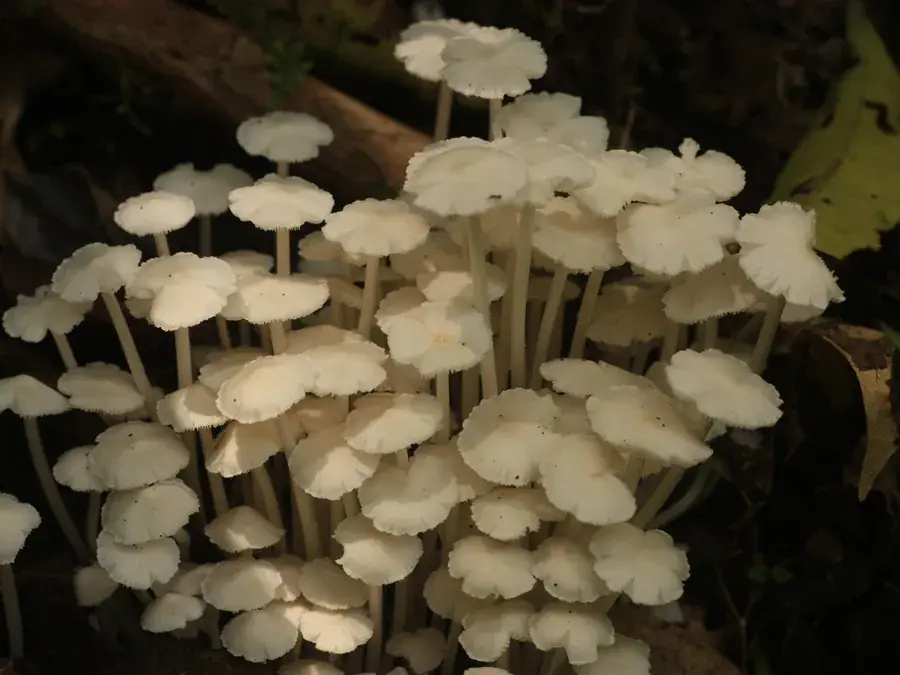 Has a dangerous look-alikeMushroomMay – October
Termite mushrooms (omajowa)
Termitomyces spp.
It grows out of a termite mound or the ground over a termite nest, never from wood. The cap usually has a pointed nipple at its centre, and the stem tapers into a long, tough root (pseudorhiza) that runs down — sometimes a metre or more — to the termites' fungus garden. Sizes run from a few centimetres (Termitomyces microcarpus, in crowds) to frying-pan caps of 15–40 cm (T. schimperi) and, in T. titanicus, up to a metre across.
How to know it & its look-alikes →Photo: madhavan a.p · CC BY 4.0
- Photo coming soonGreenJanuary – December
Eru (okazi, fumbwa)
Gnetum africanum
A slender climbing vine up to about 10 m long with thick, glossy, leathery, oval leaves about 8 cm (3 in) long, pointed at the tip. It is a gymnosperm, related to the conifers: no true flowers, but small cone-like spikes, and on female vines fleshy seeds 1–1.5 cm long that ripen red-orange.
How to know it & its look-alikes → 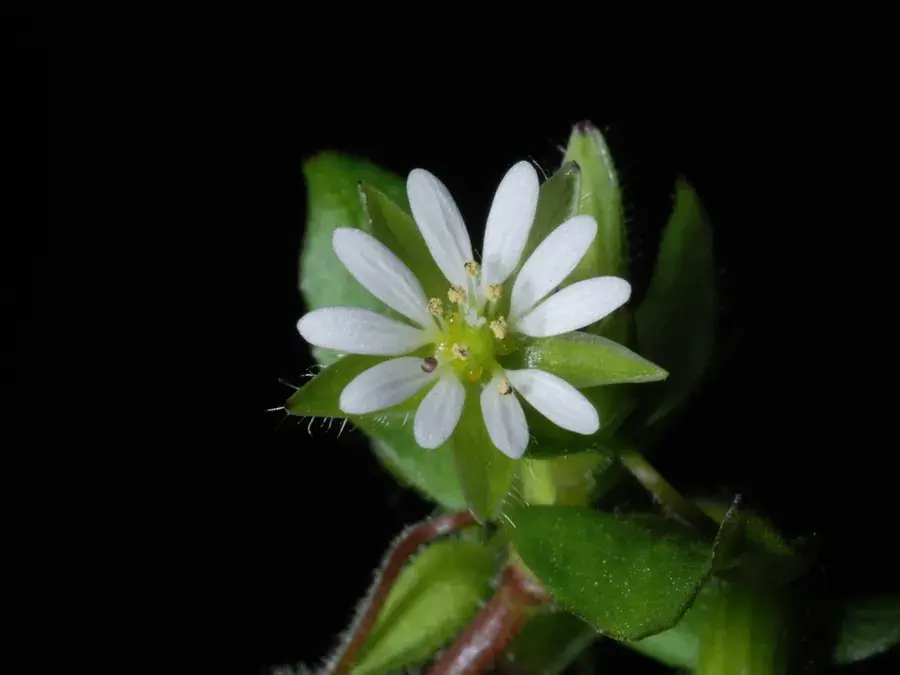 GreenOctober – May
Chickweed
Stellaria media
Sprawling mats with small opposite oval leaves and a single line of fine hairs running up one side of the stem, switching sides at each leaf pair. Stretch the stem: an elastic inner core.
How to know it & its look-alikes →Photo: Douglas Goldman · CC BY-SA 4.0
Photographs are research-grade observations from iNaturalist, each credited to its photographer. They show a typical specimen, not every variation — never identify from a photo alone. Confirm with a regional field guide or an experienced forager before you eat anything wild.
In the water now · October
What's biting
The sport fish active near Kinshasa, DR Congo in October — where they hold, how to know one on the line, and the tactic that usually works. Check your licence and the current limits before you go.
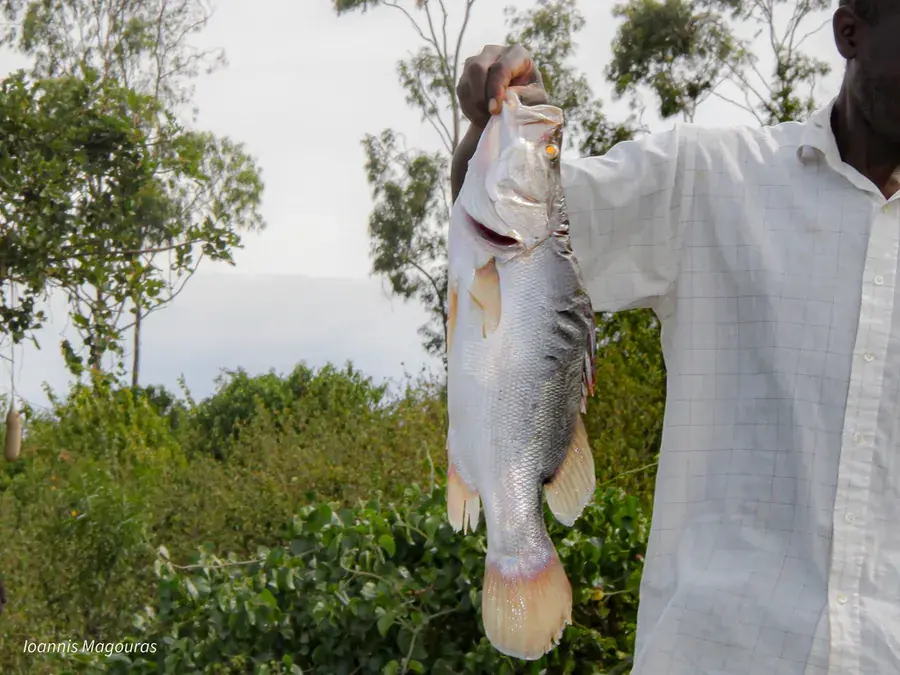 FishYear-round
Nile perch
Lates niloticus
A huge silver perch with a blue sheen, a dorsal fin cut deeply into spiny and soft halves, a rounded tail, and a dark eye ringed in bright yellow.
Where and how to catch it →Photo: Ioannis Magouras · CC BY 4.0
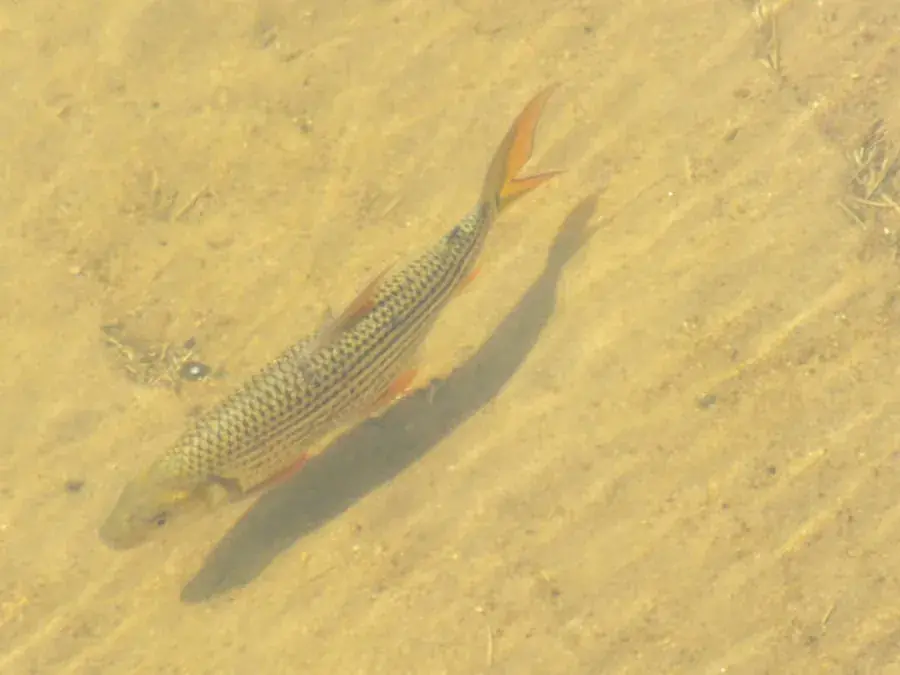 FishYear-round
Tigerfish
Hydrocynus vittatus
Silver with dark horizontal stripes along the upper sides, a red-orange tail edged in black, and big fang-like teeth that overlap the jaws even with the mouth shut.
Where and how to catch it →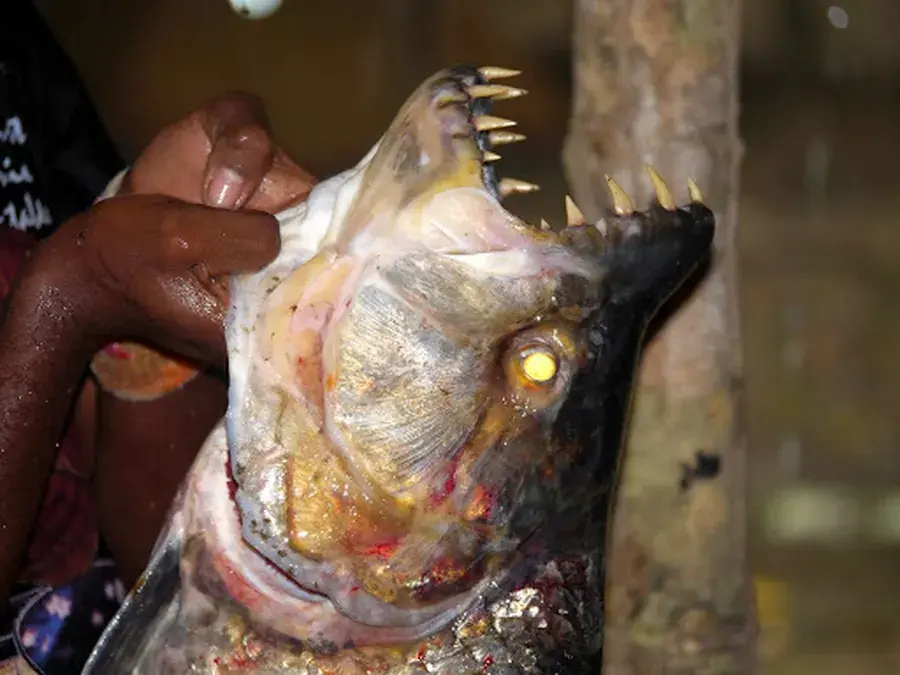 FishYear-round
Goliath tigerfish
Hydrocynus goliath
A heavy, silver-grey tigerfish with a thick, tuna-like body, a black adipose fin and enormous dagger-like teeth — the largest of all the tigerfish.
Where and how to catch it →Photo: 116916927065934112165 · CC BY 4.0
Photographs are research-grade observations from iNaturalist, each credited to its photographer. Ranges and timing are typical, not guaranteed — 87 species are covered across North America, Europe and Africa.
In the garden now · October
Who else is working the garden
The insects and soil life out near Kinshasa, DR Congo in October. Most of them are on your side — learn the few that aren't before you reach for anything.
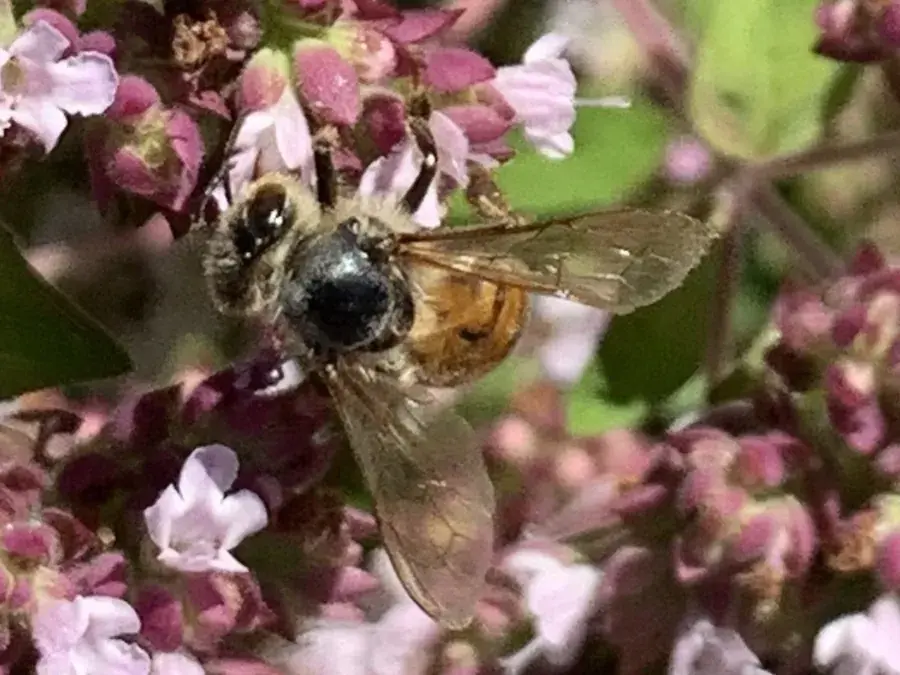 PollinatorMar–Oct
Honey bee
Apis mellifera
Golden-brown, banded, furry thorax, and pollen packed onto the hind legs in visible baskets.
What it does in the garden →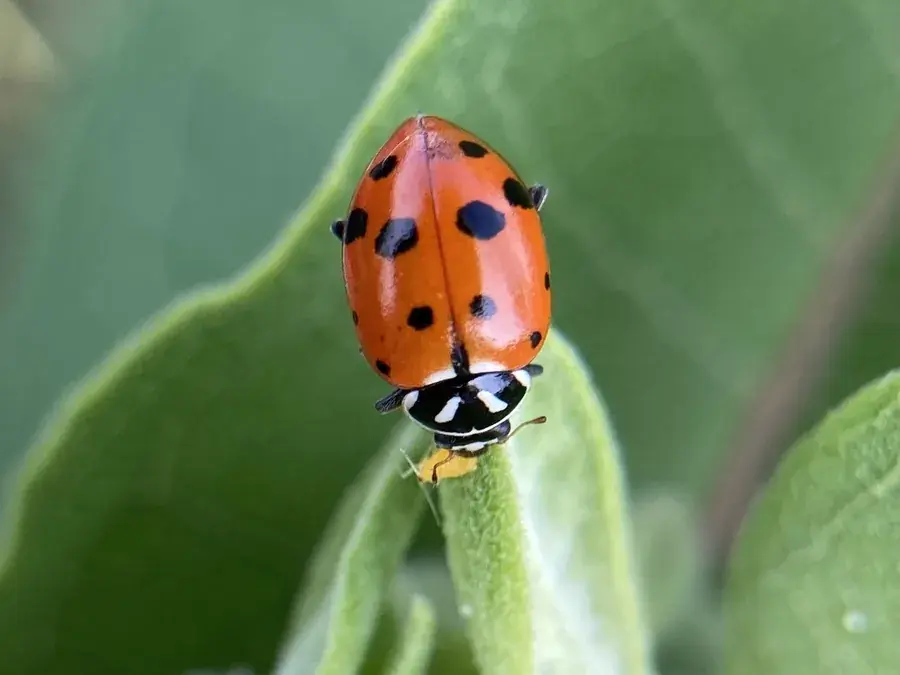 BeneficialApr–Oct
Lady beetle
Coccinellidae
The adult everyone knows; the larva is the useful one — a spiky, alligator-shaped grey-and-orange creature that looks like a pest.
What it does in the garden →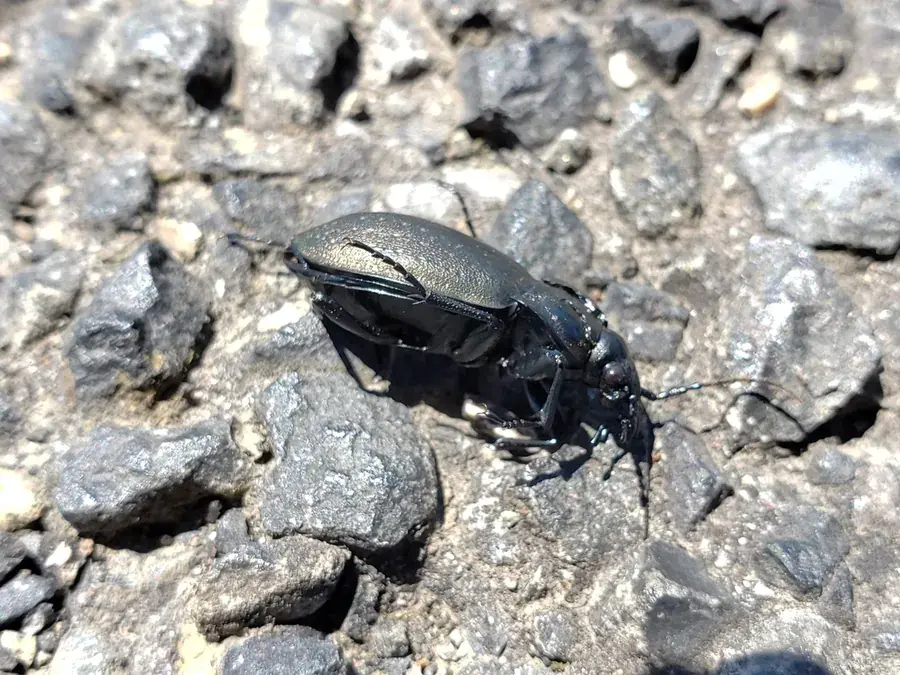 BeneficialApr–Oct
Ground beetle
Carabidae
Shiny black or bronze, fast-running, with grooved wing covers and long legs.
What it does in the garden →Photo: Gavin Slater · CC BY 4.0
Photographs are research-grade observations from iNaturalist, each credited to its photographer. Ranges and timing are typical, not guaranteed — 87 species are covered across North America, Europe and Africa.
Your ecological region
Congo Basin Rainforest
The second-largest rainforest on Earth, drained by the Congo River: warm, wet and green all year.
Regional guide →Get this guide for Kinshasa every week
Frost warnings, what's biting, what's ripening. One email, Sunday evening.